
Walleye
Sander vitreus
Walleye are not native to Wyoming. The species was first introduced to the state in the early 20th century, but did not fully establish in Wyoming waters until the 1960s.
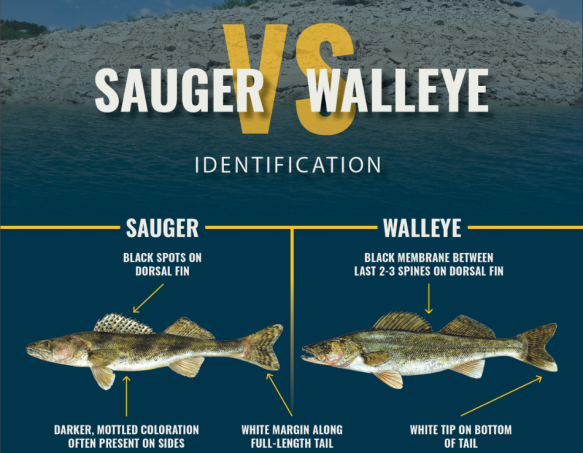
The walleye is known for its large, silvery eye, sharp teeth and anterior dorsal fin with spines. Walleye are distinguished from sauger by the lack of spots on the dorsal fin and the presence of a black membrane between the last two or three spines. Walleye also have a white tip on the lower lobe of the tail, whereas sauger have a thin, white margin along the full length of the tail.
Walleye Overview

Native or nonnative?
Nonnative

Wyoming classification
Game fish

Closest relative
Sauger

Length
Reproductively mature walleye are around 15 to 17 inches in length, but in some cases, they can get up to 34+ inches

Weight
Walleye typically weigh under 5 pounds, however the state record weight is 17.42 pounds and 34 inches

Lifespan
Typically 10 years in the wild, but they can live up to 20 to 25 years.
Conservation Management Efforts
Most Wyoming walleye populations are maintained through natural reproduction. However, the Wyoming Game and Fish Department stocks some lakes and reservoirs where natural reproduction cannot maintain a population large enough to provide quality angling opportunities. It is important for anglers to be able to identify between walleye and sauger where the species coexist (Boysen Reservoir; Glendo Reservoir; Bighorn Lake). The creel limits on these waters is different for each species, with sauger limits being lower because they are a native Species of Greatest Conservation Need. The Wyoming Game and Fish Department does not stock walleye in waters that contain native sauger to reduce the risk of hybridization between the two species.
Behavior
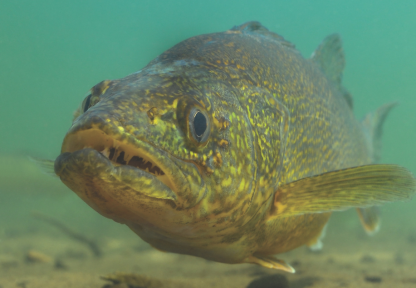
Walleye are most active at night, dusk, and early morning, and can be found feeding in shallower inshore water during these times of day. They spend daylight hours in deeper offshore water, which makes boat anglers much more successful than shore anglers at catching walleye.
Reproduction
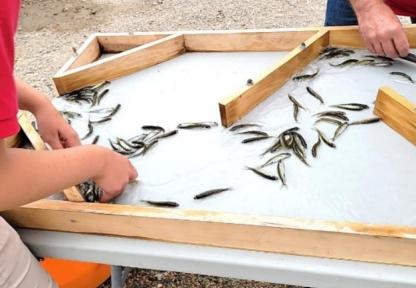
Most walleye spawning in Wyoming occurs in April. Walleye primarily spawn on rocky shorelines of lakes and reservoirs; however, some walleye will migrate into rivers and spawn in gravel beds.
Where to find in Wyoming
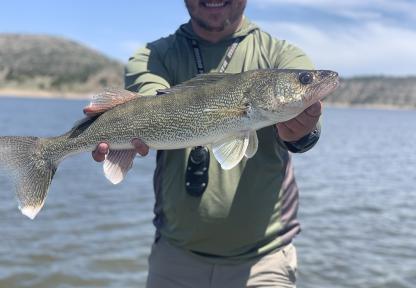
Glendo, Alcova, Pathfinder, Seminoe, Boysen, Keyhole, and Grayrocks reservoirs, Lake DeSmet. Ocean Lake has some of the more robust walleye populations in the state.
Wildlive Species Slider
More Species