A female brown trout underwater in a clear stream.

Brown Trout

Salmo Trutta

Brown trout typically have a light brown or yellowish body with large, mostly darker brown spots and a few red spots on their sides. Their fins tend to to be light brown with a pale - white leading edge. 

The brown trout is native to Europe, Western Asia, and Northern Africa but has been distributed to waters all around the world and has become a popular sport fish in the United States due to their growth potential and beautiful coloration.

Phylum:
Chordata
Class:
Actinopterygii
Order:
Salmoniformes
Family:
Salmonidae
Subfamily:
Genus:
Salmo
Species:
Trutta
An icon of a globe made up of a white stroke on a circular blue background

Native or nonnative?

Nonnative

An icon made up of solid white silhouette of a buffalo on a circular blue background

Wyoming classification

Game fish

In icon of various food items, including chicken, fish, and wheat, made up of a white stroke on a circular blue background

Diet

Aquatic invertebrates like mayflies, caddisflies, stoneflies, midges, as well as freshwater shrimp, and zooplankton. Brown Trout are also piscivorous, eating other fish.

An icon of a scale made up of a white stroke on a circular blue background

Weight

On average, a brown trout will weight 1 to 5 pounds. However, some brown trout can be 30+ pounds in the right conditions.

An icon of a tape measure made up of a white stroke on a circular blue background

Length

An average mature brown trout can grow between 15 and 30 inches in length, but in optimal conditions the oldest and largest individuals can grow up to 40 inches long.

An icon of a heart with and EKG graph in the middle, made up of a white stroke on a circular blue background

Lifespan

6 to 8 years on average, but they have been known to grow as old as 15+ years if they are able to avoid predators and are located in high quality waters.
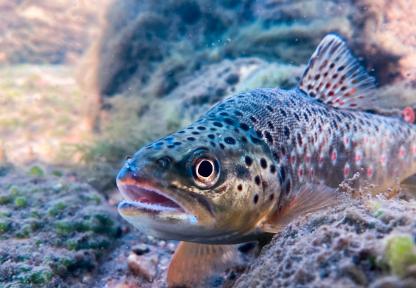
Image
brown trout underwater

Habitat

Trout are often found in strong, fast-moving currents, as these areas provide abundant oxygen and food, along with protection from predators. Features such as submerged rocks, fallen logs, undercut banks, and overhanging vegetation provide crucial shelter. In winter, deeper waters serve as a refuge from freezing temperatures.
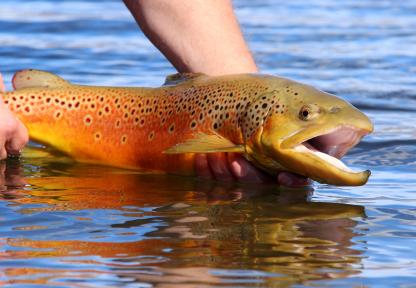
Image
brown trout image

Predators

Brown trout are preyed upon by black bears, grizzly bears, mink, river otter, larger fish. Common bird predators include mergansers, herons, and kingfishers. Trout eggs are often an easy meal for others as they are left unguarded in nests.

Image
trout eggs

Reproduction

Brown trout are fall spawners that can spawn year after year. Females will create nests called "redds" in gravel, where they will lay their eggs, and males will swim over top to fertilize the nest of eggs. The number of eggs per female depends greatly on size and age, however, each female will lay roughly 2,000 eggs per female.
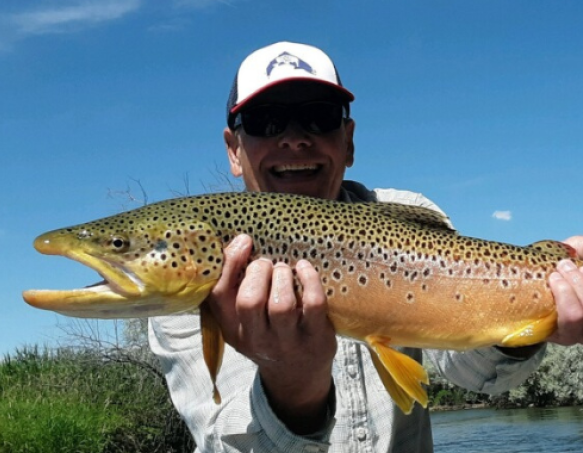
Image
Male angler holds a brown trout for his Master Angler photo submission

Brown Trout Importance

Brown trout are a highly prized trout species among anglers, known for their ability to grow quickly and provide a fun sport fishing opportunity.
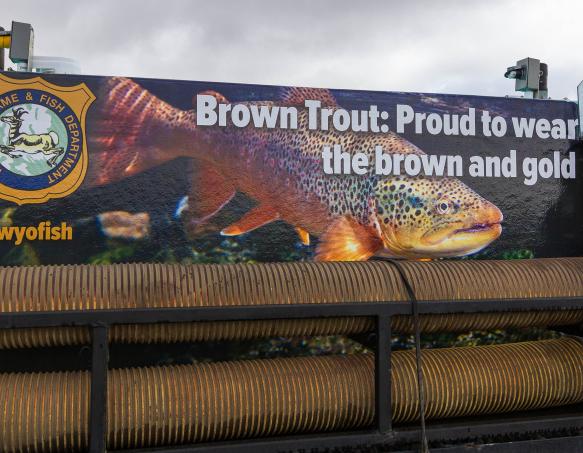
Image
brown trout stocking truck

Sport Fish Management Efforts

Although brown trout are non-native, there is a heavy angler desire to catch them. Ensuring habitat protection and restoration (especially for crucial spawning habitat) as well as monitoring water quality contributes to their ongoing success monitoring populations, by evaluating distribution, abundance, size structure and recruitment.

Wildlive Species Slider

More Species

View All
A photo of the profile of a buck pronghorn standing against a background of tall yellowish brown grass.

American Pronghorn

All pronghorn have an orangey-tan or reddish tan coloration going across their upper bodies. Their chest, sides, and rump…

Arctic Grayling

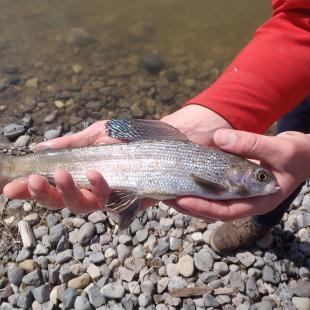
Arctic Grayling are a slender, silver-colored fish with coarse scales. However, the species is perhaps best known for their…
A Rocky Mountain bighorn sheep standing with its head turned as snowflakes fall, with two bighorn sheep ewes out of focus in the background.

Bighorn Sheep

Often nestled amidst the rocky terrain of the Rocky Mountains in North America, the bighorn sheep (Ovis canadensis) stand as…
burrowing owl

Burrowing Owl

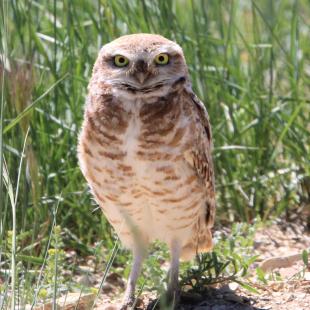
The burrowing owl is easily identified by its long legs, rounded head and mottled brown and white body. They also have…
Cow elk standing in sage brush

Elk

Elk are the second largest member of the deer family. They appear tan or light brown in color with dark neck manes. Males…
golden trout

Golden Trout

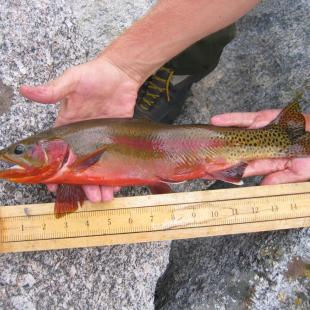
Golden trout are distinguished by their striking green and golden coloration, often featuring black spots near the tail, and…
Kokanee Salmon

Kokanee Salmon

Kokanee salmon are typically silver but turn bright red during spawning season, after which they migrate upstream to…
hatchery lake trout

Lake Trout

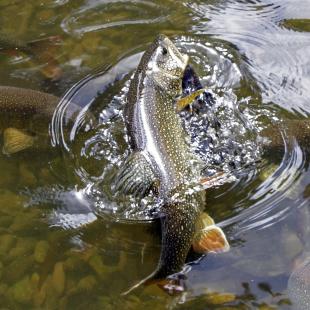
Although called a trout, lake trout are a char, meaning they have light spots on a dark body and white margins on their fins…
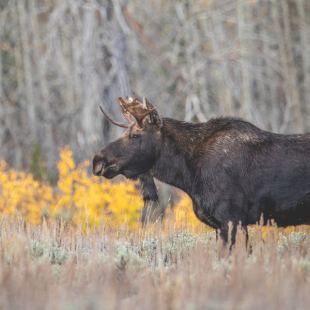
A bull moose stands among sagebrush with golden aspen leaves in the background.

Moose

Moose are large animals with massive antlers, thick fur, and long legs, adapted for life in cold environments.

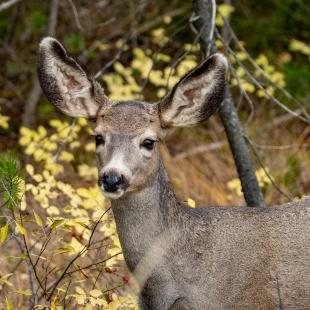
Mule Deer

The mule deer is an iconic ungulate of the American West. It has a distinctive black forehead and a light gray face, and its…

Ring-necked Pheasant

Ring-necked pheasants stride across open fields and weedy roadsides in the U.S. and southern Canada. Males sport iridescent…
Swift fox

Swift Fox

Swift foxes are found in Wyoming, primarily in the eastern plains, but their range is expanding westward into higher…

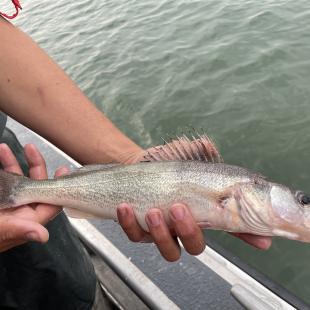
Walleye

The walleye is known for its large, silvery eye, sharp teeth and anterior dorsal fin with spines. Walleye are distinguished…
Western tanager

Western Tanager

The western tanager is a brightly colored songbird. The male has a red head, a yellow body, and black wings. The female…
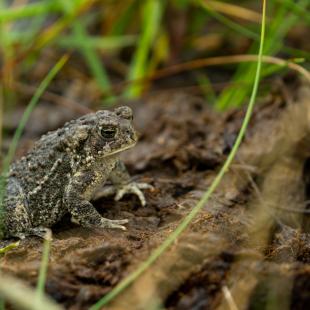
Wyoming toad

Wyoming Toad

The Wyoming toad was once abundantly found in the Laramie Basin of southeastern Wyoming, but in the 1970s an alarming…