
Some small-bodied, native fish call Wyoming home, but face numerous challenges
The Wyoming we know today wasn’t that way tens of thousands of years ago. Many of the landscapes differ in climate and environment.
Multiple ice ages resulted in some aquatic species being segregated from their core ranges, forming glacial relict populations. Changes in climate and receding glaciers allowed these species to colonize streams in Wyoming from the core of their distributions. Some of these species still exist in the Cowboy State. However, they have their own challenges — some more than others — and are among the top priorities in the Wyoming Game and Fish Department's State Wildlife Action Plan, which contains conservation actions for Species of Greatest Conservation Need.
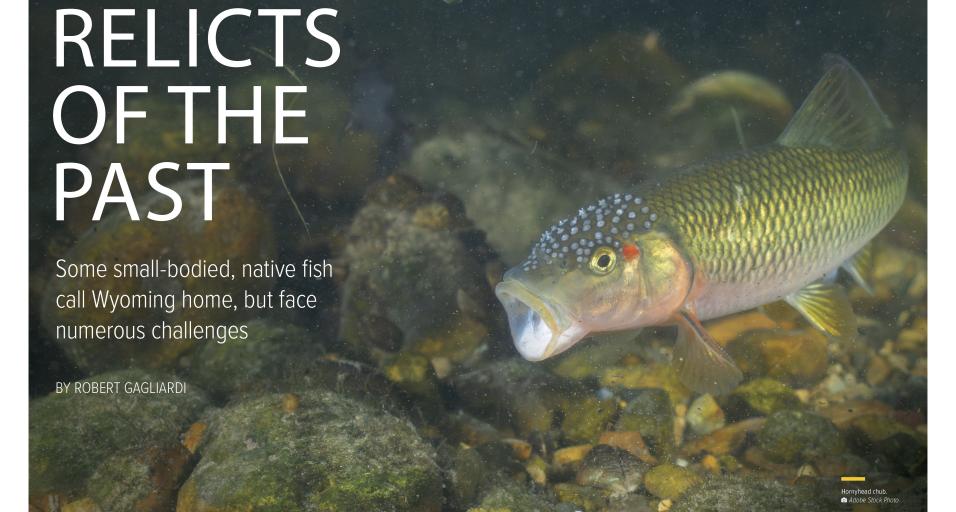
Hornyhead chub
This minnow could be dubbed the “Comeback Kid” of Wyoming fish.
After multiple ice ages, there were glacial relict populations of this fish in Wyoming, Colorado, Kansas and Nebraska. Today, the only known glacial relict hornyhead chub populations are in Wyoming.
Around 1900, hornyhead chub were found in the Laramie, North Laramie and Sweetwater rivers, and also in Rawhide and Box creeks in eastern and central Wyoming. By the 2000s, the last known populations were in the Laramie and North Laramie rivers. Even then, research indicated that hornyhead chubs occupied only about 16 miles in the Laramie River and 8 miles in the North Laramie.
In 2012, the Arapaho Fire resulted in a lot of sediment and ash deposited in the North Laramie and hornyhead chubs were extirpated. By 2013, only the Laramie River had hornyhead chubs.
The Wyoming Game and Fish Department wanted to restore and expand hornyhead chub numbers in the state. The Laramie Region’s fish management crew collected hornyhead chubs from the Laramie River in 2014, 2015 and 2019 and transplanted them in the North Laramie. By 2019, hornyhead chub numbers in the North Laramie were back to prefire abundances.
The hornyhead chub expansion continues. In 2016 and 2017, Game and Fish used state wildlife grant money to fund a research project by the Wyoming Cooperative Fish and Wildlife Research Unit at the University of Wyoming, where it collected data at 54 sites on 12 streams for possible hornyhead chub transplants. Those sites were scored and ranked, and parts of four streams ranked favorably — Horseshoe Creek and Boxelder Creek on the north slopes of the Laramie Mountain Range, Horse Creek in southeast Wyoming and the Sweetwater River in central Wyoming, where hornyhead chub once occurred. The Sweetwater particularly stood out with the three highest ranked sites.
Hornyhead chubs were first collected in the Sweetwater River in 1853, however, they were extirpated between 1853-1938. Paul Gerrity, Game and Fish fisheries biologist in the Lander Region, said the causes are unknown, but it is believed a primary factor was high instream sediment loads caused by overgrazing from cattle during the peak of the Oregon Trail usage during the 1840s-1860s. There also was a gold rush in the 1870s in the area that contributed to sediment loads and likely pollution from mine tailings.
Why try to bring a fish back to a river it was extirpated from?
“The Sweetwater is in better shape now,” Gerrity said. “There is some ranching and agriculture, along with limited mining. Possible problems include river dewatering and fish passage barriers, but based on our knowledge and research, we thought it was worth giving it a shot.”
In 2020-21, 558 hornyhead chubs were captured from the Laramie River and transplanted in the Sweetwater. Twenty-five hornyhead chub nests were found in the Sweetwater in 2022, five in 2023, two in 2024 and 81 in 2025. Hornyhead chub don’t spawn until they are about 3 years old. Those 81 nests were over a stretch of about 4 stream miles.
That is encouraging, and Game and Fish expects to begin a fish passage project on the Sweetwater this fall. This not only should help hornyhead chubs, but other native fish and sportfish.
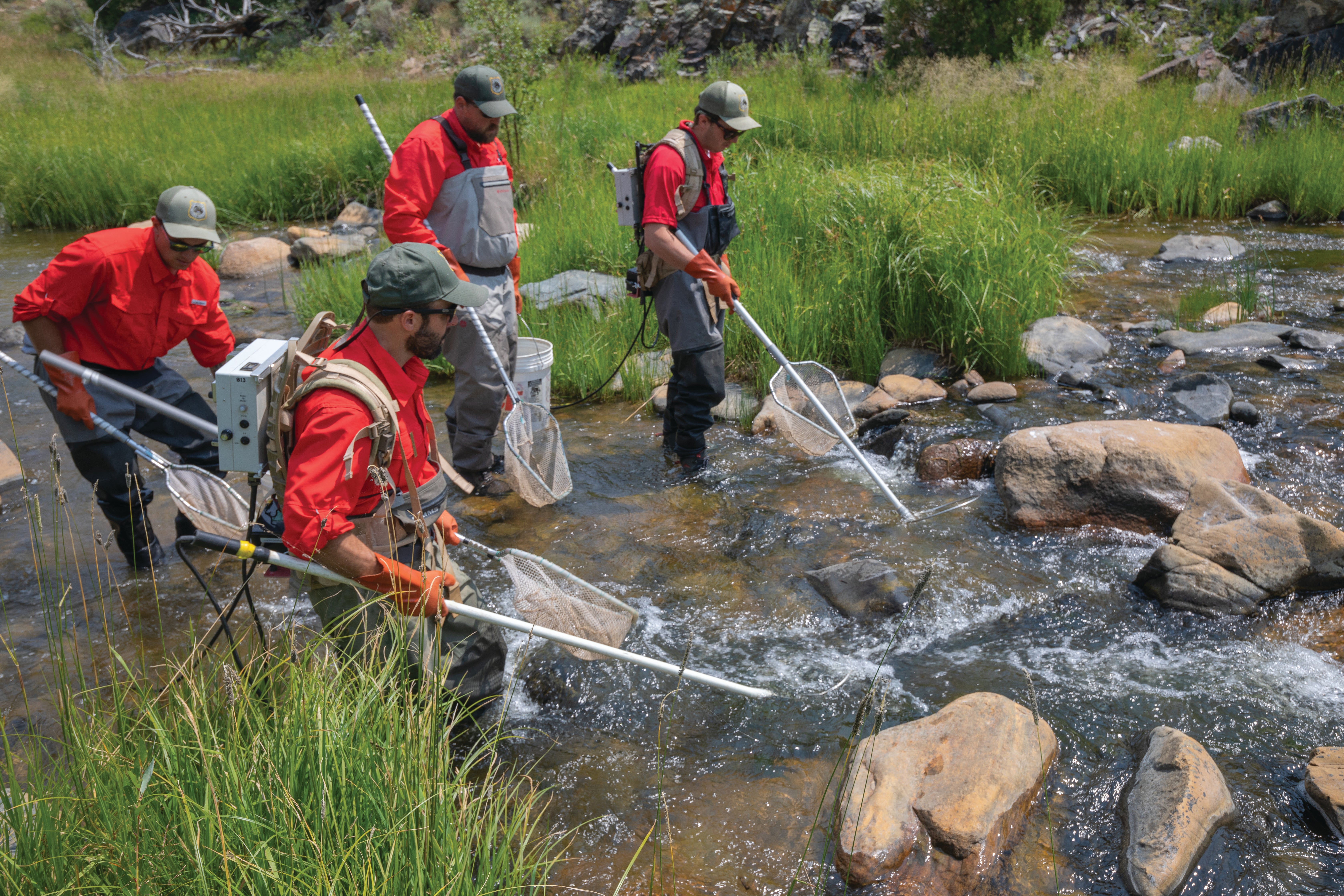
Wyoming Game and Fish Department personnel electrofish for hornyhead chub and other small-bodied fish in the Laramie River. (Photo by Robert Gagliardi/WGFD).
Northern pearl dace
Northern pearl dace native range extends across much of north-central North America, including many northern U.S. states between Montana and Maine and Canadian provinces between British Columbia and Nova Scotia. Glacial relict populations exist across Great Plains states including Wyoming, Montana and Nebraska. This species is only known to exist in Wyoming in the downstream portion of the Niobrara River. This fish was last captured by Game and Fish staff in 2020, but sampling hasn’t occurred every year.
“Recent unsuccessful sampling attempts are very concerning. However, we can’t say for sure they are completely gone at this point,” said Nick Hogberg, Game and Fish fisheries biologist in the Casper Region.
Northern pearl dace do best in groundwater-fed streams that stay cool year-round and have slow flows. Hogberg said historically, the Niobrara River had a continuous flow from near Manville to the Nebraska border. More recently, aquifer depletion and the establishment of cattails throughout the river resulted in less water and caused the river to divide into several sections disconnected from each other by dry reaches.
Hogberg added native fish such as the northern pearl dace are “somewhat resilient” to this intermittent flow pattern.
There is another problem that, at very least, isn’t helping northern pearl dace — northern pike.
This toothy predator has been present in the Niobrara River drainage in Nebraska since about the 1940s, and Game and Fish can’t be certain whether pike were illegally moved around the drainage or if stockings downstream were the only source.
Hogberg said decreased water flows in the Niobrara River over the years have prevented northern pike from further colonizing the drainage. Still, the presence of northern pike has hurt the population of many small-bodied native fish.
Hogberg added Game and Fish is working with Nebraska Game and Parks to establish new populations of northern pearl dace, but as of now, the future of this little fish is uncertain.
“Given they have a much smaller native range in Wyoming, we don’t have as many options for other places to start new populations,” Hogberg said. “We are working with Nebraska Game and Parks to collect northern pearl dace in Nebraska and spawn them at a hatchery there. If successful, offspring will be stocked into the Niobrara River in Wyoming in locations farther upstream than where northern pike can colonize.”
Hogberg added that work started this spring and the hope is to have fish to stock within the next 1-2 years.
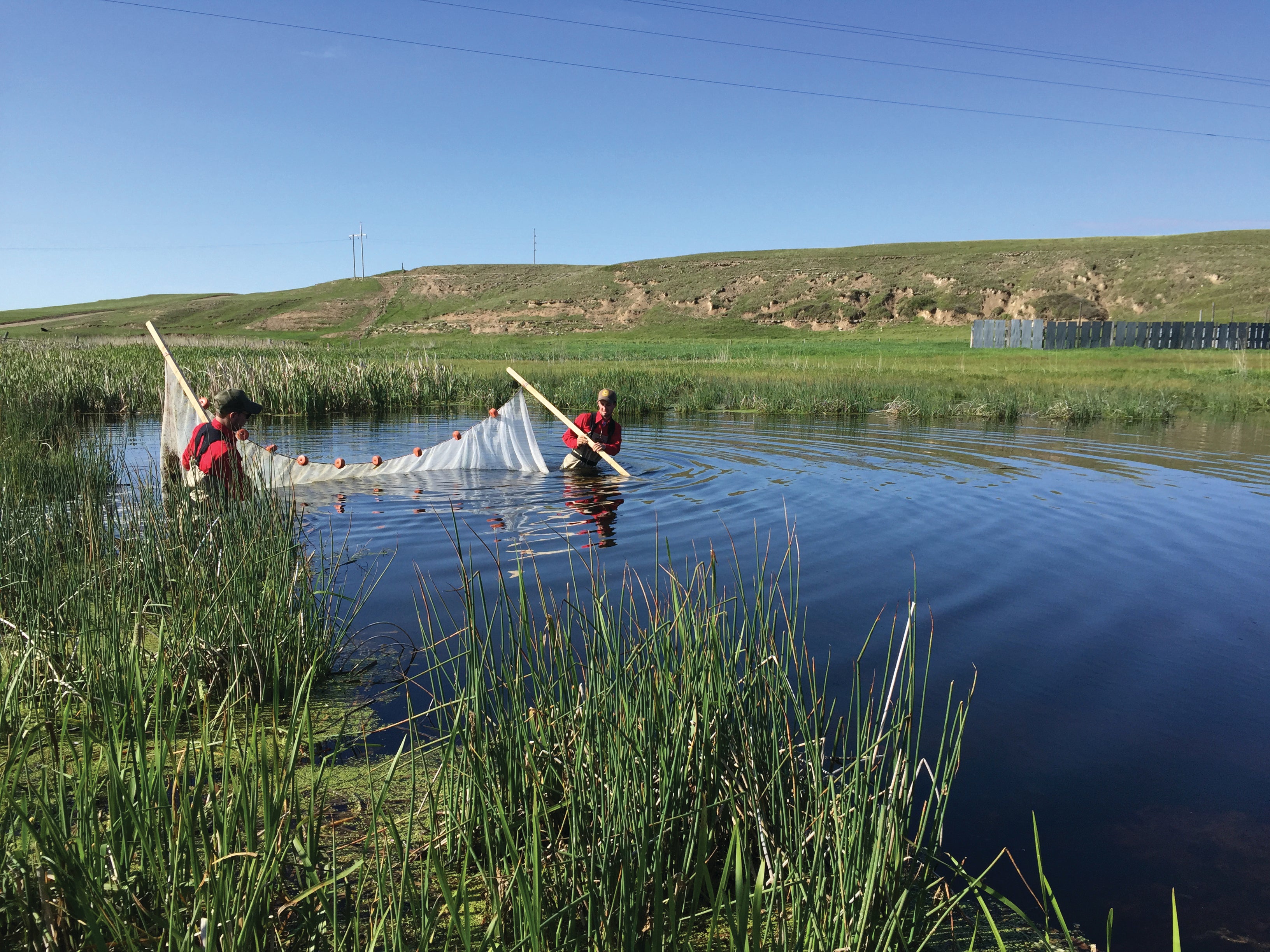
Northern pearl dace are found in the downstream portion of the Niobrara River in Wyoming. (Photo by WGFD).
Finescale dace
Another glacial relict fish can be found in the Niobrara River and in the Belle Fourche River drainage in Black Hills National Forest in northeast Wyoming. Northern pike in the Niobrara River have caused a small reduction in their distribution there, but they can be found in the main stem of the river and in manmade livestock ponds from west of Lusk to near the town of Van Tassell. Prior to northern pike moving up the Niobrara River, Game and Fish found finescale dace all the way to the Nebraska border.
In northeast Wyoming, finescale dace seem to be doing well in the Upper Redwater Creek drainage, and specifically in Middle Redwater Creek, where a population source for translocations exists in an old stock pond/reservoir.
“It’s a pretty good population there that seems to be hanging on,” said Gordon Edwards, Game and Fish fisheries biologist in the Sheridan Region. “It is easy to get to and easy to get fish from for establishing new populations.”
A graduate study by Evan Booher published in 2020 from the University of Wyoming found, among many things, relict populations of finescale dace in Wyoming, South Dakota and Nebraska. Booher also recommended other locations in Wyoming where finescale dace could exist, and Game and Fish has slowly translocated some fish from its source population. This year will mark the third time the department has translocated finescale dace into Whitelaw Creek and upper stretches of Beaver Creek in the Black Hills National Forest.
Edwards said Game and Fish will survey Whitelaw Creek after the third translocation to see how the finescale dace are doing.
Nonnative brook trout coexist with finescale dace at several locations in Wyoming, despite some evidence of a negative impact on the dace. Edwards added that is likely due to habitat with ample cover where dace can hide in areas where they cohabitate with brook trout.
In his thesis, Booher wrote that his work with finescale dace was trying to safeguard a rare fish in a high-plains environment. Edwards agrees.
“Finescale dace are doing fairly well in the Black Hills,” Edwards said. “We are actively looking at new places to spread them out on the landscape to make sure they are more distributed in the Black Hills National Forest. That can help the overall population weather impacts of a major habitat change, such as a prolonged drought or fire.”
Looking ahead
All three fish are Species of Greatest Conservation Need and will continue to garner attention from Game and Fish. Hornyhead chub and finescale dace have shown improvement since Game and Fish’s last State Wildlife Action Plan in 2017, which will be updated next year. That doesn’t mean Game and Fish won’t do anything with these two species, but the improvement shows progress in conservation. Northern pearl dace have not improved, so more attention from Game and Fish will be given in the future.
The power of Mother Nature left these three species in Wyoming thousands of years ago. And while their environment has changed since those glaciers receded, and even in more recent years, they’re still around. With help, management and attention from Game and Fish, the goal is to keep them on the landscape.
— Robert Gagliardi is the associate editor of Wyoming Wildlife.