
Images reveal the state's rich colors, from subtle earth tones to striking displays.
When people think of color in Wyoming, they often think of the good ol’ brown and gold. Not only are those the colors of the state’s lone university, they are colors that dominate the landscape with hues of brown earth, golden grasses as they dry and autumn leaves bursting with color. Those aren’t the only colors of the Cowboy State, though. A variety of colors can be found in every corner of the state and all the areas in between.
Whether the green of a meadow, vibrant wildflowers in the spring, brilliant red earth and rock formations, iridescent feathers or the almost other-worldly colors of a hot spring, Wyoming offers a remarkable palette year-round.
This year, Wyoming Wildlife magazine asked Wyoming Game and Fish Department employees to share their photos that celebrate colors of the natural world. The following photographs capture some of the many shades, tones and pops of color that make Wyoming a unique and colorful place.
Thankful
By James Hobbs, regional wildlife supervisor, Green River
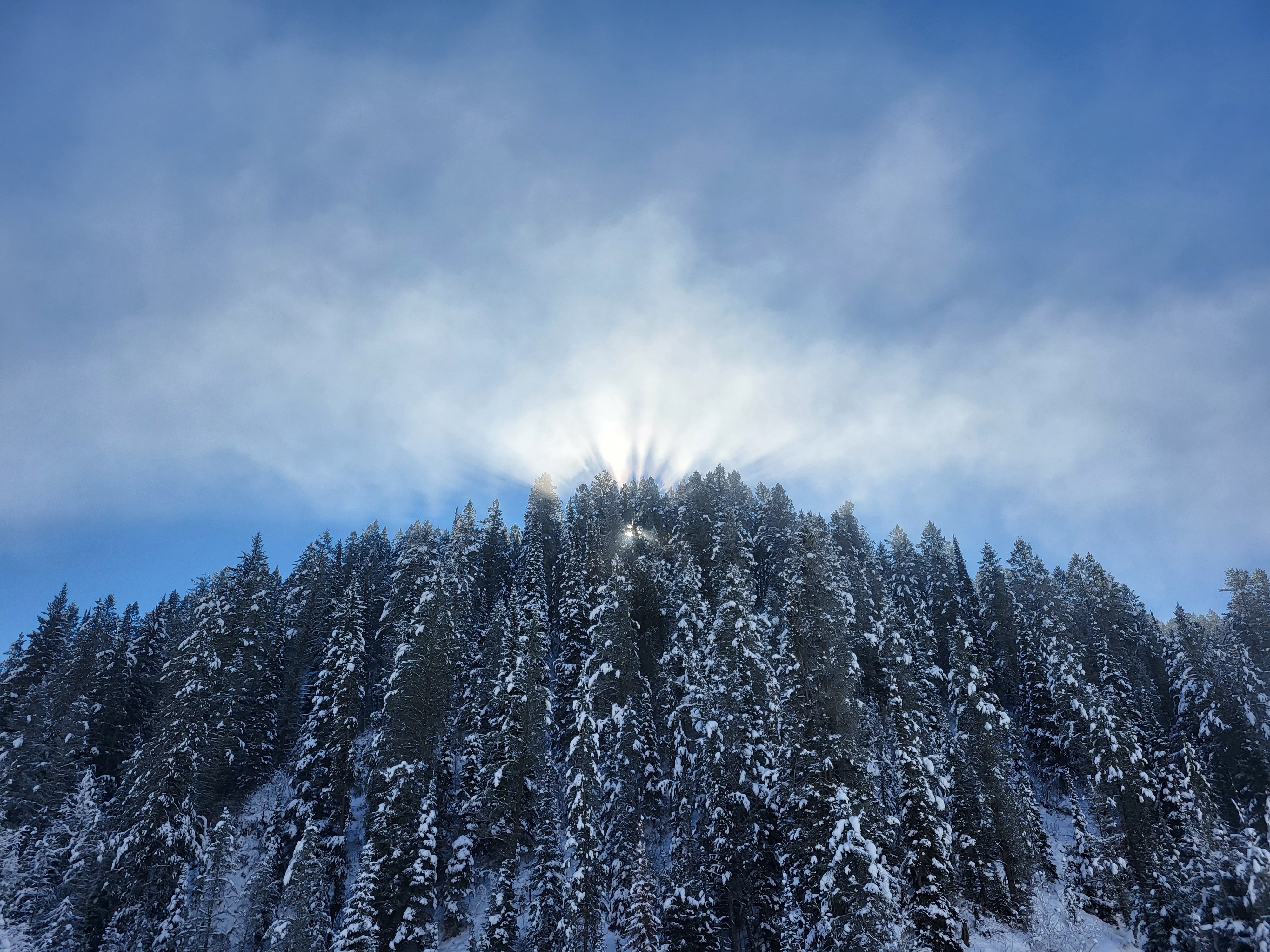
This photo was taken with my cell phone on Thursday, November 24, 2022, from the Grover Park Road in Star Valley. Yes, that's right, on Thanksgiving Day.
I was working and had a bunch of family at home preparing Thanksgiving dinner. I wished a little bit to be at home with my family, but there were hunts going on, so I also wanted to patrol and help keep people honest. I contacted a successful hunter and helped him pack out an elk. He was extremely grateful. I was thinking of my family at home and how grateful I was for them, and then I looked up and saw something great.
On the day we celebrate what we are grateful for, this is the scene that came to me. It was like a message from a higher power. The time of day was right with just enough fog coming off the trees, and the rays of the sun were perfectly visible. I am so grateful for the work I do, the important people in my life and for the nature and wildlife we enjoy in Wyoming. That morning reminded me of the many things I am grateful for and of the blessing of living and working in the beautiful state of Wyoming.
Morning Glory Pool
By Jill Randall, big game migration coordinator, Pinedale
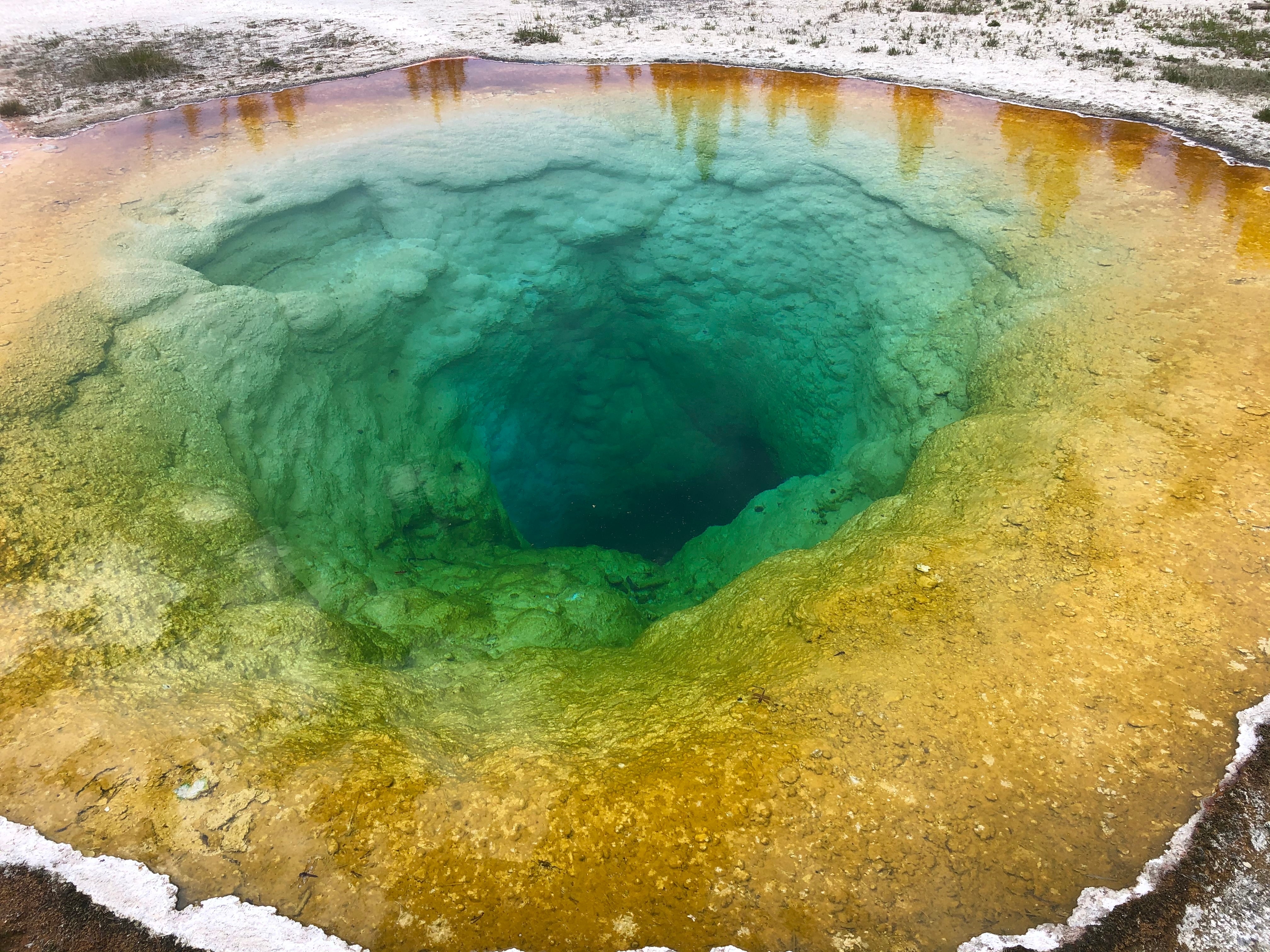
Yellowstone National Park's breathtaking Morning Glory Pool, photographed on June 27, 2021, was the highlight of a special, multigenerational trip. My father, my son and I embarked on this memorable adventure to share camping, fishing and hiking experiences.
One of our goals was to immerse ourselves in the unique geological wonders that define this part of the state. Yellowstone offers unparalleled access to geothermal features, an extraordinary sight we don't encounter in our typical outdoor activities in Sublette County.
The Morning Glory Pool perfectly exemplifies the powerful, dynamic forces operating beneath the earth's surface. Its deep, azure center and the surrounding rings of vibrant, colorful bacterial mats create a striking spectrum — from deep emerald to fiery yellows and oranges. This breathtaking artistry serves as a profound reminder that Mother Nature is the most masterful and original artist of all, continually crafting masterpieces that human efforts cannot replicate. Since every fluctuation in temperature or mineral content produces new colors, encountering these natural wonders is always a humbling and unique experience with the planet's creative genius.
Double the pleasure
By Robert Gagliardi, Wyoming Wildlife associate editor, Cheyenne
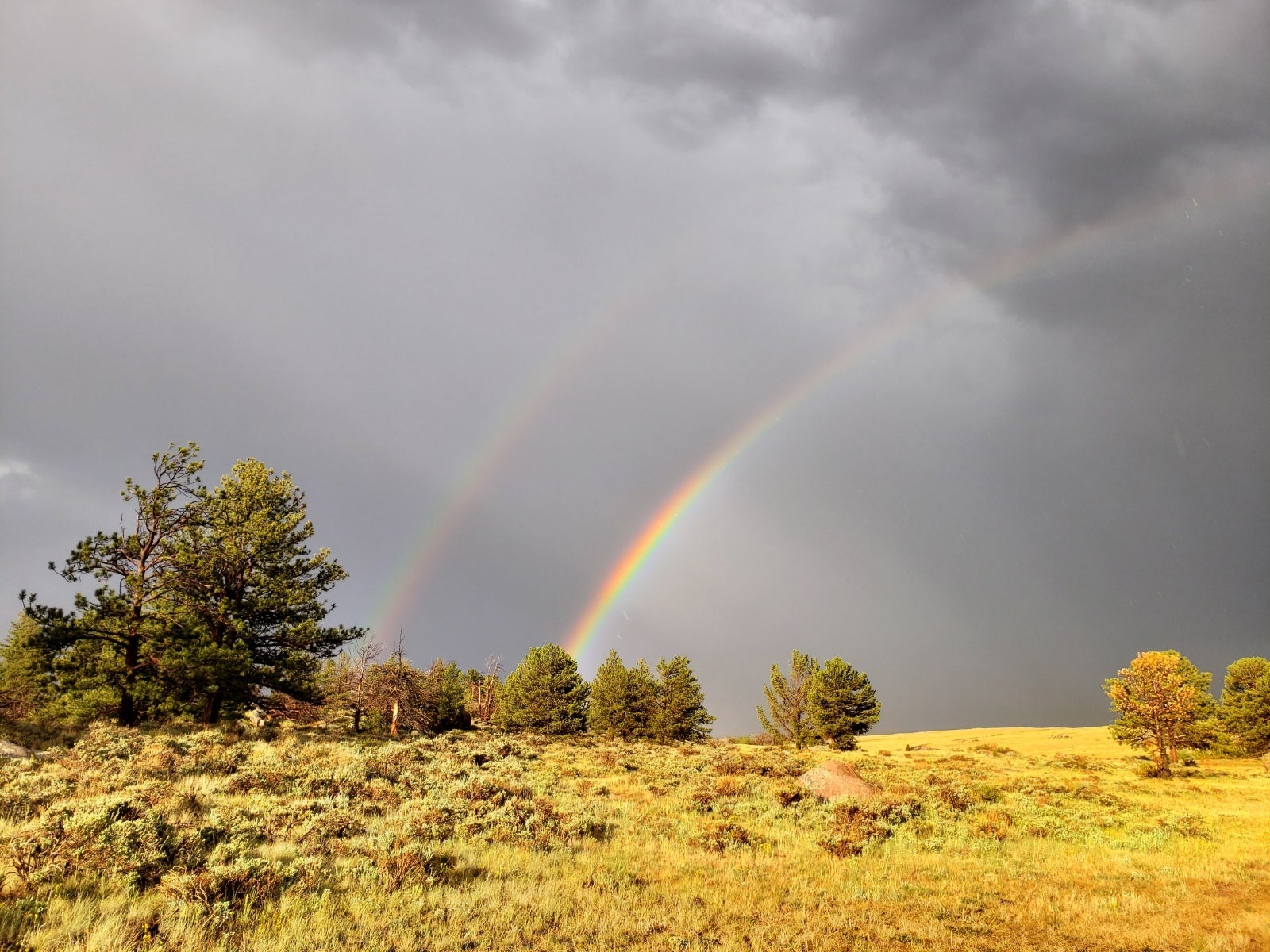
On a camping trip in July 2022 in the Pole Mountain area between Laramie and Cheyenne, I was chased off a string of beaver ponds due to incoming thunderstorms. Although the fishing was good and I wanted to keep going, it wasn’t worth the risk of getting caught in the rain and potential lightning. I made it back to camp relatively dry and waited out the storm in my camper.
The storm lasted about an hour, and I used that time to take a nap. As I woke up, clouds were still in the area, but the sun popped out at camp. I ventured outside, and the first thing I saw was this double rainbow. One was a lot more vibrant and visible than the other, but the contrast of colors based on the sun shining at camp, the dark skies near the rainbows and the rainbows themselves not only captured a beautiful scene, but a wide array of colors. I felt fortunate to see this and capture a photo or two. As a superstitious angler, I hoped this would bring me some luck. I returned to those same set of ponds later in the day and did quite well.
Magnificent monarch
By Mark Nelson, former chief of planning and special projects (retired), Cheyenne
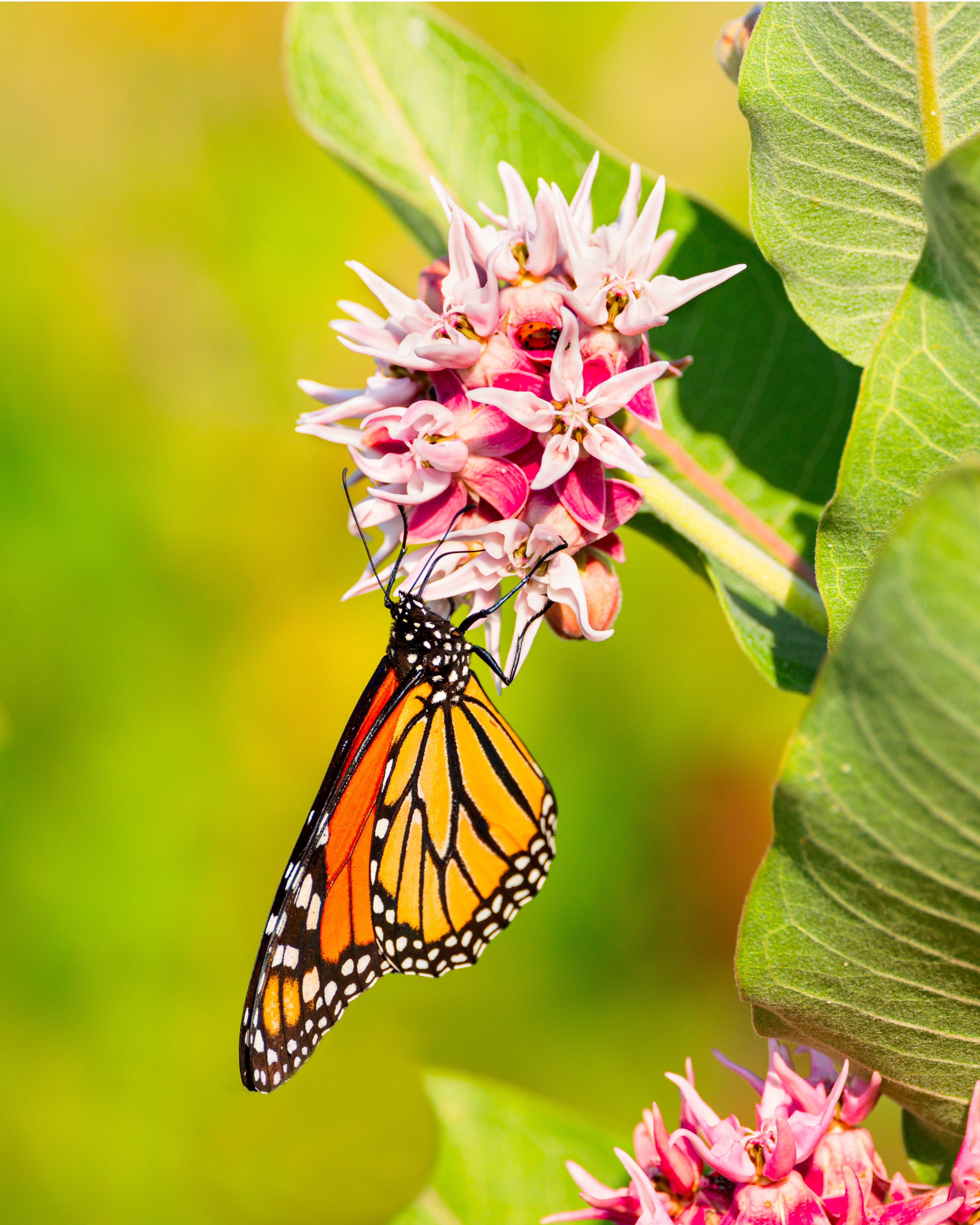
I was out on an August morning along Horse Creek in southeast Wyoming, camera in hand, looking for opportunities to photograph birds. I walked by a patch of milkweed and found several butterflies on the plant’s flowers. At first glance, I didn’t know if these were monarchs or viceroy butterflies as they look alike. Upon closer inspection, I saw there was no black band extending across the lower wing. The absence of this band confirmed the species were monarchs.
I liked how the morning light gave a warm glow to the flowers and butterflies. I found one monarch that gave a nice pose and snapped several shots. The color and the patterns on the insect’s wings reminded me of the stained-glass windows in my church. While pleasing to the human eye, I knew the bug’s coloration warns predators that snacking on this butterfly will leave a bad taste in its mouth and can be toxic.
I also liked how the milkweed’s pink flowers seemed to coordinate with the orange of the butterfly. The monarch and the milkweed have a close relationship. The monarch only survives with access to this plant, as it is the only host where the female lays eggs and the caterpillar can feed. Feeding on this plant gives the larva the toxins to help ward off predators and the toxins remain in the adult butterfly. The nectar also supplies the adults the energy needed for their long migrations.
Spring pheasant
By Mark Nelson, former chief of planning and special projects (retired), Cheyenne
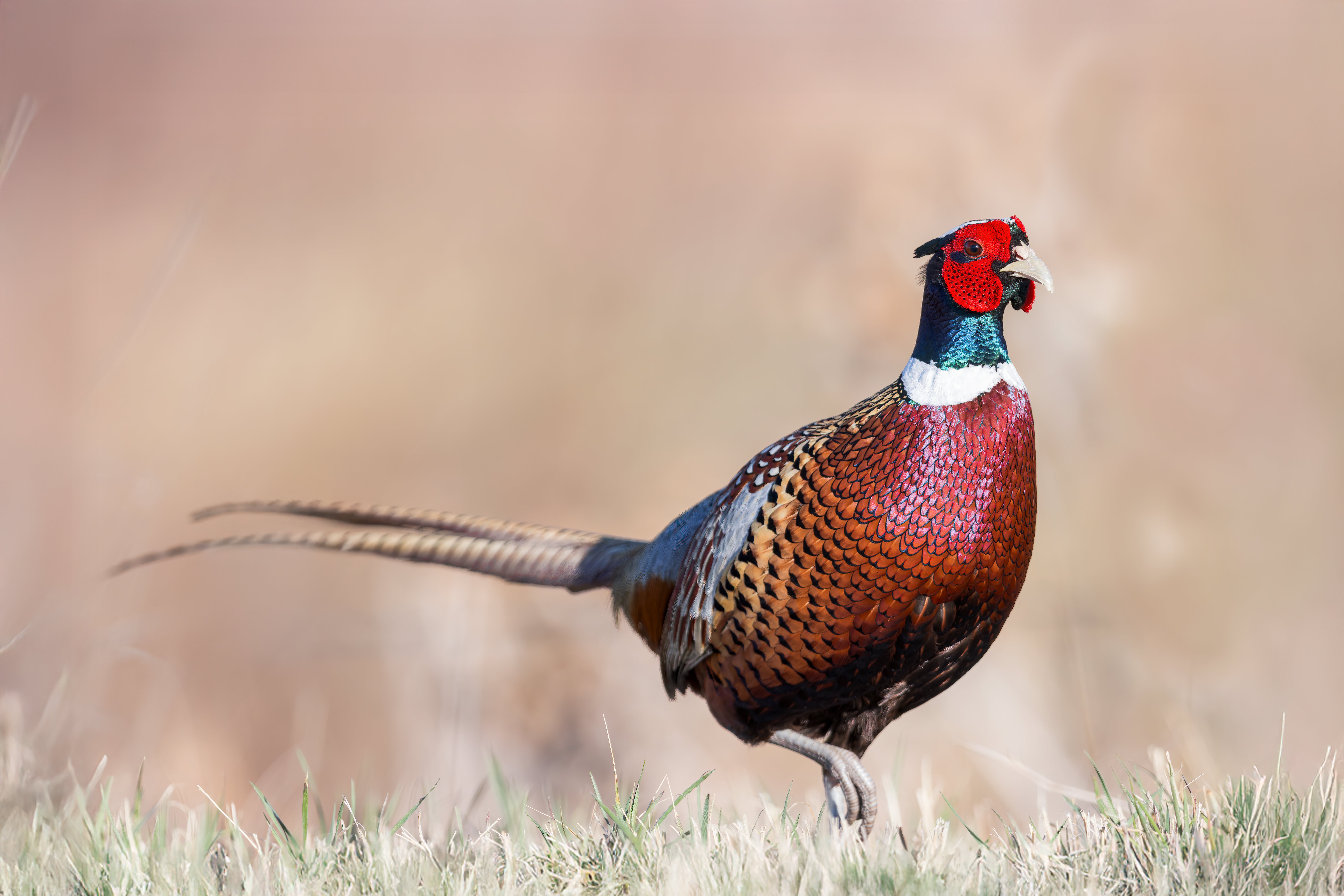
This male ring-necked pheasant came out of heavy cover on the Table Mountain Wildlife Habitat Management Area near Torrington as the sun peeked over the eastern horizon. Even if it were bedazzled in gems and jewels, it could not have radiated more vibrant colors than its feathers at that moment. The red wattles around his eyes, the violet green on his neck and the iridescent copper and gold breast all shined in a kaleidoscope of color.
This late-April encounter made my mind fast-forward to the fall when I would replace the camera in hand with a 12-gauge over and under shotgun. My mind also harkened back to past pheasant hunts when I nearly stepped over these colorful birds before they burst into the air with their characteristic cackle. I still don’t know how a bird, adorned with such color, can be camouflaged in the dried and brown grasses of fall.
This bird, native to Asia, was brought to America in the late 19th century. They survived and reproduced so well that it wasn’t long until the first hunting season was established. While I’m not one for bringing exotic species into Wyoming, this is one exception with which I have no problem.
Fifty shades of blue
By Amy Anderson, terrestrial habitat biologist, Lander
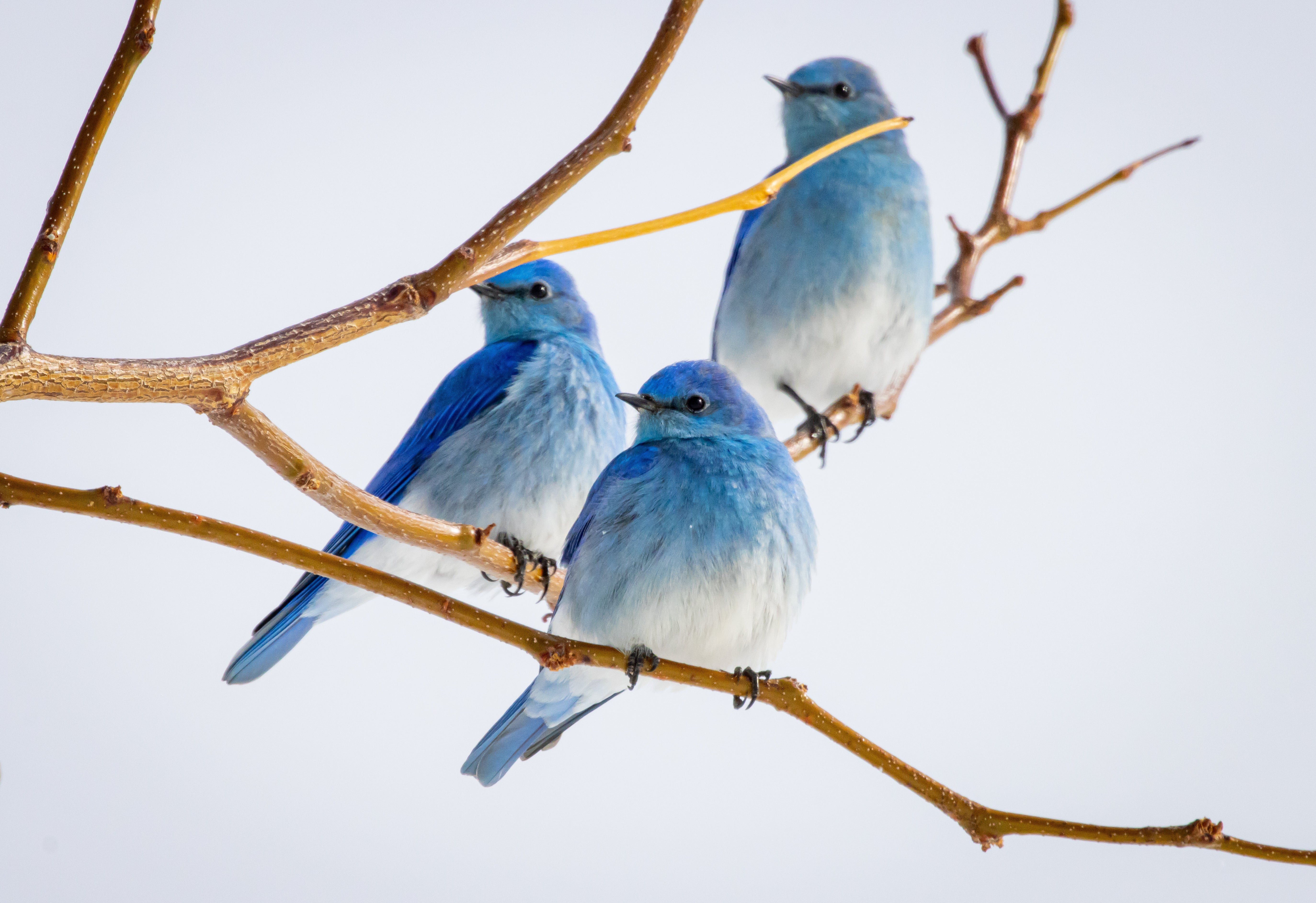
There are several occurrences I look for each year as harbingers of the approach of my favorite season — spring. One of those is the first flowers of the year, which I usually see when I’m out in the early mornings checking sage-grouse leks in April.
The second is the arrival of mountain bluebird males. It’s usually toward the end of March that I see the first flash of bright blue.
This particular morning was frosty and foggy following a snowy night. I heard there were bluebirds in Lander, so I went out early to see if I could catch them all fluffed up against the cold. Boy, did I get lucky to find three birds perched together and chilled enough to let me snap their photo. I call this one, “50 shades of blue” because it seems like about every blue on the spectrum made an appearance in those gorgeous feathers.
Red Canyon
By Amy Anderson, terrestrial habitat biologist, Lander
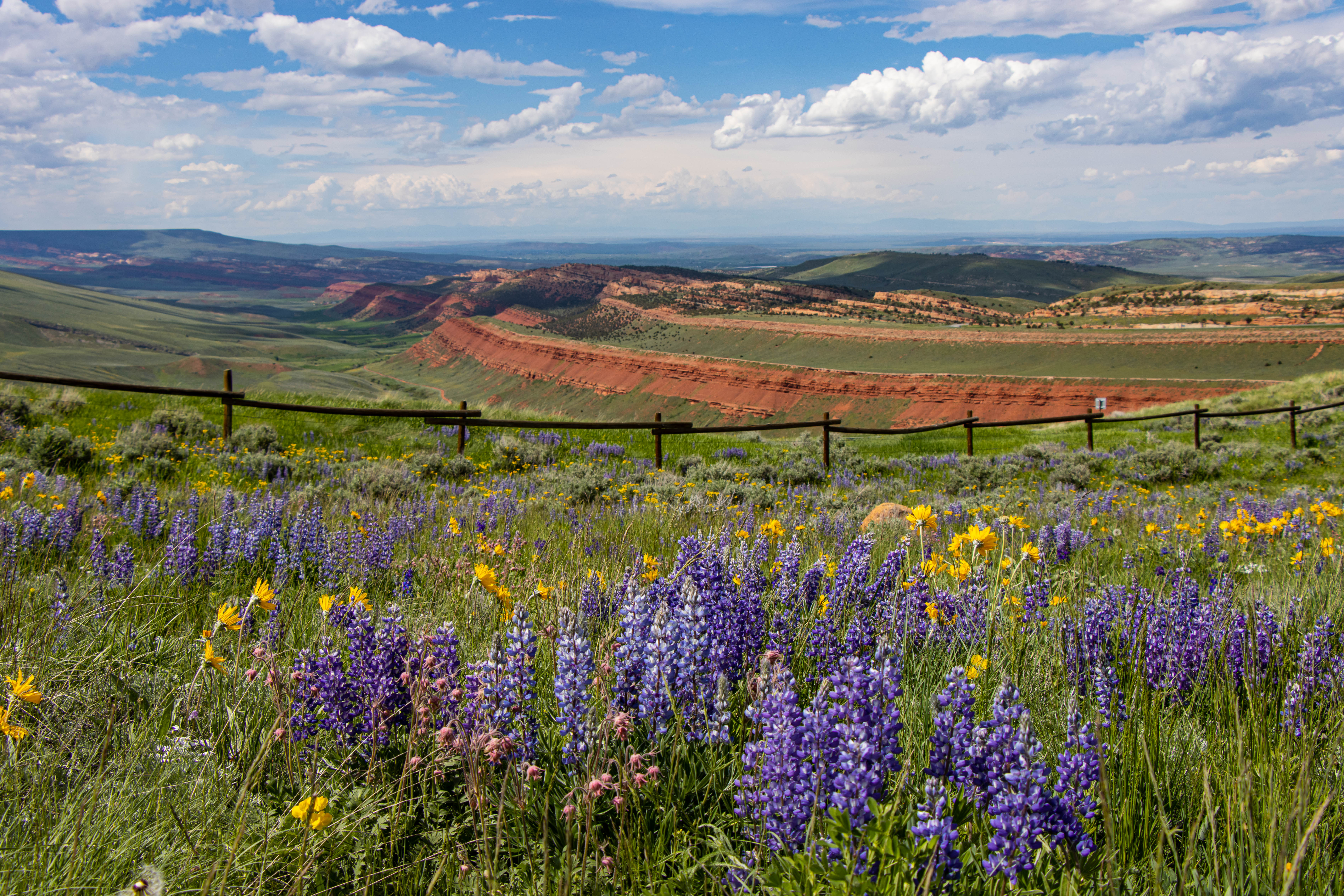
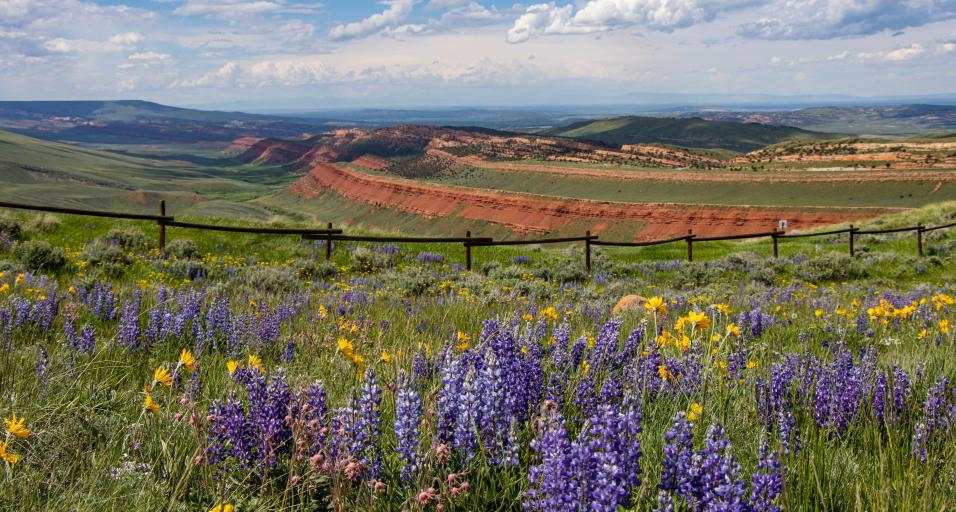
Second only to the Tetons and maybe Devils Tower, I would hazard to say Red Canyon near Lander is one of the more recognizable landmarks in Wyoming. I am lucky that my work takes me past it a few times a week.
I have photos of the canyon in every season, and I always find it beautiful, no matter what season it is dressed up for. Last spring, Red Canyon was extra dressed up in spring wildflowers. I found a vantage point that allowed me to capture about every color of the rainbow. The bees were buzzing, birds were singing, and the spring sunshine was warm on my back while big, puffy clouds floated by. The scene was idyllic.
I found myself wishing that old fence wasn’t there, but I decided it gave the photo a little something Wyoming-esque. Some of the flowers making an appearance in this photo include: lupine, arrowleaf balsamroot, prairie smoke, Montana sweet pea, hawksbeard and American vetch.
Tantalizing tanagers
By Amy Anderson, terrestrial habitat biologist, Lander
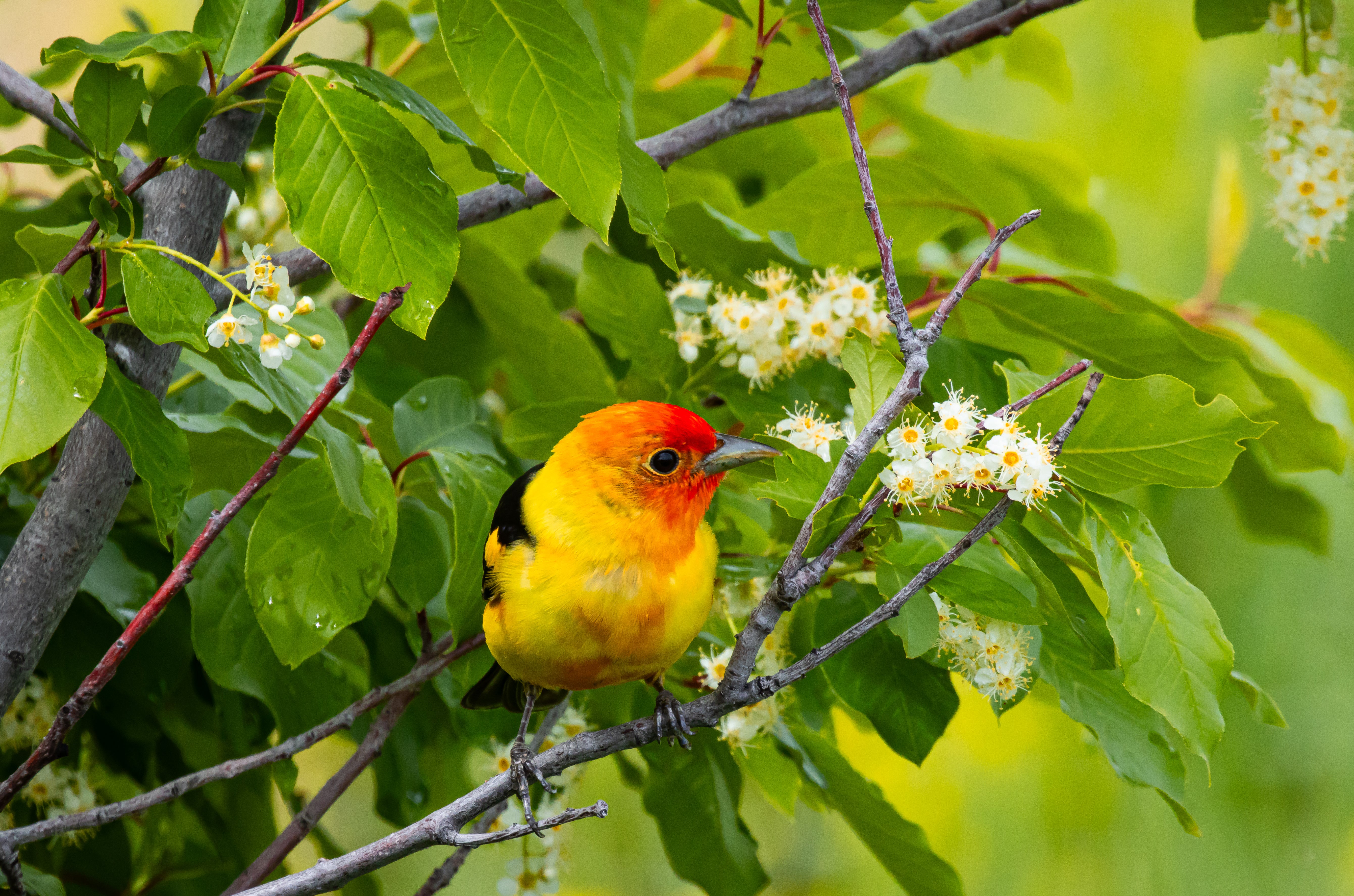
If someone asks me what my favorite bird species is, I have a hard time choosing just one, but the western tanager would certainly be on the list. The first time I saw one was in Yellowstone National Park, and I thought it looked like it belonged in the tropics rather than in the pine forests of Wyoming.
A friend once told me their call sounds like an angry robin, and I love that description. On the day I took this photo, after a significant rainstorm, a huge flock of western tanagers was hanging out in Lander while the chokecherries were blooming. They were feeding among the blossoms, catching bees and other insects that were visiting the flowers. The bright reds and yellows of a flock of tanagers is something wonderful to behold. Every year I go to this same spot looking for them, and once in a while I get lucky and see one or two, but I’ve never seen as many as there were this day — thanks to a rainstorm.
Turkey vulture
By Grant Frost, senior wildlife biologist, Cheyenne
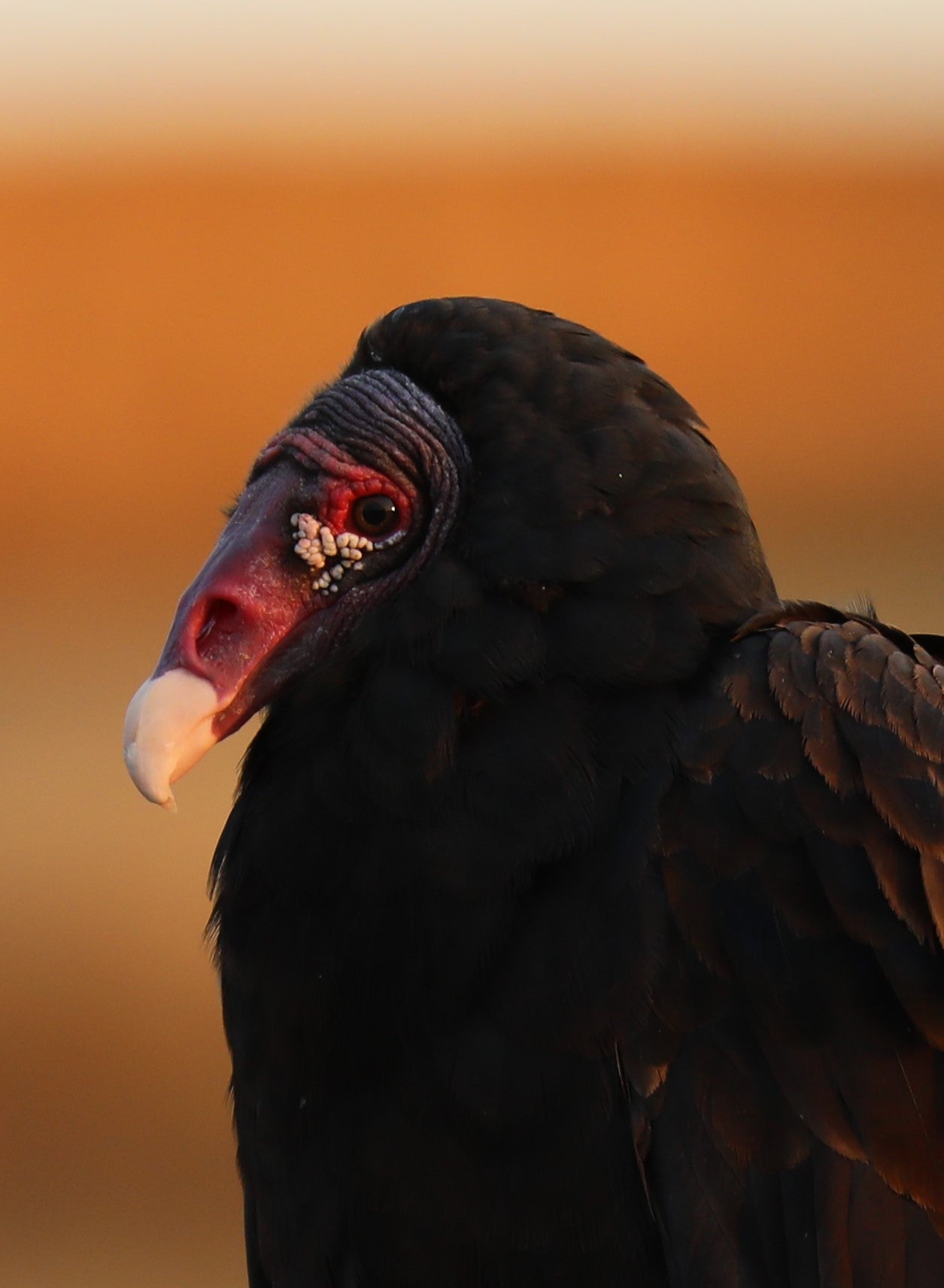
Each species of bird, and even individuals within a species, reacts differently to the close presence of humans. I’ve had brown creepers almost land on my foot and red-breasted nuthatches have fed from a birdfeeder I was hanging up. On the flip side, belted kingfishers are always frustrating because they are so wary and scold you as they fly away.
Raptors, like this turkey vulture, are usually among the wariest of birds. But TVs, as they are often called, sometimes seem to want to warm up or wait for thermals to start rising so they can fly with less effort.
After visiting Rock Lake southwest of Wheatland early on a September morning while driving out to the paved road, I saw this vulture sitting on a fence post and expected it to fly. Luckily, for whatever reason, it stayed until I was opposite it. The sunrise light on the haystack behind made for a nice background, but the details on the vulture’s face are a treat to see this close up. Vultures get a bad rap, but they are important for cleaning up carrion, and the bare head is part of the adaptation needed to do that.
This is also a lesson in how vehicles can be used as mobile blinds, as wildlife will often allow a closer approach than a human on foot.
Lenticular clouds
By Grant Frost, senior wildlife biologist, Cheyenne
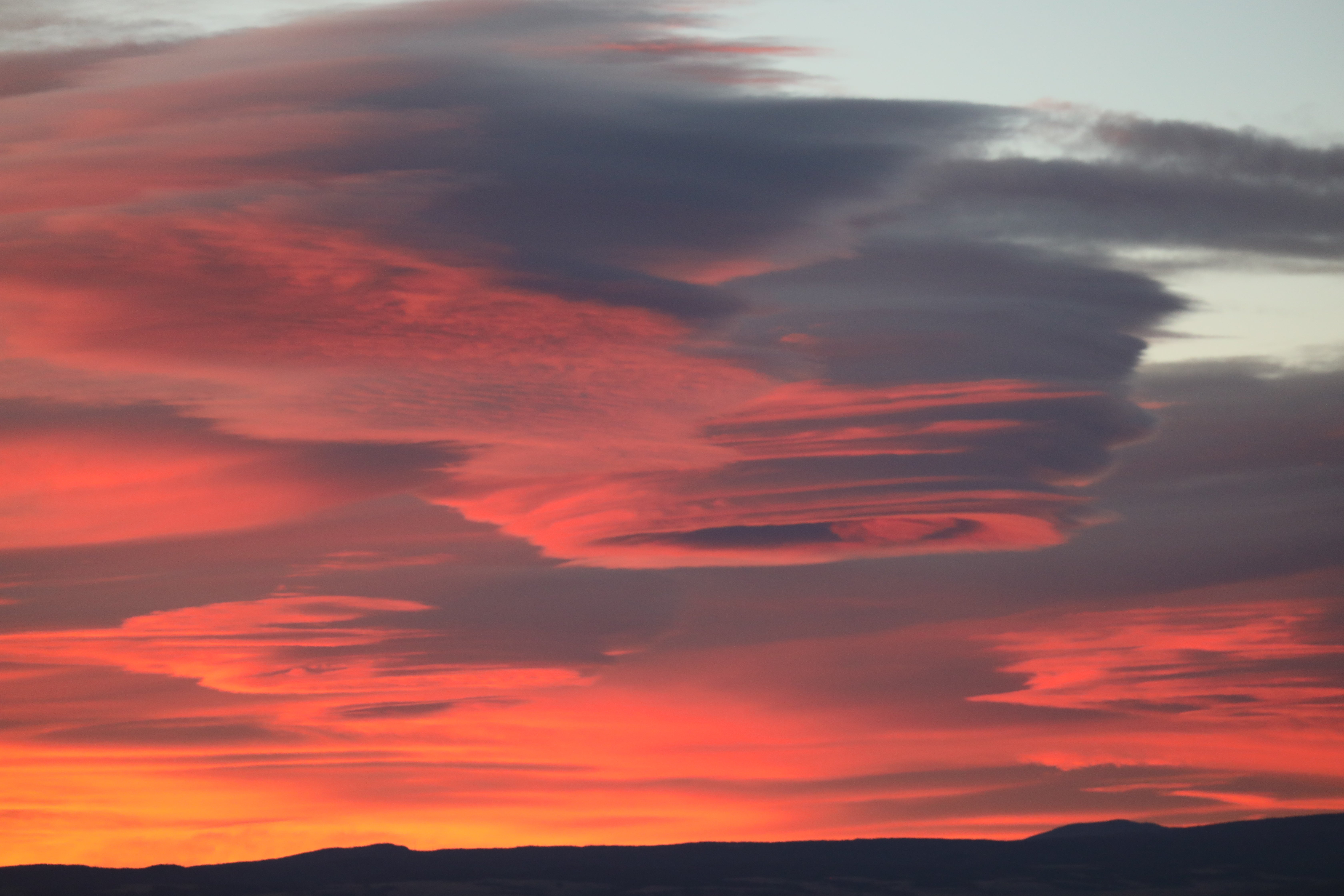
I visited Lake Hattie west of Laramie late last fall to try to see some rare bird species that visit there. Concentrating on looking north and west through a spotting scope in the wind, I was shocked when I looked up for a second to see what was evolving behind me. Lenticular clouds like this are a sign of strong winds aloft, especially on the leeside of mountains. Combined with the low angle of the sunrise light, it revealed a structure and complexity in the clouds that is only visible for a short time each day.
I took a break from birds to admire this scene and take a few pictures. It extended across much of the sky on both sides of the view, with every kind of red, orange, yellow, purple and blue that seemed possible. Within about 10 minutes, though, much of the color was gone, and I was just left with pictures and memories that can tell part, but not all, of the story.
Busy bees
By Phil Damm, wildlife biologist, Baggs
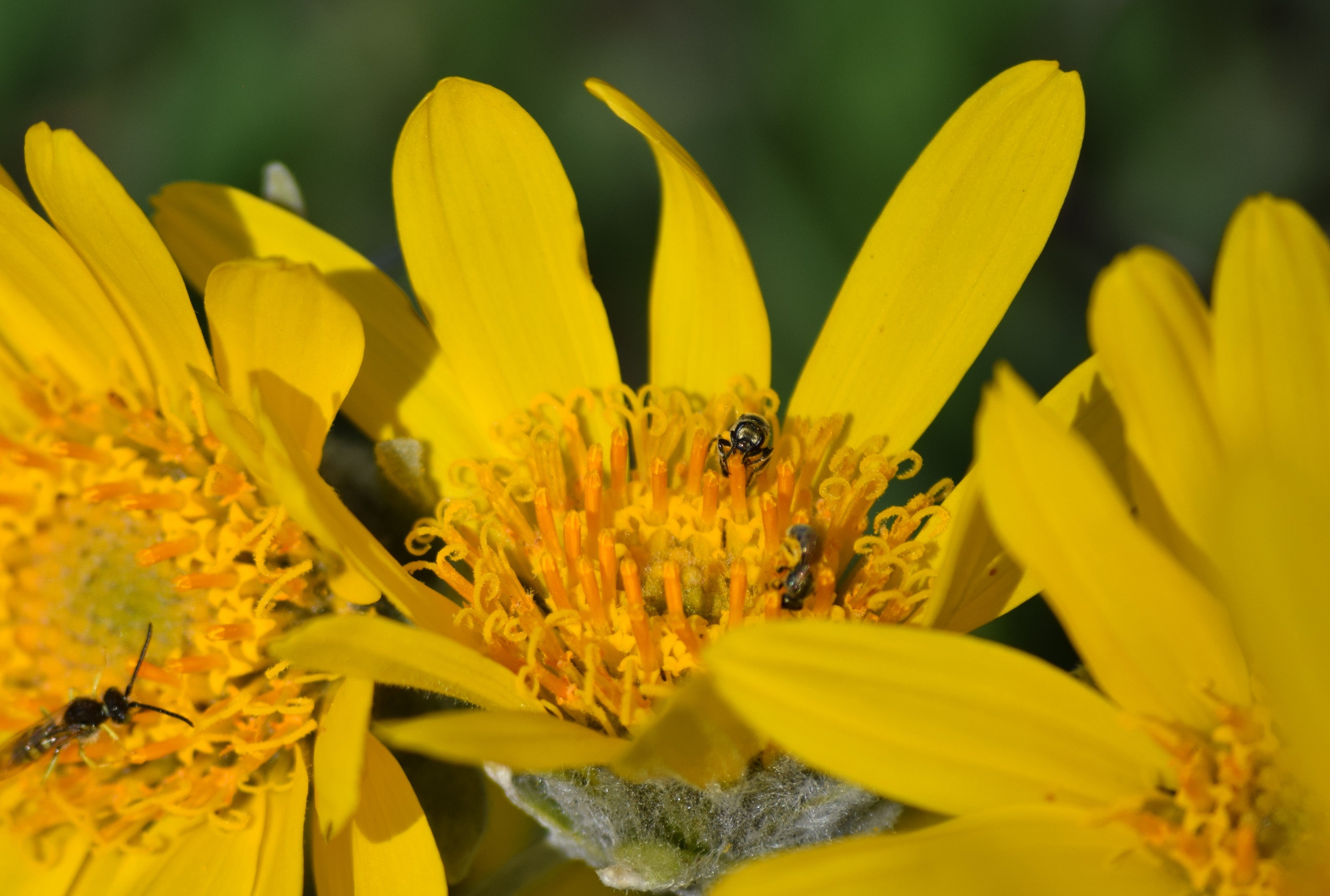
After an early morning of counting and photographing a sharp-tailed grouse lek near the species-rich Battle Mountain area of southern Wyoming in mid-May, I realized along the walk back to the truck how many flowering plants were blooming out of the deep, rich soils found there. An important forage species for the many mule deer, elk, and pronghorn living in the area, this arrowleaf balsamroot caught my eye. It wasn’t until after I began photographing that I realized the flowers were busy with these little pollinators, providing resources for the very insects that soon-to-be hatched sharp-tailed grouse chicks might consume.
Colorful work
By Ryan Snell, game warden, Elk Mountain
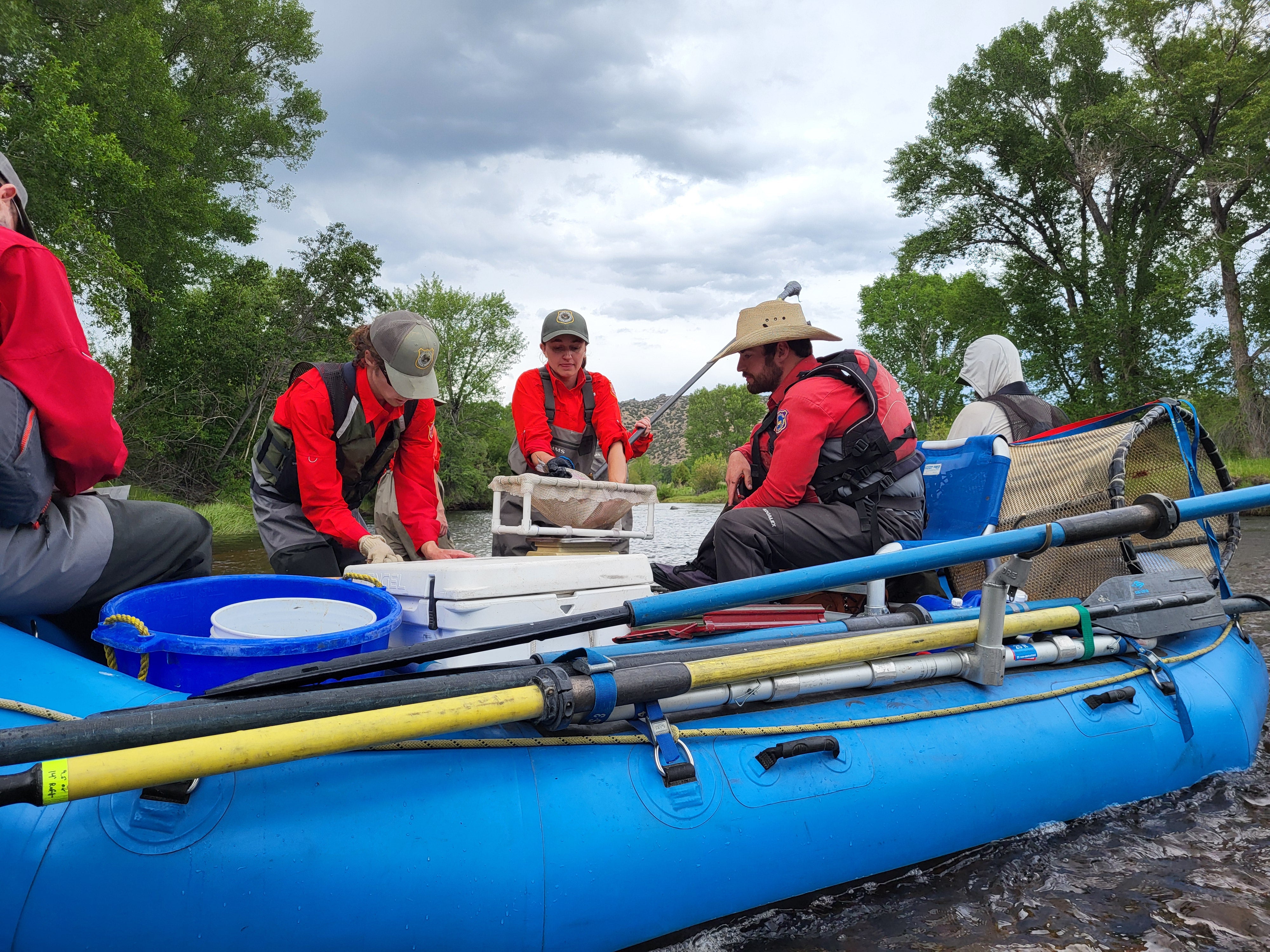
In late June last year, I helped the Laramie Region fisheries management crew sample the Encampment River. It is quite the team effort to sample these rivers, and we had employees there to help from multiple divisions, along with volunteers from Trout Unlimited.
One of the unique parts of sampling larger rivers is the necessity to use rafts. While this creates some unique challenges, like netting fish while trying not to fall out of a raft that’s often spinning and bouncing, it is a great way to see the river and learn about the types of aquatic habitats that hold many fish. One of my favorite memories from this day was how one of the fisheries technicians compared netting fish from the raft to an Olympic sport. She coached me in the specific techniques that would help me net more fish, such as trying to net them headfirst or how to net multiple fish at the same time.
One might not expect it, but it takes a fair bit of stamina and skill to net fish efficiently. I left that day tired from all the netting and rowing, but feeling fulfilled knowing I helped collect data that would be critical to the management of the river. The day was full of beautiful colors, from the stunning colors of the trout we sampled to the red shirts working from bright-blue rafts and the beautiful green foliage of summer.
Fly catcher
By Stephanie Estell, former statewide information specialist, Cheyenne
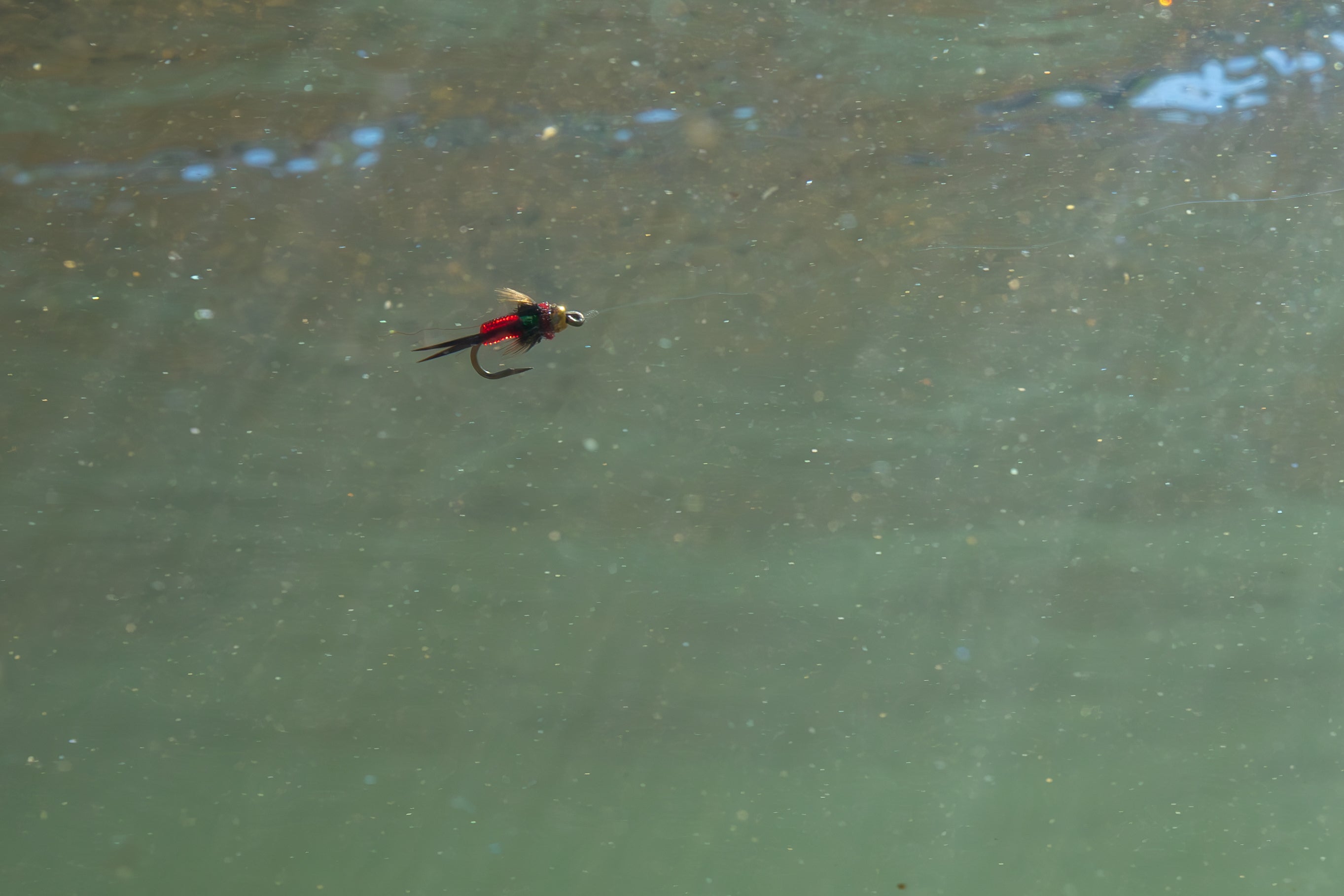
In June 2024, I attended a Game and Fish fishing-focused family camp at the Whiskey Mountain Conservation Camp near Dubois — a perfect opportunity to try the department’s newly acquired underwater photography equipment. As participants learned to cast and reel, I explored different angles and tried to take advantage of the unique perspective.
Since I could see underwater, I wanted to know what the anglers’ flies looked like to the fish they pursued. Of all the flies I tried to document, the red wiggler came out the sharpest and was stark against the background of open water. One of the biggest challenges in creating this photo was not being able to see what I was capturing as I took the shot. With the setup I had, it was a matter of choosing the settings, sealing the gear and then point, shoot and hope.
It wasn’t until I was back at the lodge with my laptop that I knew which photos had worked and which hadn’t. While I can’t quite see how this fly might look like a delicious lunch to a trout, I’m glad I was able to capture how bug-like these tools can look underwater and hopefully give anglers new insight into what they’re throwing into the water.
Still sculpin
By Stephanie Estell, former statewide information specialist, Cheyenne
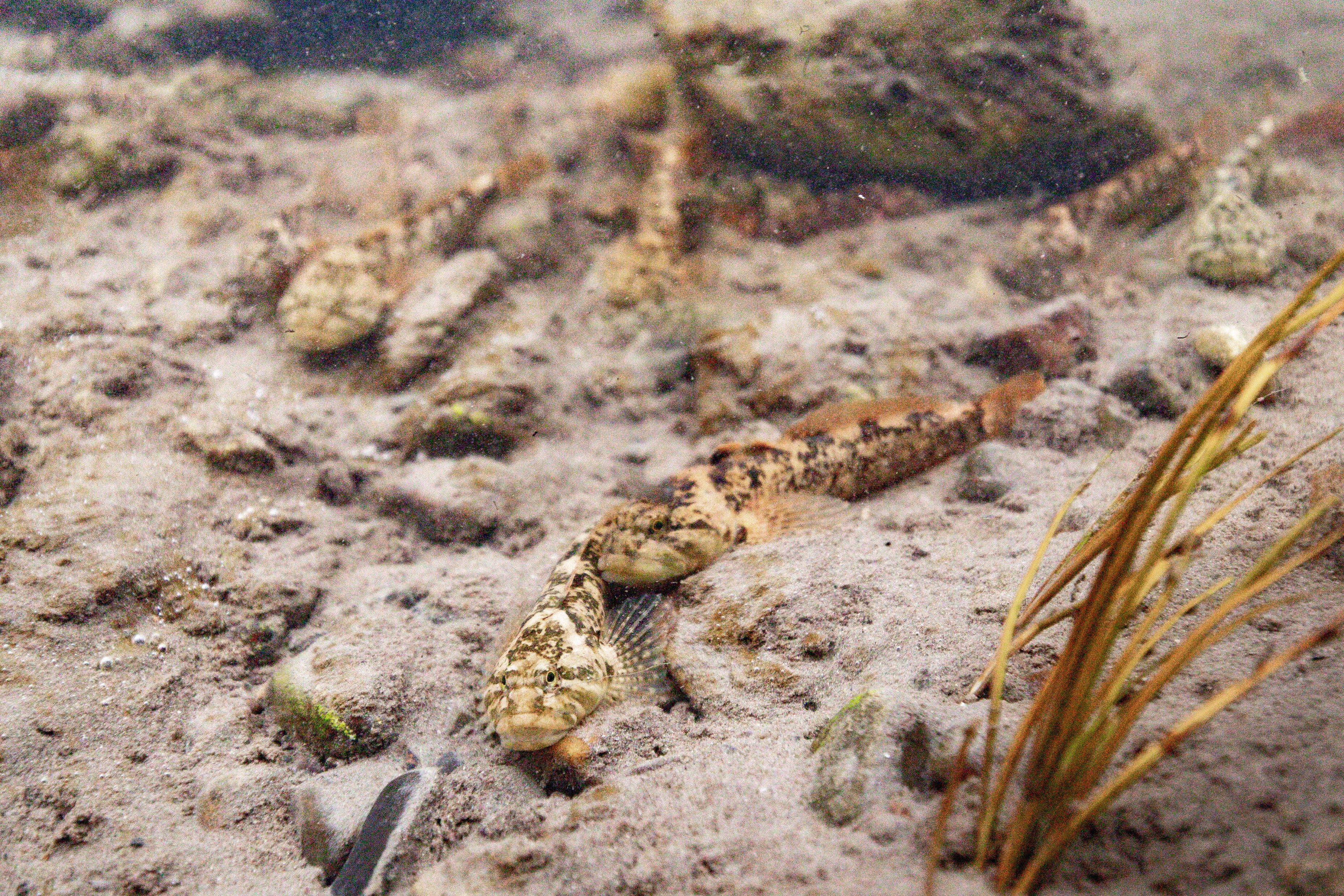
Fish in their natural habitat are, generally, incredibly difficult to photograph. Not only do you need underwater photography equipment, you need to be at the right place at the right time, and be quick enough to catch them in frame. However, with a slow subject and little help from your friends — fish biologists, in this case — these photos get a little easier to capture.
In summer 2025, I joined some members of the Jackson Region fisheries crew for field work in the Greys River drainage. The crew was electrofishing as part of a population study, and its catch included a handful of species from trout to sculpin.
Once the fish were counted, they were released from their holding pen back into the stream. The trout high-tailed it out of there, zooming off before I could get much of a shot, but the sculpin quickly settled to the bottom of the stream, which gave me time to get some of them in focus. While their placement in the stream bed wasn’t quite the luck of the draw, their willingness to stay still for a few minutes gave me the chance to peek into their world and see them in their natural habitat. While this is usually the case when it comes to birds, mammals and other land-dwelling creatures, being able to view fish this way was a fantastic privilege.
Stormy skies
By Victoria Gostas, wildlife division business office coordinator, Cheyenne
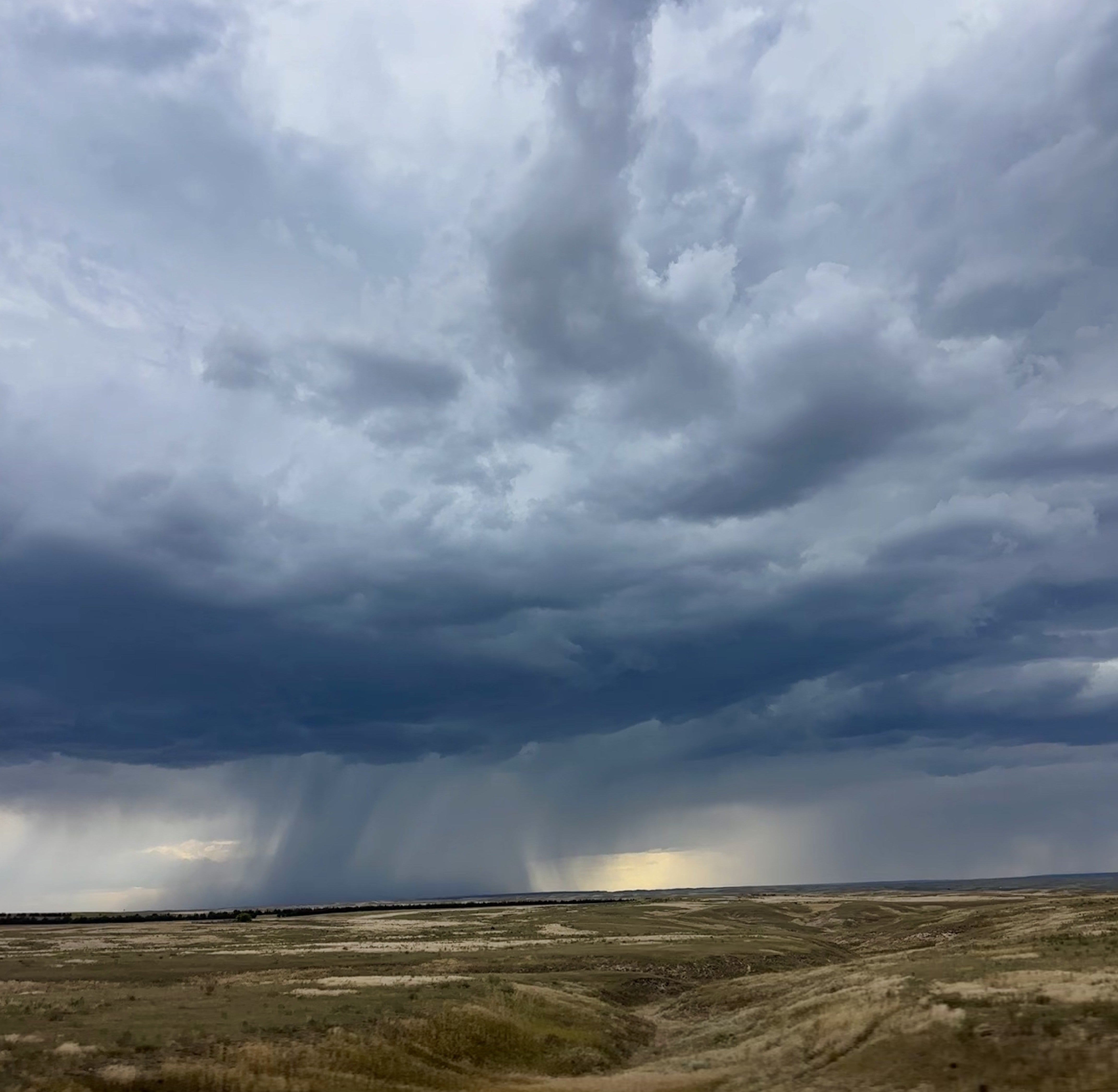
My partner, Ben, and I saw this storm develop over 100 miles as we drove along the northern part of U.S. Highway 85 last summer. It was late afternoon when the clouds started gathering. The sky was clear and bright from our vantage point. Just north of Lusk, we noticed the temperature plummeted and the wind picked up. The clouds seemed to stop moving. It was almost instant. I caught the moment the rain dumped, which I assumed was a concentrated flash flood to our west.
The combination of this downpour, the prairie and the horizon really highlights the wide-open spaces we enjoy here. I get to see a lot of eastern Wyoming on my adventures with Ben. We take our time, usually hauling a Jeep home. It’s given me a deep appreciation for how dynamic the prairie is, especially in late summer. Storms like these are spectacular. I can usually count on looking west to see how dark the sky becomes as the clouds approach the Laramie Range. I’ve always loved the stark contrasts that come with downpours like these in the distance.
Skyline sage-grouse
By Stan Harter, wildlife biologist, Lander
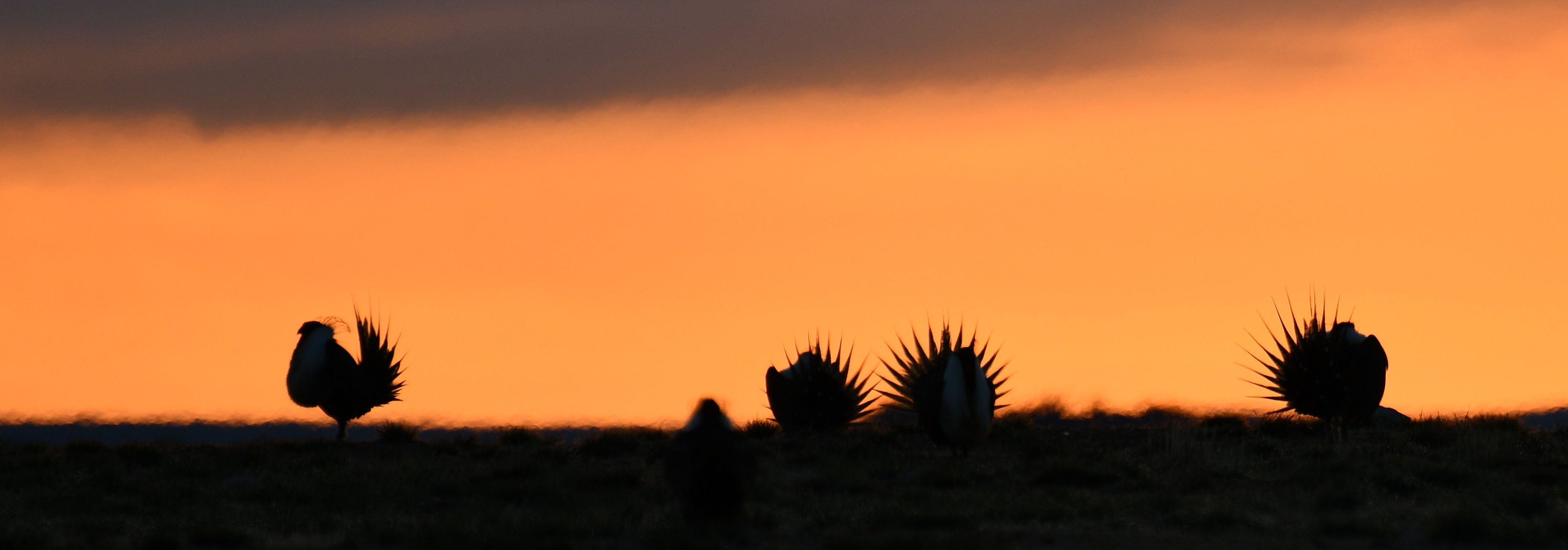
One of the premier work opportunities as a wildlife biologist in Wyoming is monitoring greater sage-grouse leks. On an early May morning in 2025, I made the final visit to a lek in central Wyoming where more than 100 males were observed twice that spring. On this particular morning, there were several males lined up along a ridgeline at sunrise. I was able to get several images of the tangerine-colored sunlight sandwiched between dark rain-laden clouds and the sagebrush and grass-covered ground around the lek with these males perfectly silhouetted in the dawn glow.
This image captures the male sage-grouse courtship display as each male performs a methodical and elaborately choreographed dance and then turns about 90 degrees and repeats it — as seen by each of these four males facing four different directions. On this morning, there were at least 116 males directing their almost kinglike plumage and tones to an audience of females, which remained hidden to the observer.
Bigtooth maple
By Stan Harter, wildlife biologist, Lander
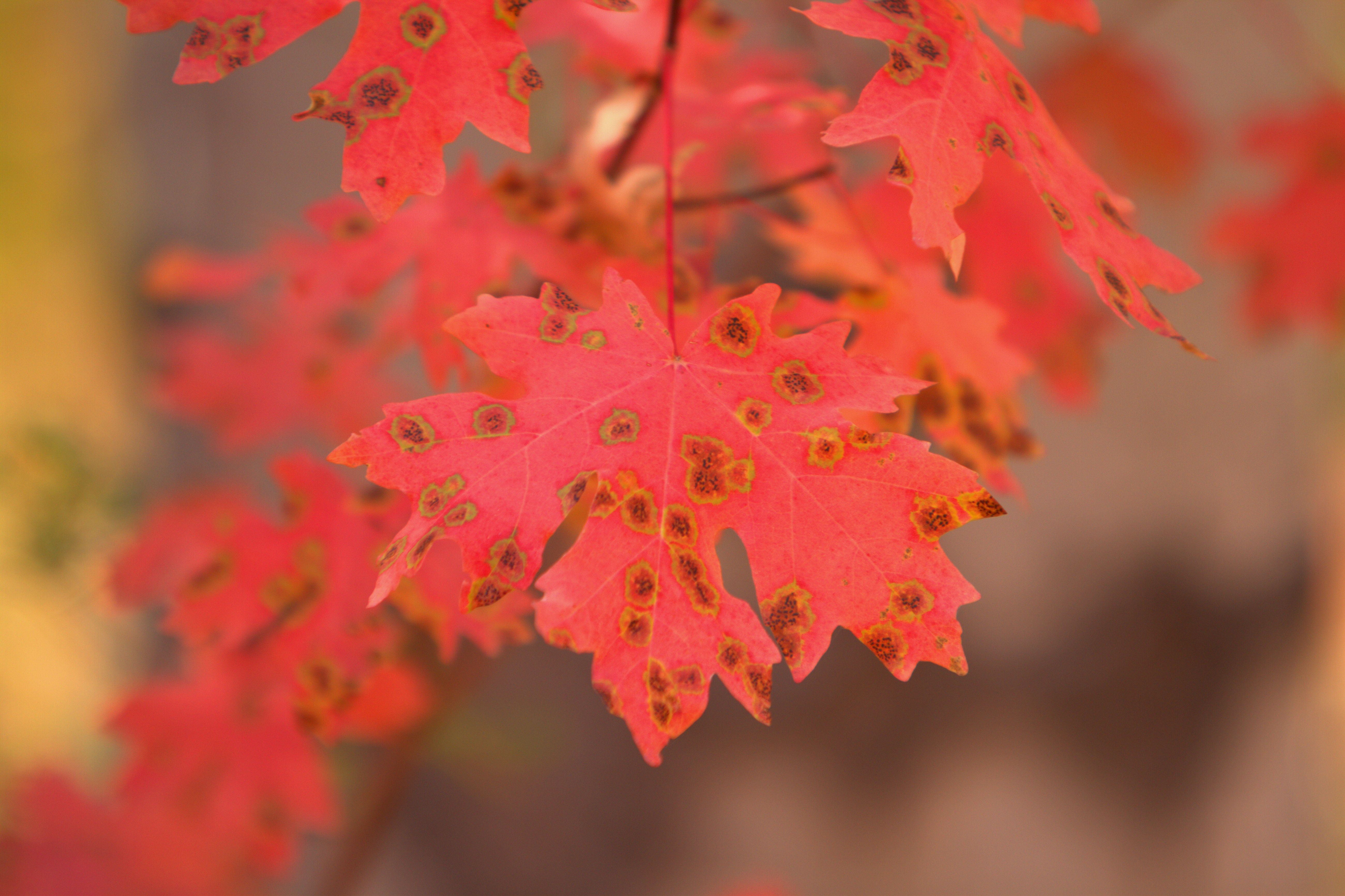
During a fall moose hunt in the Wyoming Range in 2012, I decided to take a break to visit friends who lived in Alpine that year. As the autumn weather strengthened in late September, leaves of deciduous trees and shrubs were erupting in extravagant displays of color across Wyoming. However, the vigor of those colors intensified the nearer I got to Alpine along the Greys River and Snake River drainages. One of the most impressive conglomerates of color was produced by the extensive number of bigtooth maples (Acer grandidentatum) found along the roadsides in each river drainage and their tributaries, with colors ranging from brilliant crimson red to burnt orange. The scarlet reds of the leaves in this photo were accented by yellowish rings surrounding brown centers that were likely due to disease or insects.