
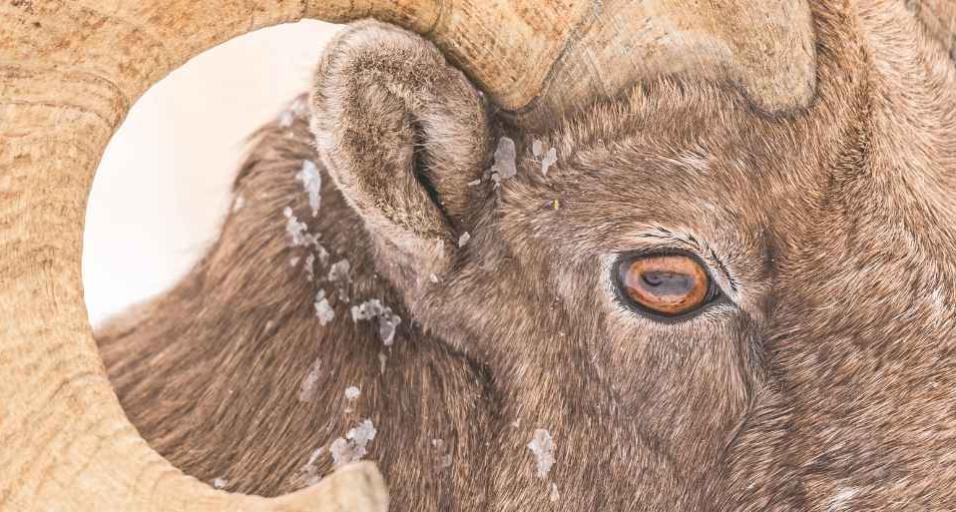
Animal adaptation is an ecological arms race. To survive, every species on Earth had to change as the environment shifted, whether through the yearly cycle of seasons, periodic drought or catastrophic geologic and weather events.
All species have adapted to find food and avoid becoming food. Bighorn sheep are one example of a species consistently adapting as the environment and circumstances change. Constrained by predators and the landscape, these animals have adapted to find forage islands amid the rocks and avoid becoming prey. Their low center of gravity and split hooves, cushioned with a soft, grippy inner sole, enable them to grab and balance on tiny ledges. They have eyes on the sides of their head, giving them monocular vision and limited blind spots. Horizontal pupils act like a camera aperture to focus light, enhance their already incredible peripheral vision and detect movement. When bighorn sheep bend their necks to eat, their eyes act like gyroscopes, staying parallel to the ground so they can be on the lookout for danger, even when grazing. However, predators have learned to chase bighorn sheep. The sure-footed sheep responded by escaping across treacherous, rocky cliffs out of reach of even the most agile pursuer.
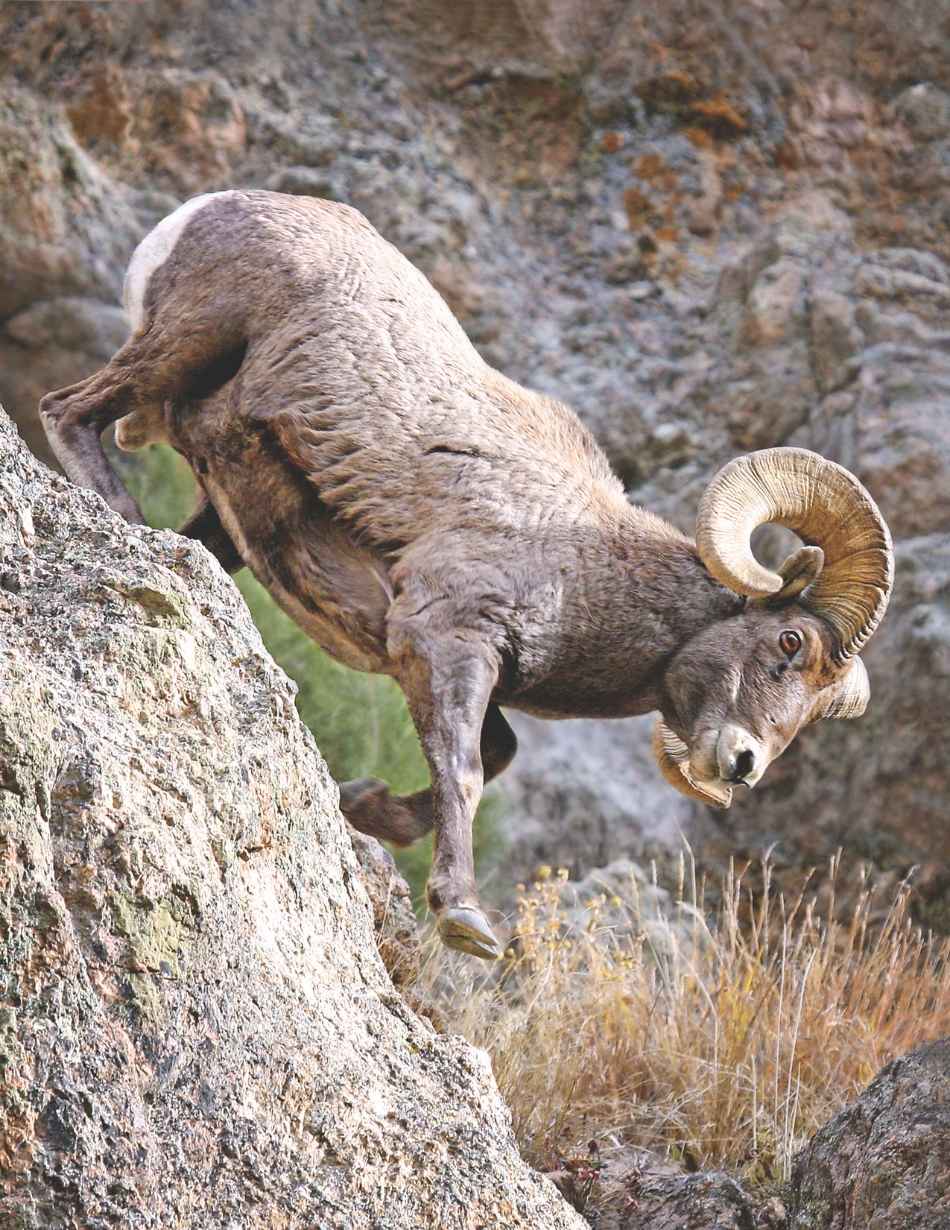
Bighorn sheep's low center of gravity and split hooves, cushioned with a soft, grippy inner sole, enable them to grab and balance on tiny ledges. (Photo by Vic Schendel)
Humans are no exception to the never-ending requirement to adapt. As apex predators, humans are experts at migrating, planning for the future and engineering the landscape to be more fruitful and predictable. People have spent generations adapting to their environment in parallel to the quarry they pursue, including bighorn sheep. Wyoming is a fantastic stage to watch the multi-millennia quest for human and nonhuman survival.
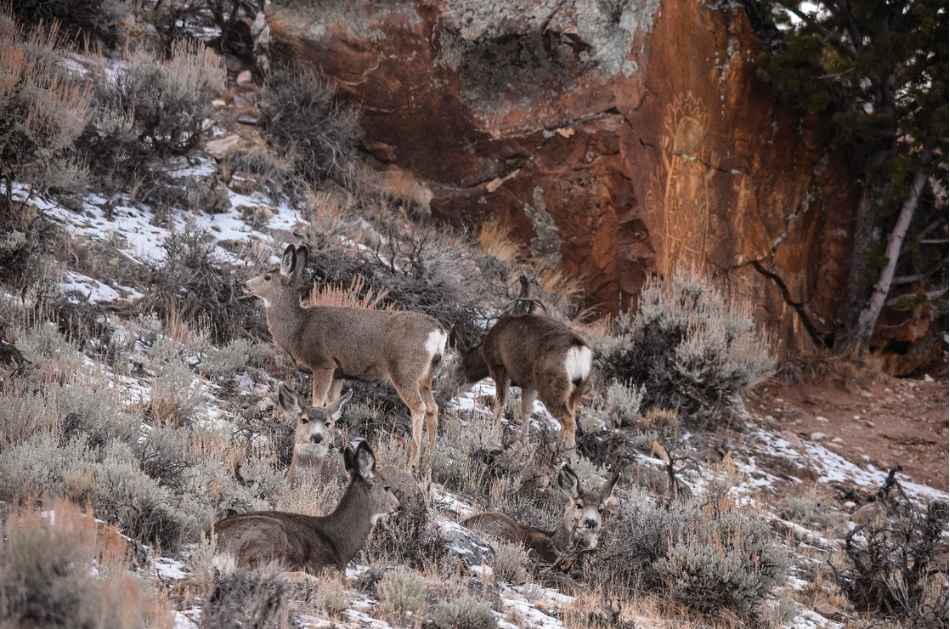
The Dinwoody petroglyphs, like those in the Torrey Valley near Dubois, are some of the oldest in Wyoming. Native American tradition recognizes them as places where spiritual power meets the physical landscape and often contain hunting motifs and animal depictions. (Photo by Wes Uncapher)
Prehistoric Silicon Valley
In the Absaroka Mountains in northwest Wyoming, a wealth of such prehistoric human activity is preserved in the archaeological record. It's a rugged, remote landscape carved by glaciers that melted long ago. It pastures some of the largest, non-feedground elk herds in the country and is home to not only bighorn sheep, but also grizzly bears, mule deer and dozens of Wyoming’s other charismatic species.
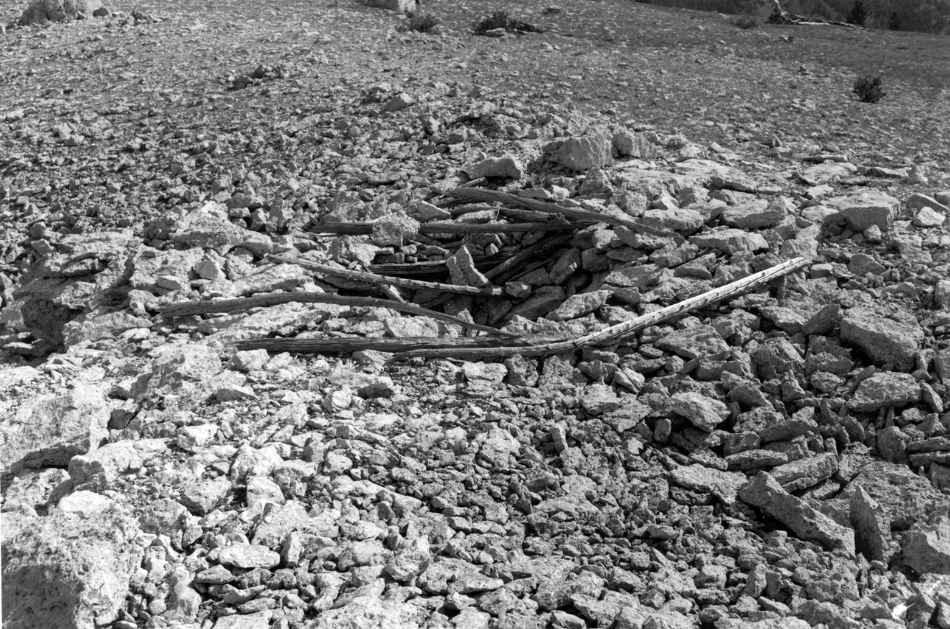
Hunters' blind in the slide rock above timberline. On Indian Point above the Lookingbill site. (Photo courtesy of the Paleoindian Research Lab)
Located around 8,600 feet above sea level in a perennially wet meadow overlooking several small drainages, the Helen Lookingbill site was occasionally occupied for more than 10,000 years. People used the location as a hunting camp between midsummer and early fall when they pursued deer and bighorn sheep. Wild game, however, was a secondary goal.
Prior to European contact, stone tools were a technology that served all aspects of life in North America. The Helen Lookingbill campsite is situated on an abundant chert outcrop where hunters quarried high-quality materials and chipped out thousands of tools, including knives, scrapers and spear/arrowheads. The main material for constructing these tools was a group of silica-based rock types with microscopic crystalline structures that could be shaped by an expert hand. These kinds of rocks, which include quartzite, chert/flint and obsidian, to name a few, are abundant in a variety of geologic formations in Wyoming.
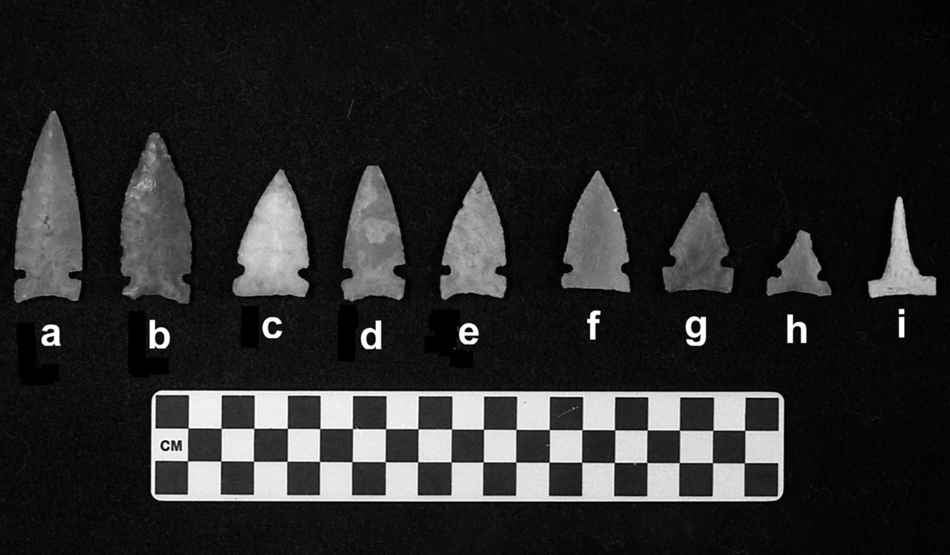
Lookingbill site Early Plains Archaic projectile point series illustrating blad resharpening and point recycling into nonhunting implements: projectile points (a-g), early-stage recycled drill (h) and late-stage recycled drill (i). The points are the age of the sheep bone bed pictured below. (Photo Courtesy of the Paleoindian Research Lab)
Stone tools traveled with hunters as they migrated throughout the year, following wildlife as they munched on the spring green-up, summer mountain-fare, fall crop and freeze-dried winter forage, often gathering many of the same plant species for their own pantries. Their portable, repairable and versatile toolkit provided the means for them to follow wildlife for generations.
Behavioral experts
Prehistoric hunters used traps to harvest animals throughout North America. Traps were implemented for a variety of big game species, including ungulates like pronghorn and bison, but also for smaller species and fish.
The Helen Lookingbill site is in close proximity to a number of what archaeologists call sheep traps. Similar to bison jumps, sheep traps exploit a familiarity with animal behavior coupled with landscape features to guide quarry into a bottleneck that prevents escape and facilitates a more efficient means of harvesting multiple animals at once.
The communal exercise began with a few hunters gently hazing a group of bighorns against a driveline constructed with rocks and logs along a ridgeline. At this stage, the sheep didn’t know they were being herded. The driveline would narrow as hunters continued to subtly pressure the sheep onward.
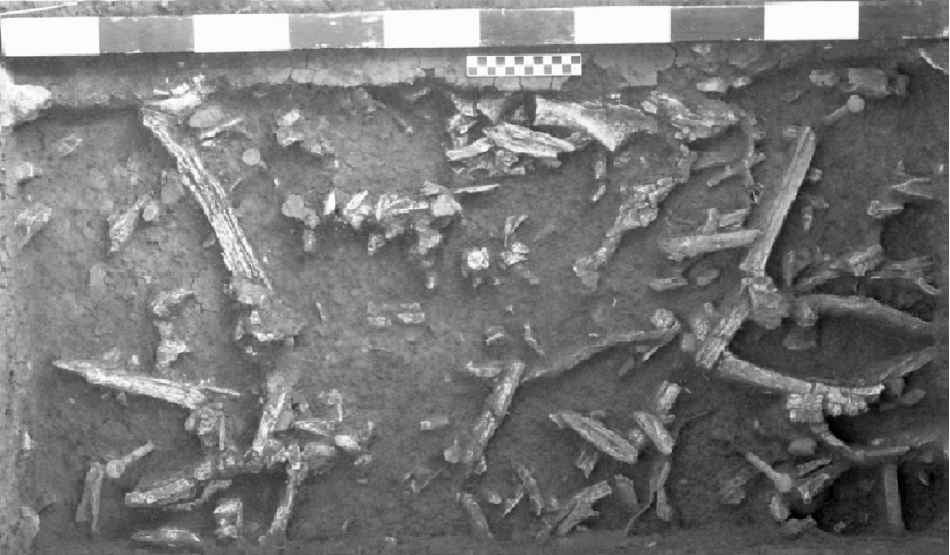
Portion of the Early Plains Archaic bighorn sheep bone bed at the Helen Lookingbill site.
On the last leg of the trap, more hunters would make a final press to scare the sheep up a ramp and into a rectangular corral with tall sides. These corrals typically had diagonal walls sloping inward, wider at the base and narrower at the top. This prevented the agile ungulates from jumping off the sides and out of the enclosure. When the sheep were corralled, the hunters barraged them with spears or arrows and harvested the meat.
Community cooperation
Communal hunting is a well-documented tradition in which humans pursued game using everything from traps to drives to fire management. For a long time, people have engineered the landscape to harvest multiple animals at once because it’s always been cheaper to shop in bulk. But communal hunting can come at a cost. People had to build and maintain the structures, often by hauling rocks and logs to the tops of hills. It involved extensive coordination, and many parties depended on the success of that cooperation. What happened if the right weather didn’t come or the landscape changed?
A handful of miles from the Lookingbill site, the Wiggins Fork Bison Jumps Complex bears evidence of generations of environmental adaptation. Functionally similar to sheep traps, buffalo jumps used strategically placed lines of stacked stones on the landscape so groups of hunters could guide bison into a funnel and over a cliff, where they tumbled to their deaths or were corralled and harvested. Todd Guenther, professor emeritus from Central Wyoming College in Riverton, is the principal investigator of the site. “The site consists of 13 integrated, overlapping driveline funnels, some of which predate other Wyoming jumps by many hundreds of years and appears to have been used by successive generations for several thousand years,” Guenther said. “This is the largest and most sophisticated prehistoric communal hunting system documented in North America.”
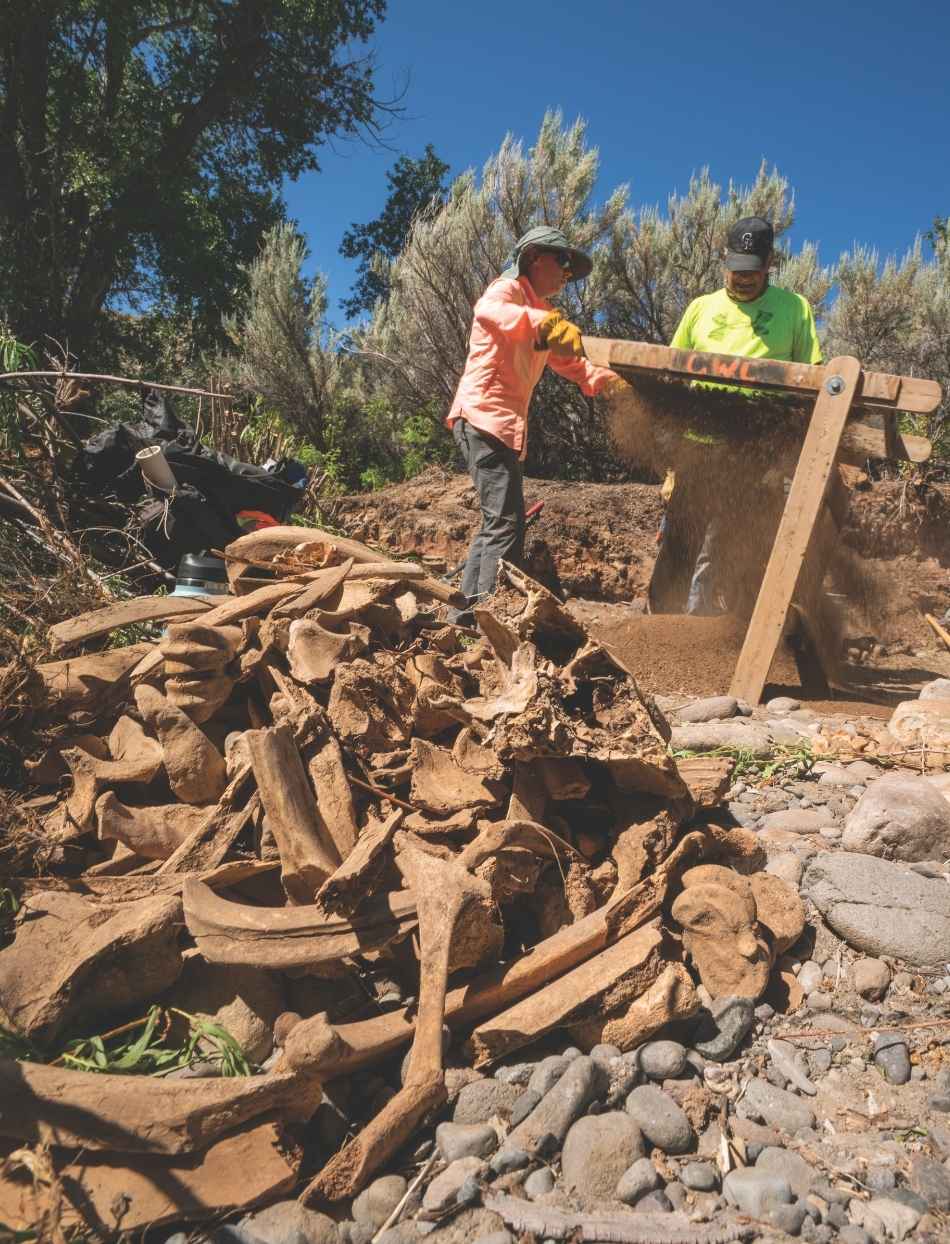
Members of the Central Wyoming College archaeology field school sift through excavated soil to recover bison remains and stone tools at the Wiggins Fork Bison Jumps Complex near Dubois. (Photo by Chris Martin/WGFD)
Along one of the major stone drivelines on the site, there is a set of four parallel lines of stacked stone. Using a dating technique called optically stimulated luminescence, Guenther’s team of archaeologists and Utah State University geologists determined the driveline was repeatedly reconstructed over a period of 500 years in response to an eroding gully that would have allowed the bison to escape from one of the funnels.
In addition to making renovations, the Shoshonean ancestors who built the buffalo jump accounted for different weather patterns. The complex system of funnels and jump-off points could have been used depending on the weather and wind direction. While it may not always be obvious in the archaeological record, people would not have survived if they didn’t adapt as the landscape changed.
“Human creativity and this reliable food source allowed hundreds of people from multiple tribes to winter and thrive in the area,” Guenther said.
Dozens of similar hunting structures are spread across Wyoming, all representing generations of shared knowledge about how to cooperatively harness animal movement and behavior.
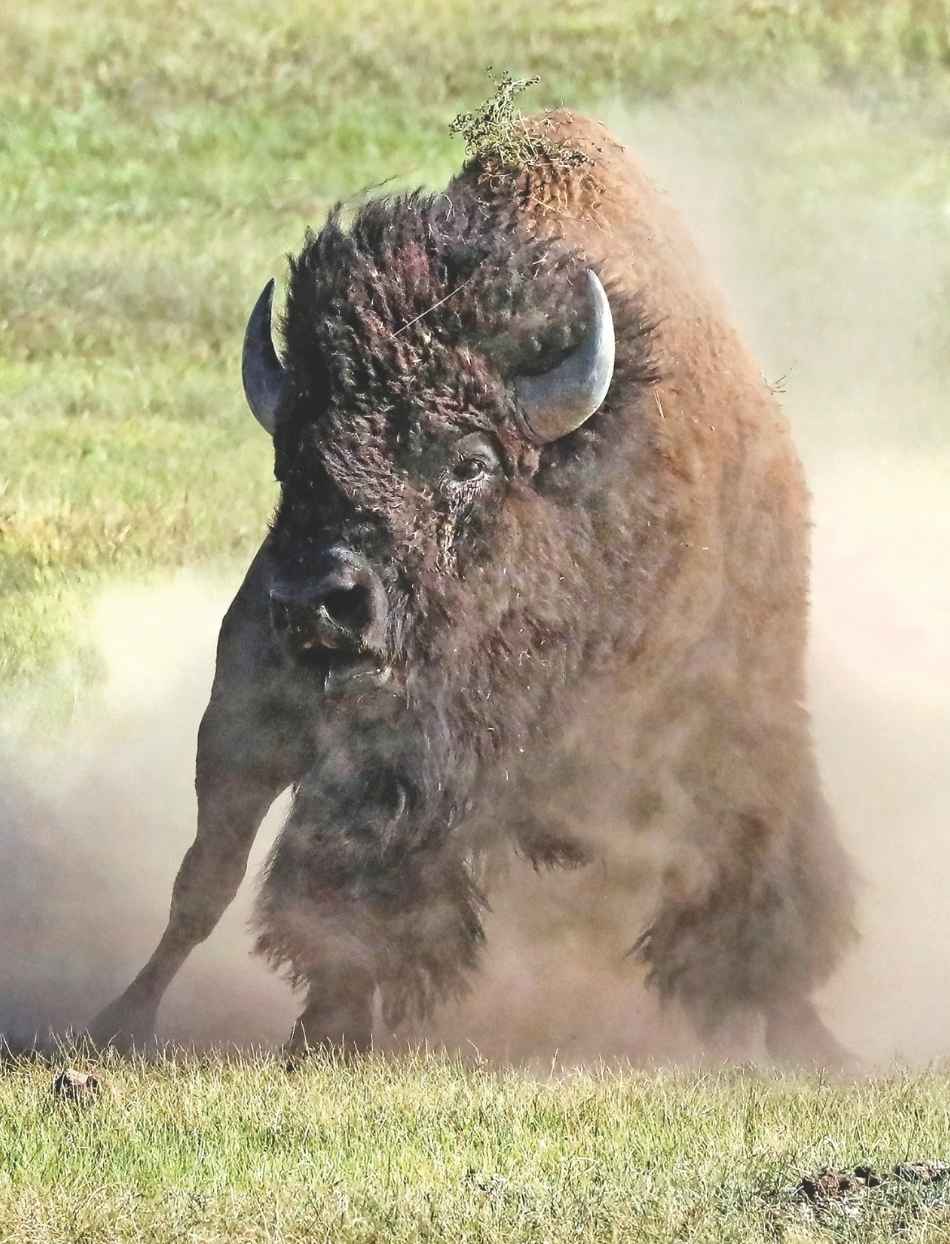
The American bison roamed from the prairies to the mountains by the millions and were a staple in the diet of Native Americans. The Eastern Shoshone call themselves gweechoon deka, or buffalo eaters. (Photo by Vic Schendel)
Movement Matters
On the other side of the Continental Divide, a site illustrates this complex relationship between hunter, animal and landscape. Named initially for the fur trappers that held their rendezvous there, Trapper’s Point is the location of a major archaeological site where pronghorn were trapped along their seasonal migration between summer ranges in Grand Teton National Park and winter ranges in the Green River Basin. Today, wildlife biologists still recognize Trapper’s Point as a key bottleneck on the longest land migration in the continental U.S., called the Sublette Antelope Migration Corridor. There, a massive collection of buried bones and stone tools tells the story of how humans noticed a consistent pattern in pronghorn movement and capitalized on it repeatedly over thousands of years. It may even have been part of their own migration route between seasonal camps.
Archaeologists Mark Miller and Paul Sanders remark in their final report on the Trapper’s Point site published in Plains Anthropologist that the “knowledge of pronghorn behavior, seasonal movements, conditions of terrain and other factors can dramatically reduce the search time for target species.” The implications of reduced effort to harvest game are a more abundant and predictable source of calories, leading to a better life for prehistoric hunters.
In addition to the anthropological insight on hunting technique, Trapper’s Point is a fascinating demonstration of how consistent pronghorn movement has been through the millennia. Even now, the highway hasn’t changed pronghorn behavior much. They have persisted on the same route for thousands of years. In an effort to protect the Green River Basin herd from vehicle collisions, there are six underpasses and two overpasses along the 12-mile stretch of U.S. Highway 191 near Pinedale, adjacent to Trapper’s Point. Similar overpass and underpass projects are underway across the state as biologists are finding that other highways, including Interstate 80, have become essentially impenetrable barriers to wildlife movement.
The ecological arms race looks different than it did 150 years ago, but the arms race doesn’t have to end in mutually assured destruction. By looking to the past, wildlife managers can answer questions about how to steward our resources for many years to come, even as Wyoming is experiencing growing urbanization and increased human traffic into wild places.
— Hannah Smith is the Wyoming Game and Fish Department information and education specialist in the Laramie Region. She studied anthropology in the Rocky Mountains and worked as an archaeologist in Wyoming before joining the Game and Fish team.