
Expert analysis, science and public input are all valued as Wyoming works to revise its State Wildlife Action Plan.
We all know someone who is a planner. That person who meticulously maps out every detail of their life with notes, daily and weekly planning journals, schedules logged into their phone and each minute of the day accounted for. They can tell you what they’re eating for dinner on Tuesday next week, and what’s on the docket for an afternoon two weeks away.
Then there are those who never have a plan, even when a general idea of the day would help. They might not know what they’ll be doing that evening, or what time they’ll leave for a big event.
When it comes to wildlife conservation, fish and wildlife managers generally land somewhere in the middle. Planning is key to conserving effectively and proactively the animals most in need, but flexibility is just as important when conditions change or new information becomes available. That balance is why each state creates a State Wildlife Action Plan, or SWAP.
The Wyoming Game and Fish Department is currently revising the state’s SWAP with a new plan effective in 2027.
A balanced blueprint
Think of the SWAP as Wyoming’s long-term conservation roadmap. It highlights species that need the most attention, the habitats that support them and the factors that could put them at risk. Just as importantly, it lays out actions that everyone in the state can take to help keep these species from becoming threatened or endangered in the future.
“The SWAP is really a blueprint for Species of Greatest Conservation Need, or SGCN, and their habitats in Wyoming,” said Rhiannon Jakopak, who served as the SWAP Coordinator and is currently the Wildlife Policy and Legislative Affairs Manager at Game and Fish. “Each state develops a SWAP, which contributes to a nationwide strategy for conservation and unlocks federal funding through the State and Tribal Wildlife Grants program.”
With each state creating its own SWAP, there’s a lot of flexibility in how the plans are created and what’s included in them. There are, however, some federal requirements for each SWAP.
“The required elements for the SWAP are primarily concerning that the plans identify SGCN and their habitats, the challenges they face and the voluntary actions to conserve species and their habitats. The SWAP also outlines who needs to be involved in the process of creating or revising and implementing the plan,” Jakopak said.
Identifying the species most in need of conservation is one of the main focuses of the document. In Wyoming, SGCN are identified based on the Native Species Status classification system, which compares population and limiting factors using a comparative matrix. Using this standard, Wyoming is able to consistently identify those species most in need of conservation efforts. The designation of SGCN can be based on known population or habitat challenges or on a lack of information about the species. SGCN are typically species that are not harvested and have not received the same focus as other iconic Wyoming species.
Federal requirements do not designate a specific number of species that should be identified as SGCN. Instead, states are asked to identify any that may require this designation based on criteria they find appropriate for their own state.
State wildlife agencies aren’t the only ones to use the SWAP. It is meant to be used collaboratively. Partners, conservation organizations and other stakeholders can use this blueprint when working on projects throughout the state. For example, a land management agency may consider the SWAP when conducting a project in habitat where SGCN occur.
All great plans require some flexibility. A plan that is too rigid doesn’t adapt well as things change. Someone who plans things down to the minute may be derailed when a red light lasts a little too long or something unexpected happens. Fortunately, the SWAP has built-in flexibility. It outlines the kinds of actions that can take place for conserving SGCN; it’s not a checklist of things that will be done. It is a nonregulatory plan, and all actions identified within it may be pursued voluntarily. This allows flexibility as more information is available, new challenges are identified and circumstances change.
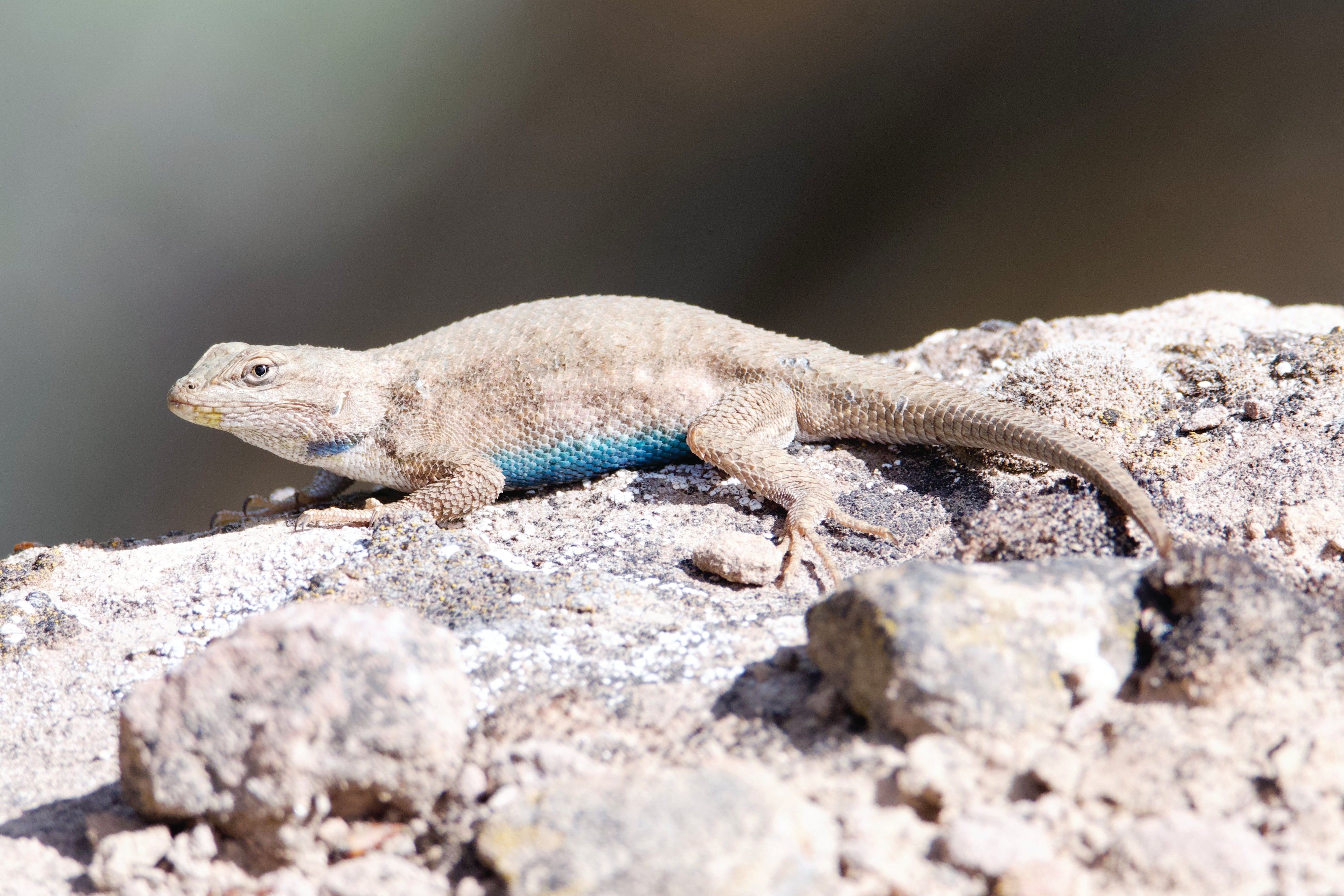
A plateau fence lizard gets some sun on a rock. These lizards are found at lower elevations in Sweetwater and Carbon counties and are designated as a Species of Greatest Conservation Need. (Photo by Frank Stetler/WGFD)
Updating the roadmap
The SWAP isn’t meant to sit on a shelf. It’s a guiding document used regularly by the Game and Fish and stakeholders in wildlife and habitat conservation. The plan is updated every 10 years to reflect the most up-to-date information and use the best science available. These revisions ensure the state’s plan remains an effective tool for conservation across the state.
“We really want this to be a comprehensive and holistic document,” Jakopak said. “We’ve tried to make it user-friendly and accessible with enough information for it to be useful without being so prescriptive that there’s no flexibility.”
The 2027 SWAP will have some significant changes since its 2017 iteration. Looking to a user-friendly format, the document itself will be significantly shorter.
“We’re hoping for the final version to be around 300 pages,” Jakopak said. “That should make it easier to navigate than the last version, which was around 1,700 pages.”
The newest SWAP is the first one for Wyoming to identify plant species as SGCN in addition to animals. Although the Game and Fish does not have regulatory authority over plants, the proposed 2027 SWAP includes 55 plants because of their broader role in ecosystems. This update shows the ongoing focus on habitat, a significant part of wildlife conservation.
The latest plan will have some new animal species as well. A total of 20 animals were added to the SGCN list, and 17 were removed because we learned more about their conservation status or their conservation status improved. In total, 308 animal and plant species are listed as SGCN in the proposed 2027 SWAP. The SWAP includes amphibians, birds, crustaceans, fish, mammals, mollusks, plants and reptiles.
Revision of a plan this significant doesn’t happen overnight. A final plan takes planning itself. Game and Fish began work on the 2027 plan in 2024. In spring 2025, Game and Fish invited feedback from stakeholders, partners, organizations, Game and Fish employees and the public about how they’ve used the 2017 SWAP. This feedback helped to identify what was most useful in the previous version of the document and how it could be improved.
Game and Fish also formed an interagency advisory team, which served as a steering committee to oversee the revision process. Next, the experts worked to identify SGCN as that guides most of the document. Experts reviewed more than 700 eligible fish and wildlife species and more than 4,000 native, vascular plants in Wyoming. These experts included those within Game and Fish as well as outside of the department.
When reviewing habitats, experts considered six aquatic basins and 11 terrestrial habitat types, which were established during previous SWAP revisions. Experts from across the state conducted a ranking exercise to identify relevant challenges and generated conservation actions for those habitats.
Taking all the information from that review, Game and Fish drafted a document that included SGCN along with background information, ecology and overall characteristics of each taxonomic group and habitat. In all, more than 100 technical experts from more than 20 agencies helped to develop the SWAP.
After the document was drafted it underwent several rounds of review, including by Game and Fish personnel and the interagency advisory team. The SWAP also will have a public comment period before being sent to the Wyoming Game and Fish Commission for approval and then to the U.S. Fish and Wildlife Service. It will undergo review by another state, which is assigned by USFWS, before it is finally approved.
Starting this month, the public is invited to comment on the drafted SWAP document. The draft document is available for review on the Game and Fish website under the Wyoming Wildlife tab. This landing page provides a method to submit public comment about the SWAP.
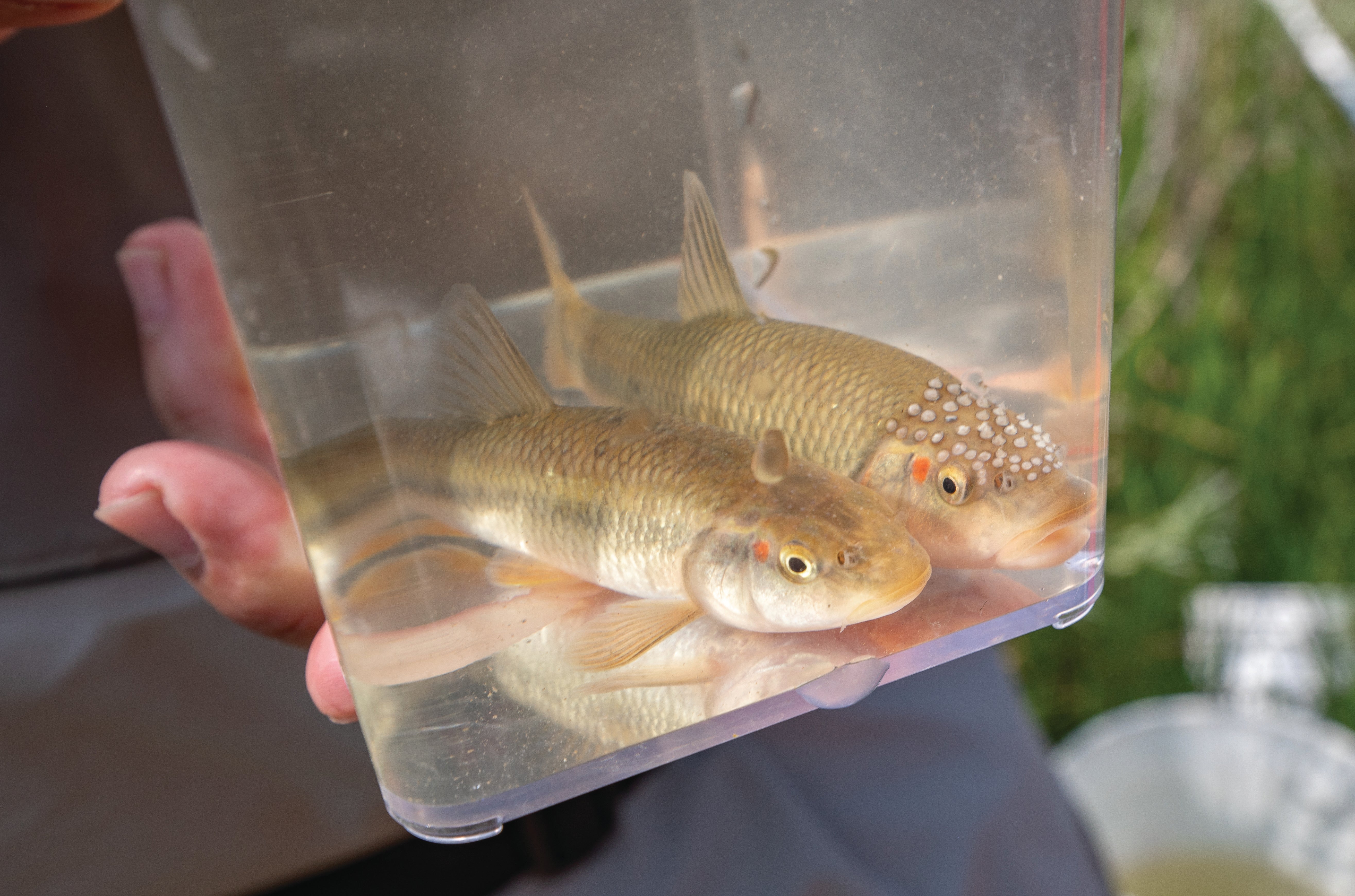
The hornyhead chub is a native, nongame fish in a priority conservation area of the Platte River Basin. This fish is designated as a Species of Greatest Conservation Need. (Photo by Robert Gagliardi/WGFD)
SWAP in action
The SWAP unlocks funds through the State Wildlife Grant program, which was established by Congress in 2001. The SWG program, which is administered by the U.S. Fish and Wildlife Service, allocates funds to each state based on its population and land mass. Since 2002, Wyoming has received more than $13 million from the SWG program. These funds have supported more than 185 projects focused on the management of SGCN and their habitats.
A few of these projects include:
Turtle recovery: Northern spiny softshell turtles are one of the largest turtles in North America. Members of the public became concerned about their declining numbers in the Bighorn and Nowood rivers. Funds from the SWG program supported surveys to learn about the distribution and population of these turtles, and citizen science observations helped inform the surveys. These efforts provided important information about habitat preferences and population status.
Fish movement: Bypass channels can improve connectivity in streams where barriers can prevent fish movement. Funding from SWG helped biologists evaluate whether bypass channels restore connectivity for native fish like goldeye, sauger and shovelnose sturgeon.
Toad research: Funding from SWG supported research on disease ecology, reproduction and habitat use of boreal toads, a species that was petitioned for listing under the Endangered Species Act. The research had far-reaching implications, including contributing to a “not-warranted” decision for listing.
Native mussels: Little is known about native mussels like California floater and western pearlshell, and they are difficult to study because they burrow in the bottom of waterways. With SWG funding, scientists at the Wyoming Natural Diversity Database used eDNA to determine the distribution and abundance of native mussels in western Wyoming. These surveys identified two new locations for the species.
Pika distribution: American pikas are vulnerable to changing climates, but their ecology also means they can be an early indicator of changes in alpine habitat. SWG funds contributed to surveys of pikas in mountains across Wyoming. These surveys improved the understanding of American pika ecology and distribution.
Swift action: Swift fox populations have declined throughout their national range due to habitat conversion and predator control efforts. Researchers used SWG funds to monitor the species and have learned that swift fox range has expanded within the state. This information has helped inform additional research projects and management actions.
Bat monitoring: White-nose syndrome is a major threat to several bat species in Wyoming, and this fungal disease has contributed to some species being listed and petitioned under the Endangered Species Act. Contributions of SWG dollars have supported monitoring the spread of this disease throughout Wyoming. These efforts allow managers to detect impacts early and use this information to identify actions to conserve bats throughout the state.
Birds on the move: Many of Wyoming’s birds can be tracked efficiently and effectively through broad-scale, multispecies monitoring programs, such as the Integrated Monitoring in Bird Conservation Regions program, which is spearheaded by the Bird Conservancy of the Rockies. SWG funds contributed to the program, which provides critical information for all bird species within the state. The program has provided critical information for SGCN monitoring.
Collaborative conservation: Funds from the SWG contributed to a multi-organization effort to investigate habitat use of great gray owls. Researchers at the University of Wyoming, Teton Raptor Center and Game and Fish investigated habitat use of these owls during breeding season, nesting and post-fledgling period. This improved understanding of great gray owl ecology will inform habitat management practices.
Supporting recovery efforts: Black-footed ferrets were nearly extirpated, but conservation efforts have resulted in two reintroduced populations in Wyoming. Funding support from SWG has contributed to a multi-agency effort to recover this species in Wyoming by funding surveys using scent-detection dogs and mapping of prairie dog colonies. It’s also contributed to management practices like releasing captive-bred ferrets and conducting plague control.
— Tracie Binkerd is the editor of Wyoming Wildlife magazine.