CASPER – In a major effort to improve riparian health and water quality in the Casper region, the Wyoming Game and Fish Department, along with several partners, installed and maintained 130 beaver dam analogs along Lone Tree Creek and Bolton Creek this season.
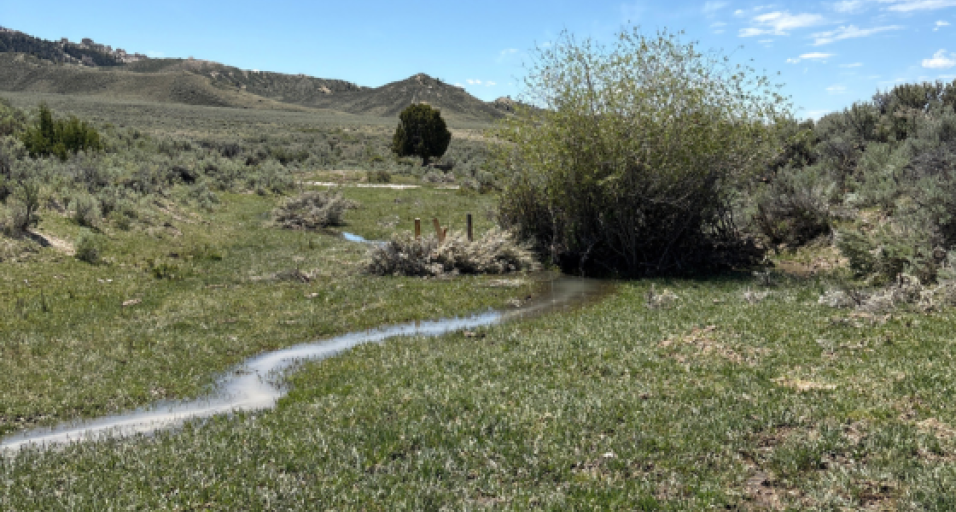
Beaver dam analogs are man-made structures designed to mimic the form and function of natural beaver dams. By using wooden posts and woven willow branches, these structures slow the flow of water, allowing it to spread across the floodplain rather than rushing downstream. The water then continues to travel downstream, now cleaner, as it enters the North Platte River. The construction of BDAs can benefit both fish and wildlife species.
The Green Up Effect
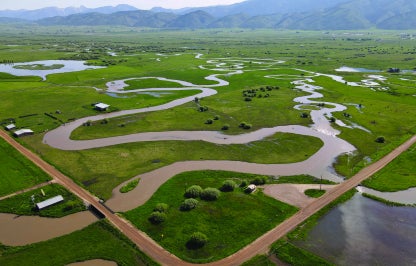
One of the primary goals of the Lone Tree and Bolton Creek projects is to extend the green-up period for terrestrial wildlife. By raising the local water table, BDAs sub-irrigate the surrounding land, fostering the growth of lush, protein-rich vegetation well into the dry summer months.
"These riparian areas are like the supermarkets of the high desert," said Willow Bish, terrestrial habitat biologist for Game and Fish. "When we keep these areas green longer, we provide critical forage for mule deer, pronghorn, and sage-grouse, especially during the late season when other forage has dried out."
Protecting the North Platte River
Beyond benefiting wildlife, the 130 new structures serve as a defense against erosion that would dump sediment into the North Platte River. “Bolton Creek is a significant tributary to the North Platte and during heavy rain or snowmelt, it can carry high volumes of sediment into the main river, said John McCoy, Game and Fish aquatic habitat biologist. “It is critical that we work to reduce the amount of sediment dumped into the river to maintain clean redds for spawning trout.”
By slowing the flow of these tributaries, BDAs allow sediment to settle behind the structures rather than enter the North Platte. This, along with increased riparian vegetation, reduces erosion, keeps the river cleaner, and protects the gravel beds essential for trout spawning in this blue-ribbon trout fishery.
A History of Natural Engineering
The concept of BDAs is not a new one; it has recently been resurrected and refined into the "Low-Tech Process-Based Restoration" by researchers and restoration practitioners seeking to restore stream functions without the high costs of heavy machinery. The goal is to "let the water do the work."
Game and Fish has a track record of using these techniques across the state. From early pilot projects in the Shirley Basin to larger-scale efforts near Pinedale and Laramie, Game and Fish has seen these structures transform incised, "leaking" streams back into vibrant, sponges-like ecosystems.
“We aren't just building structures; we are kickstarting a natural process,” said McCoy. “In many cases, once we stabilize the stream and encourage willow growth, the beavers themselves eventually return and take over the maintenance.”
Work on Lone Tree and Bolton Creeks was completed in May and June and will be studied for results for years to come. For more information on habitat projects in the Casper Region, review the Statewide Habitat Plan developed and written by habitat biologists in Game and Fish.