CHEYENNE — Sage-grouse lek attendance decreased in 2026 according to data from the Wyoming Game and Fish Department lek tallies this spring. Lek attendance was down 13% compared to 2025.
This spring, officials observed an average of 27 male sage-grouse per active lek. A little more than 27,000 male sage-grouse were observed on 91% of known, occupied leks. Annual observations are carried out by Game and Fish, agency partners, consultants and volunteers. Leks are observed from a distance from the ground and air during the birds’ spring mating.
The appearance of fewer birds at leks is thought to be due to the natural population cycles of sage-grouse combined with habitat conditions. Game and Fish data on sage-grouse lek attendance goes back nearly six decades, and the cyclical nature of the bird’s population is evident.
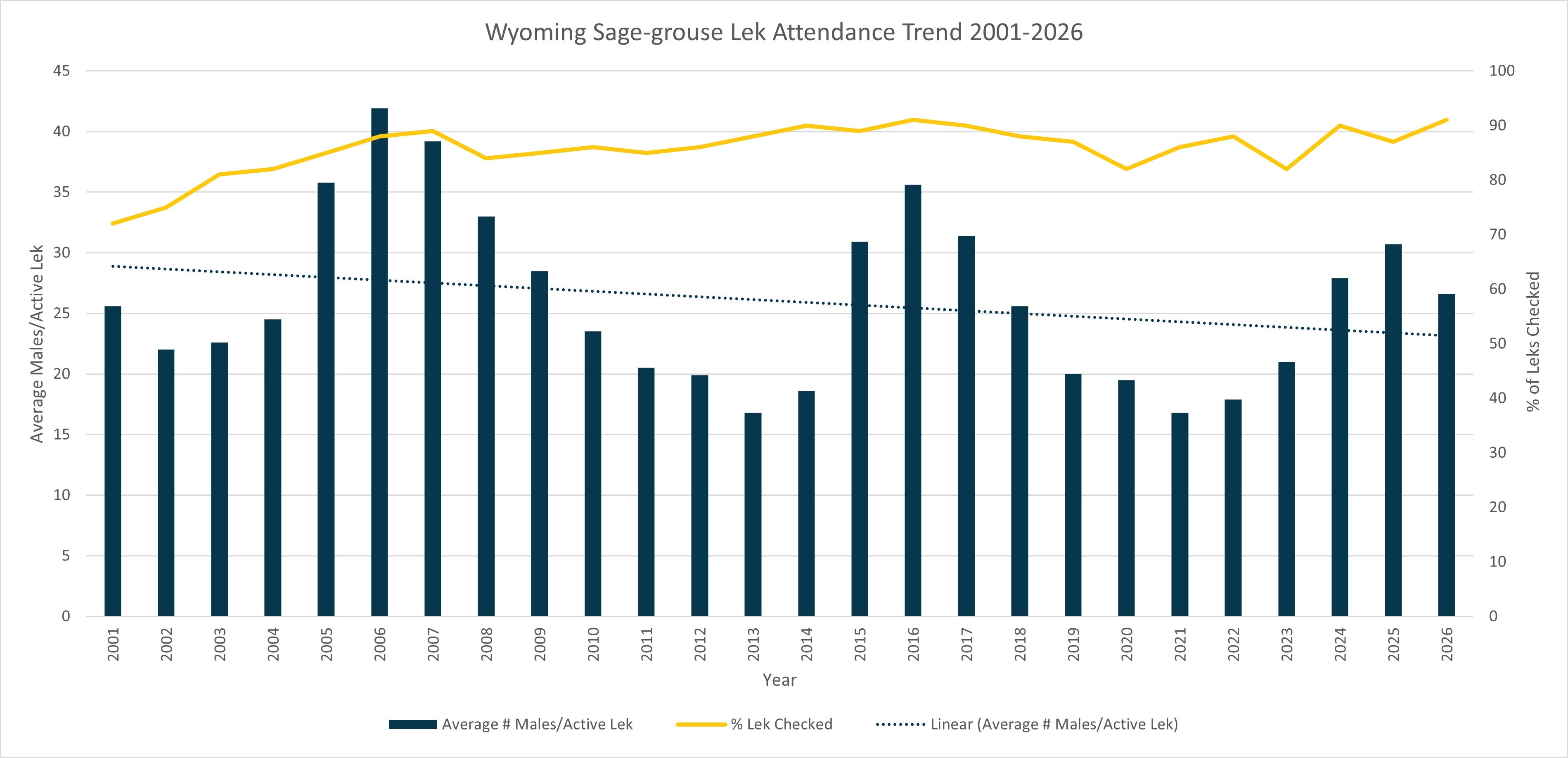
“Studies indicate Wyoming’s sage-grouse population cycles every 7-9 years,” said Nyssa Whitford, Game and Fish sage-grouse/sagebrush biologist. “We were expecting to see a decrease this year as we enter the downward portion of the population cycle.”
Whitford said based on historical data, the downward trend in population can last from 3-7 years. The cause of these well-established cycles is not understood, but it is thought to be influenced by weather and climate, which impacts the availability of food and cover in the sagebrush ecosystem.
External factors, such as extreme drought, wildfire and poor habitat quality may also contribute to these trends. Short-term weather trends, habitat fragmentation and increasing invasive annual grass coverage also are negatively impacting sagebrush habitats.
“Sage-grouse are a sagebrush obligate species and could not survive without intact ecosystems,” Whitford said. “Well-timed moisture and available habitat are paramount to robust sage-grouse populations. In much of the state, this past winter was abnormally dry, and this summer has been exceptionally hot and dry.”
Game and Fish also monitors the percentage of known active and inactive leks throughout the state. A lek is considered inactive if no birds or signs of strutting are observed under ideal conditions during mating season. The percentage of active leks decreased to 75%, which is in line with a downturn in the population cycle.
Game and Fish manages sage-grouse while taking into consideration the variation of population size over time. Part of that management includes a conservative hunting season which is reviewed each year. Game and Fish has adjusted sage-grouse hunting seasons in recent years, including adding a required free, annual sage-grouse permit for all licensed hunters. The permit is available on the department website and at regional offices.
More information on Game and Fish’s management of sage-grouse can be found on the Game and Fish website.
— WGFD —