Note: This article by Robert Gagliardi will be featured in the May edition of Wyoming Wildlife magazine. Subscription information can be found on the Game and Fish website.
Anglers may face some challenges when fishing in Wyoming this spring and summer. Low water levels in numerous parts of the state, along with expected warm temperatures as the summer progresses may affect fish and those who pursue them.
However, the forecast looks good for numerous sportfish. Wyoming Game and Fish Department fish division personnel provided a spring-summer fishing outlook for their respective regions.
Casper Region
“The biggest question mark this summer will be water supply,” said Matt Hahn, Game and Fish fisheries supervisor in the Casper Region. “Pathfinder and Seminoe reservoirs have very low storage, and given the snowpack, are not likely to come up much with spring runoff. Given the size of these lakes, it shouldn't impact the fish populations, but could impact boating access as many boat ramps will be high and dry, and various boating hazards that people are not used to worrying about start to manifest with lower than normal water levels.
“Similarly, the tailwater sections of the North Platte River are not likely to be impacted given they are somewhat insulated from drought by the upstream reservoirs.”
Streams draining the North Laramie Range could be negatively impacted by drought conditions. With low snowpack, stream flows will likely be low this summer, meaning water temperatures could be an issue in places like Deer Creek, LaBonte Creek and Horseshoe Creek.
Overall, fish populations will be comparable to last year in many of the region's reservoirs. Glendo, Alcova, Pathfinder and Seminoe reservoirs all provide excellent walleye fishing. Glendo also offers good fishing for channel catfish, black and white crappie, yellow perch and the occasional largemouth bass. Alcova, Pathfinder and Seminoe offer good fishing for rainbow, brown and cutthroat trout, and kokanee salmon are stocked in Alcova and Pathfinder.
Anglers should consult the 2026 fishing regulations as several regulations in the Casper Region have changed. Single-point, barbless hooks are now required on the tailwater reaches between Wyoming Highway 220 Bridge and Kortes Dam. The use of trout beads or pegged attractors is prohibited at the Fremont Canyon and Gray Reef reaches, and the walleye limit in the North Platte drainage upstream of Dave Johnston Powerplant has increased.
Cody Region
Most lowland reservoirs and tailwater rivers really shine in spring and early summer. With proper timing, others influenced by spring runoff can fish incredibly well.
Reservoirs such as East Newton, Luce, Hogan, Upper Sunshine and Lower Sunshine are go-to places as ice melts and rivers swell with snowmelt and are unfishable. If you are looking for a challenge with high reward, Luce is producing rainbows 4-5 pounds. Don’t expect to catch many, but when you do, it will be memorable.
The Bighorn River in Thermopolis is at its best in the spring and early summer before aquatic plants and algae get too thick. Be sure to enjoy spring fishing and give fish a break in the afternoons as temperatures climb.
For warm-water opportunities, Deaver, Harrington and Wardell reservoirs are productive for walleye and will slow down as water temperatures rise.
Rivers such as the South and North Fork Shoshone, the lower portion of the Shoshone and Clarks Fork Yellowstone prior to runoff offer outstanding trout angling.
The Bighorn River from Worland to the Lovell area can fish quite well for sauger, walleye and catfish prior to runoff. Targeting catfish into the summer remains productive, but sauger and walleye fishing tapers off with turbid water conditions.
Green River Region
Rainbow trout fishing is back at Flaming Gorge Reservoir. This spring, shoreline anglers can expect excellent action with plenty of rainbows in the 14–18-inch range and a few stretching beyond 20 inches. “A mild winter jump-started the season as shorelines are already warming and the entire reservoir is open, eliminating the usual wait for ice-off or chasing receding ice lines,” said John Walrath, Game and Fish fisheries supervisor in the Green River Region. Early-season success will come in the back of bays and in areas adjacent to deep water where trout concentrate as temperatures and productivity rise.
Kokanee salmon fishing at Flaming Gorge also should see a noticeable boost this year. Strong juvenile survival over the past couple of years is translating into more fish and better opportunities. Anglers can expect large schools of 14–15-inch kokanee this spring, along with fish in the 17–19-inch class, many of which will push 16–17 inches and exceed 20 inches by summer. Early in the season, trolling from the surface to 30 feet will be the most productive approach.
Lake trout remain an important part of the Flaming Gorge fishery, and anglers are encouraged to target smaller fish under 28 inches. High harvest rates of these smaller lake trout are critical to maintaining balance in the reservoir. Fish in the 12–16-inch range are abundant, especially near cliffs along the river channel and can be effectively targeted by jigging or trolling. “Reducing their numbers allows surviving fish to grow faster and maintain a robust prey source for trophy lake trout,” Walrath said. “A more robust prey source will equate to a heavier and healthier looking trophy lake trout population.”
While rainbows dominate the trout catch at Flaming Gorge, anglers also report catching Bear River cutthroat trout and brown trout exceeding five pounds. Smallmouth bass are also becoming more prevalent, with many fish surpassing three pounds.
Below Fontenelle Reservoir, the Green River continues to produce exceptional rainbow, brown and cutthroat trout, along with mountain whitefish. While the river is known for having fewer fish per mile than some systems, it consistently produces large, healthy trout. Floating is the preferred method for many anglers, though wade fishing can be equally productive for those willing to put in the effort. Spring brings increased flows and increased opportunity. Anglers find success nymphing or throwing streamers through deeper runs and pools. As water rises, trout often shift toward banks and inside bends, creating excellent opportunities for anglers targeting bigger fish.
Viva Naughton Reservoir near Kemmerer is poised for a rebound after several slower years. Adjustments to rainbow trout stocking should start paying off with higher densities. While younger year classes grow, fish were sampled in 2024 measuring 16–17 inches. This year, anglers should encounter rainbows exceeding 20 inches, along with solid numbers in the mid-teens. The area also continues to generate excitement around tiger trout. Another state-record fish was caught just below the reservoir last year, highlighting the incredible growth potential in this system. With abundant forage, there’s reason to believe another record-class tiger trout is swimming in Viva Naughton, Kemmerer City Reservoir or the Hams Fork River. It is also possible that another record could come out of High Savery Reservoir.
Sulphur Creek Reservoir near Evanston is another fishery on the upswing. After a few slower seasons during stocking adjustments, the reservoir is expected to produce solid fishing. Walleye are present, and early spring provides a prime opportunity to target them in shallow water during the spawn. Anglers are reminded that walleye are an illegally introduced species here and must not be released alive if caught. Kokanee salmon are a new and exciting addition to Sulphur Creek. Fish sampled in spring 2025 measured 13–16 inches, meaning anglers can expect 17–20-inch kokanee this year, along with a younger class in the 13–16-inch range.
Jackson Region
The forecast is good for the spring and early summer. Snow conditions in the area were favorable through late winter. However, how much moisture the area gets in the spring and how warm the summer gets will ultimately decide how fishing is through the summer.
“We are expecting good fishing to begin the year in Jackson,” said Darren Rhea, Game and Fish fisheries supervisor in the Jackson Region. “Mild conditions throughout the winter have many anglers already taking advantage of the spring-like conditions. Spring and early summer can be great fishing, though runoff from snowmelt usually dictates when and how conditions are favorable for fishing. Similarly, ice-off on the region's lakes sets the stage for fishing conditions during the summer. Early ice-off can mean good fishing early, though the timing of when lakes become open can impact the prospects of good angling during the summer. Prolonged periods of heat can lead to reduced activity throughout the summer.
Lander Region
“Overall, anglers can likely expect typical fishing conditions around the Lander Region this year,” said Jake Ruthven, Game and Fish fisheries biologist in the Lander Region. “Thankfully, the western mountains have continued to receive snowpack that will help buffer the dry winter at lower elevations — at least early on. At the rate things are going, runoff will likely be earlier this year, but stream and lake fishing should both be good as we move into spring and summer.”
Boysen Reservoir is one of the state’s top spots for walleye.
“It’s phenomenal. There are a lot of 14-20-inch fish, but we still have the trophies swimming around. We’re still finding 25-plus-inch fish,” said Paul Gerrity, Game and Fish fisheries biologist in the Lander Region. “The walleye numbers are great. Boysen is just really, really good right now. There’s anglers that tell me the walleye fishing is the best they’ve seen in 20-plus years of fishing.”
Gerrity added the yellow perch population in Boysen is the highest it's been in a while with a lot of 10-plus-inch fish. Black crappie also are doing well.
Spring can be a great time to target rainbow trout at Boysen. Fish can be found along the shoreline before water temperatures rise and provide a great opportunity for anglers without the need for a boat. Rainbows continue to show up as 17–20-inch fish each spring, and this year should be no exception. Keep an eye out for fish that have a clipped or missing adipose fin, and report it to Ruthven.
Another good spot to target walleye and perch, along with black and white crappie, is Ocean Lake.
Summer is the prime time to target largemouth bass at Lake Cameahwait. Anglers can count on aggressive fish leading up to the mid-June spawning period, though catch rates may drop as fish begin to focus on spawning.
The Popo Agie River drainage — the main stem, North Fork and Little Popo Agie — has good numbers of rainbow and brown trout. Gerrity said electrofishing surveys in recent years showed 20-plus-inch rainbows in the main stem, and plenty 16-plus-inch fish. He also said brown trout are doing well in the North Fork and Little Popo Agie. Game and Fish has public fishing areas on all three rivers.
Gerrity said the mountain and wilderness lakes in the region should continue to be good for golden trout, as well as for cutthroat and brook trout. There also are opportunities to fish for grayling near Lander.
Pete’s Pond east of Dubois is a quality community fishery that is stocked with rainbow and Yellowstone cutthroat trout.
Laramie Region
Drought conditions are present because the North Platte and Laramie basins entered winter dry and received little snow. This could result in near-record low flows in the rivers and streams, and reservoirs are unlikely to fill.
“We urge caution when fishing rivers and creeks with elevated water temperatures during the heat of summer and advise following Game and Fish Fishing in the Heat guidelines. Consider fishing high mountain lakes in the Snowies this summer,” said Bobby Compton, Games and Fish fisheries supervisor in the Laramie Region.
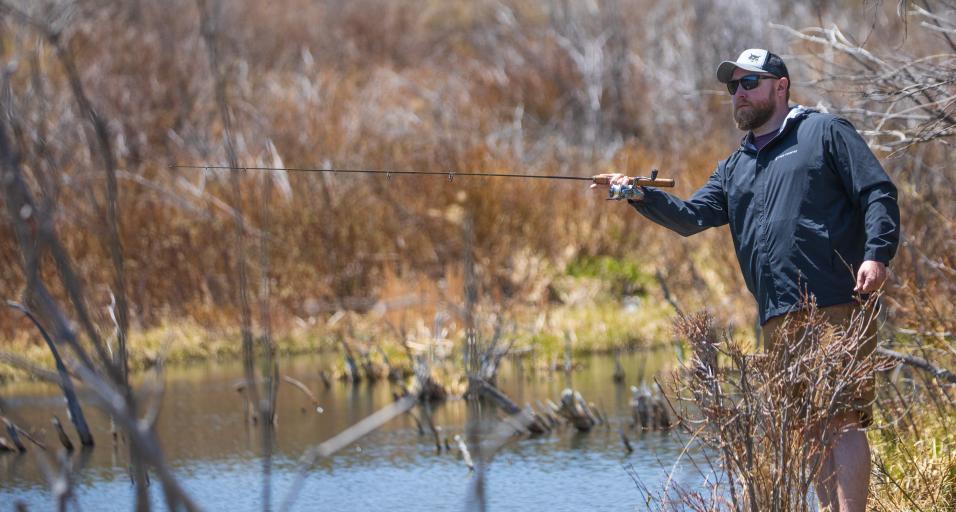
The Pole Mountain beaver ponds between Laramie and Cheyenne could experience warm temperatures and low water levels. Fishing these waters in June will be best. Harvesting brook trout here will reduce densities going into the summer and help the remaining fish survive those inhospitable conditions.
Most lakes and reservoirs in the region received little ice fishing pressure this winter. Additionally, some reservoirs were too low to launch a boat in 2025. Because of this, many trout haven't been caught or pressured. Consider bank fishing at Lake Hattie for abundant and nice-sized rainbow trout.
The water level at Wheatland Reservoir No. 3 is low, causing walleye to be more concentrated and feeding on trout. Consider harvesting a limit of walleye to maintain the trout and walleye fisheries. There is a new boat ramp on the reservoir’s southern portion.
Great opportunities exist to target channel catfish at Grayrocks Reservoir, Hawk Springs Reservoir and Wheatland Reservoir No. 1. Stocking has resulted in good numbers and large fish at all three waters.
Pinedale Region
As of early March, snow water equivalent in the Upper Green River Basin was at 97 percent of the median, considerably higher than many of the other drainage basins in the state. While warm temperatures and a lack of precipitation continue to plague lower elevations in the Pinedale Region, the snow needed to fill reservoirs and drive river processes that support sport fish populations appears adequate, at least for now.
Sampling on Fremont Lake in the spring of 2025 produced some of the largest lake trout in the last 25 years, including one fish that measured 39 inches and 27.8 pounds. Lower Green River Lake also produced lake trout of similar size, as well as some trophy kokanee salmon. While these large fish are not abundant, they do exist. Trolling and vertical jigging shoals, reefs and other underwater structures shortly after ice-off can be a great way to target giant lake trout, while trolling in open water is the most efficient way to target kokanee.
Anglers looking for native cutthroat trout can expect good fishing in Wyoming Range lakes and streams, including North Piney Lake, LaBarge Creek and North Horse Creek — to name a few. Brook trout fishing should be good in Middle and North Piney creeks in the Wyoming Range, as well as the Union Pass lakes, Gypsum, Jim and Tepee creeks in the upper Green River drainage.
Opportunities for golden, brook, and cutthroat trout continue to abound among the hundreds of lakes scattered throughout the Wind River Mountains. Good fishing with few mosquitoes can usually be had from August-September.
Trout population estimates made on the Green River near the 40-Rod Public Access Area were low in 2025. However, biologists believe these low estimates were primarily driven by low capture rates of trout less than 10 inches long. These smaller fish are typically the most difficult to capture and assess, and poor capture efficiency can artificially deflate the estimated number of trout per river mile. Based on the number of larger trout captured, biologists believe fishing will still be good on the Green River this year, though they will keep a very close eye on fish numbers moving forward.
One water that anglers may want to avoid is Soda Lake. While this fishery is popular among anglers from throughout the West, it has been struggling in recent years. Persistent drought conditions are causing the water level to drop by about 18 inches each year, and trout survival has plummeted as a result. Population estimates made in October 2025 showed brook trout are still hanging on, but brown trout have nearly disappeared.
Sheridan Region
Keyhole Reservoir is set up for a strong year of walleye fishing. Annual sampling continues to track a larger-than-average walleye population with fish across all size classes. Good numbers of small fish also suggest this trend will continue into the future. Unfortunately, crappie numbers continue to remain low. Smallmouth bass and northern pike are doing well, and Master Angler-sized fish of both species were found in 2025. An additional stocking of northern pike that took place in 2025 should continue this popular fishery for years to come.
Healy Reservoir continues to produce large numbers of smaller yellow perch. Sampling in 2025 suggests the average size may be starting to improve, but could take some years yet. Tiger muskie continue to do well and grow quickly. All sampled tiger musky were greater than 30 inches in 2025. Largemouth bass are thriving with Master Angler-sized fish readily available. Walleye stocking began in 2020 to assist in controlling perch populations. Walleye are growing quickly and stocking will continue for the time being.
Muddy Guard Reservoir No. 1 continues to produce high numbers of trophy trout and exceed all of the region’s management objectives. The fishery is approximately half Snake River cutthroat and one-third rainbow trout. Tiger trout and brown trout make up the remainder, and both produce fish greater than 24 inches. Master Angler-sized fish of all species were found in 2025. Game and Fish has concerns over spring 2026 mountain snow pack and water levels and encourages anglers to avoid fishing during high water temperatures.
Rainbow trout continue to increase at Lake DeSmet following some recent down years. Game and Fish is hopeful adjustments to stocking practices lead to continued improvements in the rainbow trout population in 2026. Few kokanee salmon were sampled in 2025. Those that were collected were either greater than 20 inches or recently stocked in the spring of 2025. Kokanee stocking adjustments were initiated in 2025 and Game and Fish expects to see improvements. Walleye continue to persist, but populations don’t appear to be growing. While at low numbers, walleye are in great condition and grow quickly to large sizes — up to 30 inches long. Lake trout numbers are seemingly increasing and this has led to additional work to better understand the population. While adding an exceptional trophy component to the lake, Game and Fish is concerned about this population growing too large and impacting the rainbow trout and kokanee fishery.
Weston Reservoir is known for an abundant, but stunted arctic grayling population. Game and Fish introduced tiger trout in 2014, hoping to provide some predation on the grayling population and improve the quality of the fishery. Sampling in 2025 suggests this is working. Grayling numbers are reduced, but still reasonable, and the average size is increasing. Tiger trout are growing well, too, with fish greater than 2 pounds collected.
The North Tongue River continues to produce top-notch trout fishing in a beautiful, accessible portion of the Bighorn Mountains. Snake River cutthroat trout are thriving, with fish reaching 18 inches long. Concerns over a reduction in rainbow trout over the past decade led to the unfortunate discovery of whirling disease throughout the system. While the rainbow trout population was impacted, Game and Fish began stocking a whirling disease-resistant strain of rainbow trout in 2025 and will do so for several years.
—WGFD—