
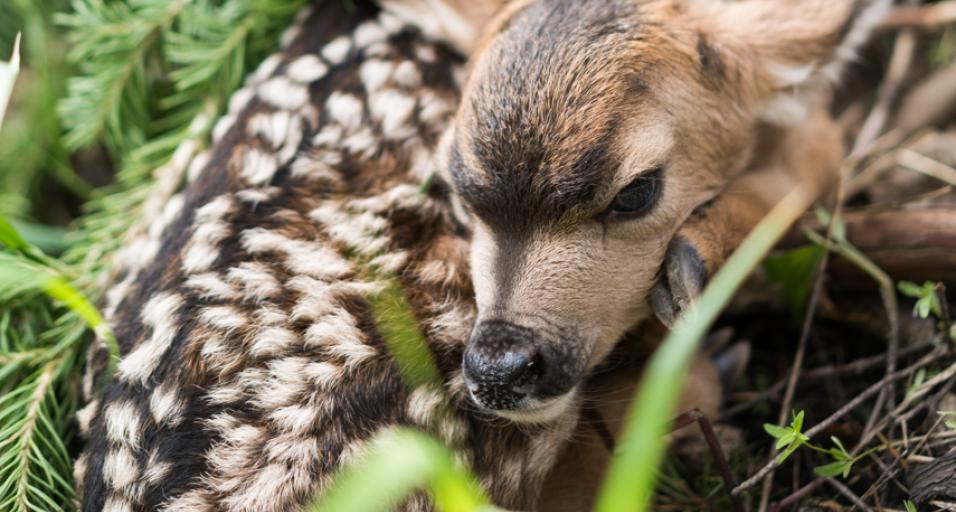
CHEYENNE — If you’re outside this spring, there is a good chance you’ll see newborn wildlife. These young fawns, hatchlings and other babies are charismatic and incredible to watch and photograph. At the same time, the Wyoming Game and Fish Department urges people to leave newborn wildlife alone and keep a safe distance.
Most mammals hide their young and return periodically to nurse. People who find young animals without a mother nearby often assume the newborns have been abandoned, but this is almost never the case.
“The mother knows where her young are and will almost certainly return to care for them,” Fry said.
Young birds sometimes fall out of or leave their nests before they are able to fly. The parents continue to care for the young bird while it is on the ground, bringing food and trying to protect the youngster while it is in this vulnerable situation.
Getting too close to newborn wildlife can be very dangerous. A mother bear, bison, moose and even deer will display aggressive behavior when humans get close to their young. Leave the area immediately if you encounter aggressive wildlife with young.
Pets can also disrupt newborn wildlife. It is important to make sure pets are leashed or kept indoors. Mothers are very defensive, so ensuring pets keep their distance and are controlled or contained will ensure their safety as well.
If children bring home a wild and young bird or animal, immediately return it to the exact spot it was found. In the rare instance when a fawn or other newborn is found and the mother is known to be dead, contact the nearest game warden, biologist or Game and Fish Regional Office. Do not attempt to capture these animals yourself.
State and federal laws forbid possession of game and many nongame animals, so adopting newborn wildlife is illegal. Citations can be issued for possession of newborn wildlife with a possible penalty of up to a $1,000 fine.
It is also important to maintain a safe distance from wildlife. National Park guidelines advise remaining 100 yards from predators like grizzlies and 25 yards from other mammals like bison or elk. In cases where wildlife is closer than anticipated, such as roadways and in traffic, remain in your vehicle.
-WGFD-