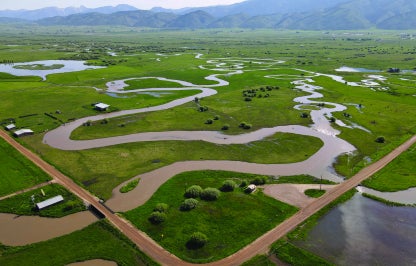

The Amsden Creek and Kerns wildlife habitat management areas in Sheridan County were treated for ventenata the last week of August. The herbicide treatments were conducted by helicopter in partnership with Sheridan County Weed and Pest District.
Ventenata is an invasive annual grass that prefers disturbed areas, such as post-wildfire landscapes, and is extremely competitive with native plants. Invasive annual grasses have a large impact on wildlife habitat and livestock production on affected rangelands. Invasive annual grasses germinate earlier than native plants, robbing native grasses and forbs of soil moisture needed for germination. Ventenata has no forage value, due to the high silica content present in the plant, and can quickly establish a monoculture, reducing the diversity and amount of native plants. Monocultures of ventenata and other invasive plant species can also increase the timing, frequency and intensity of wildfires.
“Although we had already found and were treating small patches of ventenata on both habitat areas, landscape conditions after the Elk Fire in 2024 really allowed the plant to spread rapidly,” said Sheridan Region Habitat and Access Coordinator Nathan Lindsey. “The area with established ventenata that we mapped this year was almost twice as much as in the previous year. The aerial treatment should significantly reduce or eliminate the identified patches, but we will continue to monitor to look for any future infestations.”
Lindsey and other Game and Fish personnel regularly monitor for and map locations where invasive grasses and weeds are found on Game and Fish Commission-owned or managed properties. Treating these areas often requires financial and logistical support from federal and state land management agencies, nonprofit organizations and private landowners.
“Helicopter spraying is the most efficient and cost-effective way to control many invasive plants,” said Lindsey. “We appreciate the expertise and funding assistance from Sheridan County Weed and Pest, along with additional funding from the Wyoming Wildlife and Natural Resource Trust Fund and the Game and Fish Commission in completing these treatments.”
Help from hunters and other recreationists is also critical in protecting native rangelands and reducing the spread of ventenata and other invasive plants. By cleaning clothes, footwear, trucks, recreational vehicles and dog paws and fur of mud and plant material every time they come in from the field, hunters can help ensure we limit the spread of these damaging plants from one favorite hunting location to another.
At many Game and Fish Public Access Areas and Wildlife Habitat Management Areas, local weed and pest agencies have provided cleaning stations for brushing off footwear. Anyone using these WHMAs is encouraged to use these stations before entering and after leaving the area.