In late April I spoke at two congressional briefings in Washington, D.C. Briefings are an opportunity to educate and build support for our work. One of the briefings focused on one of my favorite subjects — wildlife crossings. We are seen as national leaders on crossings and the opportunity to showcase our work was a privilege.
Here are my remarks:
Wyoming is renowned for its vast, intact landscapes and cold-water streams where wildlife often outnumbers people. As a premier destination for pronghorn and home to the world’s largest sage-grouse population, our state also supports native bighorn sheep herds and world-class trout fisheries that attract visitors from around the globe. Our ecosystems sustain iconic species such as grizzly bears, pikas, wolves and golden eagles.
In Wyoming, we share a deep culture of appreciation for wildlife and the outdoors. This wildlife heritage is a fundamental part of our identity. Effective wildlife management requires working alongside those who live in our remarkable state. Our work on wildlife crossings serves as a model example of this collaborative spirit.
Wyoming is dedicated to making our roads safer for wildlife and drivers. Through our Wildlife Crossings Initiative, we have built significant support across various stakeholder groups. Gov. Mark Gordon and state legislators have demonstrated their commitment through executive orders, general fund allocations and the creation of a specialty license plate. Additionally, conservation groups have provided essential matching funds, while citizens have supported Wyoming’s crossing work by purchasing conservation license plates, making donations and expressing their desire and support for more crossings. We have even had several artists contribute by donating their work to provide funding.
The broad reach of this support, from individuals to federal agencies, truly tells a story of its own. Our work with the Wyoming Department of Transportation exemplifies how a collaborative spirit can provide benefits to wildlife and people. WYDOT is not only at the table with us, they help us prepare the food.
While we have worked with WYDOT since the 1960s on crossings, we revitalized our partnership in 2017 by inviting conservation groups, state and federal partners and all interested stakeholders to the table. Following a roadway summit that utilized collision and carcass data alongside local expertise, we successfully identified more than 240 hotspots across the state.
Using biological and social science, we developed a scoring matrix to rank these projects and set priorities. We also provided visual tools and launched a communication campaign to educate the public and build support.
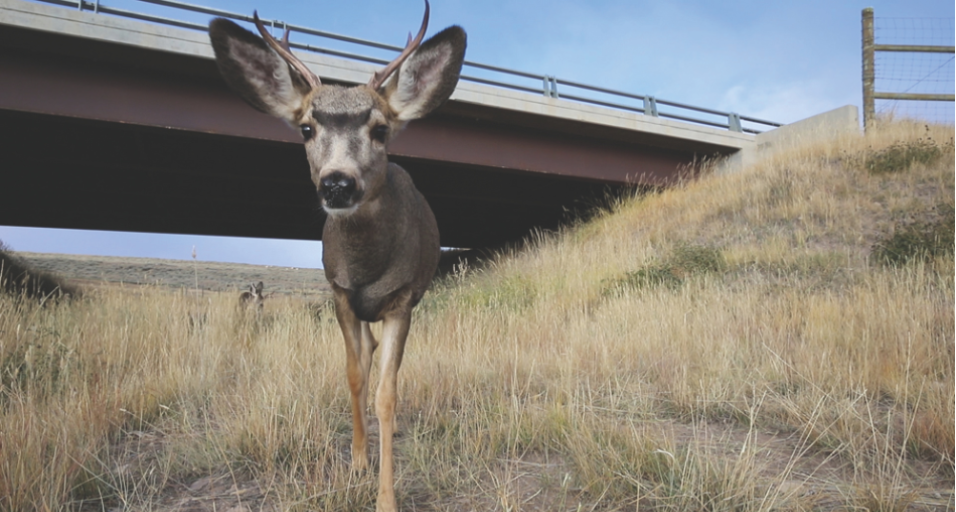
Since 2017, we have invested more than $90 million in wildlife crossings, ranging from major pronghorn overpasses to fencing that funnels deer toward existing agricultural underpasses.
We currently have more than 1,500 GPS collars on big game species. Years of data collection have enabled us to engineer projects that guarantee success. To us, success means more than reducing vehicle collisions and wildlife mortality, it means opening thousands of acres of habitat that were previously inaccessible. Increased habitat availability leads to healthier mule deer, pronghorn, moose and other species. By removing barriers, we provide wildlife with essential access to water resources and spawning habitats, facilitating seasonal migration and fostering more resilient populations.
Three years ago, we reevaluated our strategy by expanding our priorities and modernizing our messaging. We have moved toward all-species mitigation, incorporating our existing aquatics work into these efforts. Our new emphasis is on keeping fish and wildlife moving. By broadening the conversation to a Movement Matters Initiative, we have advanced the understanding that most species require free movement across the landscape. Removing fish barriers to enhance spawning and adding features to crossings for nongame species are now integral parts of our broader initiative.
We are grateful to have received $24 million from the Federal Highway Administration’s Wildlife Crossing Pilot Program. This award, the largest of the first funding period, has been allocated to the Kemmerer U.S. Highway 189 project, which is currently under construction.
This federal support, alongside Secretary’s Order 3362, has enabled us to achieve far more than we could have independently. However, significant work remains. Our highest priority project aims to protect a native bighorn sheep herd. To date, $2.5 million has been raised privately, and the Wyoming Game and Fish Commission, together with WYDOT, have committed several million dollars. Despite these local commitments, this critical project cannot be completed without a dedicated federal funding source.
Wyoming is a large state with a small population, and current state funding is insufficient to address crossing infrastructure projects that benefit visitors from around the world. A sustainable federal funding source is essential to ensure these non-partisan projects are completed.
Roadways intersect our ecosystems and are a necessity, however, science-based solutions now allow us to design and mitigate these roads to minimize their impact on wildlife. Wyoming’s Movement Matters work is a testament to our state-driven, comprehensive, science-based approach, which combines community engagement with federal partnership.