Big game hunters in Wyoming have more options for legal carcass disposal this fall thanks to the generosity of two conservation organizations.
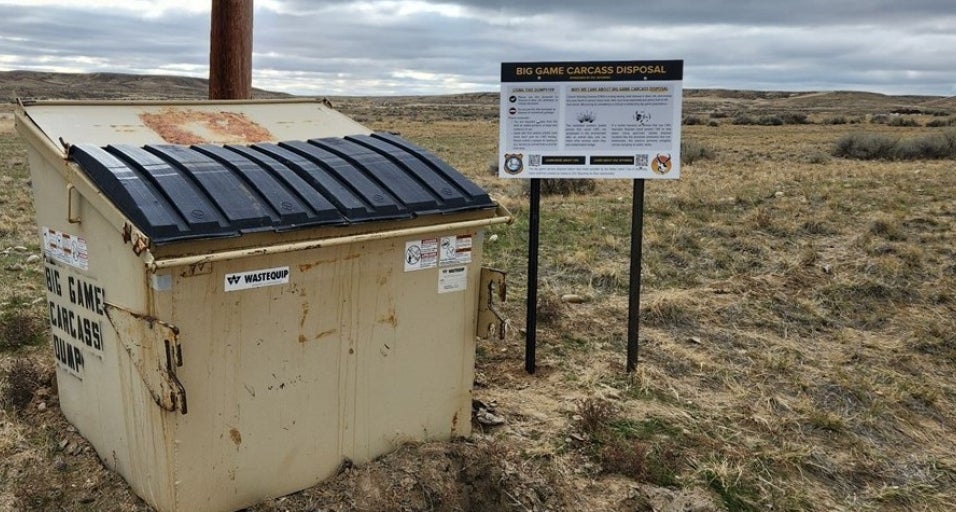
For several years, the Wyoming Game and Fish Department has been increasing the availability of big game carcass dumpsters around the state to facilitate proper carcass disposal and lessen the potential for environmental spread of chronic wasting disease.
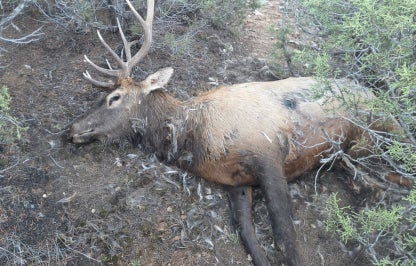
Chronic wasting disease is a fatal disease of the central nervous system affecting mule deer, white-tailed deer, elk and moose. CWD infected carcasses can transmit CWD to healthy animals and contaminate environments further spreading the disease. To minimize the possibility of transmission to healthy cervids, big game carcass transport and disposal regulations are in place.
Regulations require that after all legally-defined edible portions of meat have been removed from the field, the remaining carcass may be left in the field at the site of harvest. If a harvested animal is removed from the field for processing, the remaining carcass must afterwards be disposed of in an approved landfill.
Carcass dumpsters are emptied regularly by sanitation companies into approved landfills, meeting the CWD disposal regulations.
This year, the Wyoming Chapter of the Dallas Safari Club and the Gillette-based Wyoming Sportsman’s Group have provided funding to support and expand the carcass dumpster program into new communities including Tensleep, Sundance and Hulett.
“The support of these two organizations allows the department to offer both additional carcass dumpsters in new locations and increase the weeks of availability for several existing dumpster locations,” said Austin Wieseler, Cody wildlife biologist and member of the department’s CWD working group, who assisted with the program’s expansion. “These dumpsters provide a convenient way for hunters to comply with carcass disposal requirements, while also contributing to CWD mitigation efforts.”
In addition to the Dallas Safari Club and Wyoming Sportsman’s Group, some carcass dumpsters are provided and funded by the Bureau of Land Management.
It is illegal to dispose of a big game carcass on public or private lands (unless it is the site of the harvest) or along roadways.
Carcass dumpsters are available for use at no charge, but hunters are asked to only dispose of carcasses and no garbage. Many municipal landfills take carcasses for little or no charge. An interactive map is available showing landfill and carcass dumpsters sites throughout the state.
-WGFD-