Outdoor Hall of Fame on mountain

Wyoming Outdoor Hall of Fame

The Wyoming Outdoor Hall of Fame was created in 2003 to honor individuals, both living and posthumously, who have made significant, lasting, lifetime contributions to the conservation of Wyoming’s outdoor heritage. 


Recognition is given to people who have worked consistently over many years to conserve Wyoming’s natural resources through volunteer service, environmental restoration, educational activities, audio/visual and written media, the arts and political and individual leadership. The Wyoming Outdoor Hall of Fame is designed to educate the public about and promote the significance of our state's rich outdoor heritage. 


2026 Induction Ceremony 


The Wyoming Outdoor Hall of Fame induction ceremony took place in November 2026 at the Buffalo Bill Center of the West in Cody. 


Submit a Nomination 

Hall of Fame Nomination packet 


Youth Conservationist of the Year Nomination Packet


Have questions? Please call (307) 631-6878 for more information.


Get involved, become a sponsor


The outdoor industry is crucial for the state of Wyoming and the committee wants to continue to honor the people who make it possible. 

All donations are tax deductible.

Have questions? Please call (307) 631-6878 for more information. 

Past Hall of Fame Inductees

Year Inducted: 2009
Colonel William D. Pickett
Year Inducted: 2009

William D. Pickett was born October 2, 1827 near Huntsville, Alabama. He moved to Kentucky as a child and received an education that prepared him for a career in engineering. He served in the Mexican War, though his duties were fighting Comanche in Texas rather than in Mexico itself. After his discharge he returned to Kentucky where he helped with the design and construction of several railroads.

At the beginning of the Civil War, he joined the Confederate Army, rising to the rank of colonel and serving until the surrender. After the war, he returned to engineering with the Memphis and Ohio Railroad, and in 1876, he came west to hunt and explore. In 1883, he bought land along the Greybull River in north central Wyoming and took up  ranching. He stayed until 1904, serving three terms in the Wyoming Legislature before returning to Kentucky where he died in 1917.

Pickett was one of the earliest members of the Boone and Crockett Club, the group Theodore  Roosevelt created in 1887 "to work for the  preservation of large game in this country" and  "to promote inquiry into, and to record observations on, the habits and natural  history of various wild animals." Pickett served as the organization's vice  president in 1897, contributed to several of its  early books, and was the primary author of Hunting at High Altitudes, a Boone and Crockett volume published in 1913. No less an authority that George Bird Grinnell wrote that Pickett "has had an experience hunting grizzly bear greater probably than that of any man who ever lived. A keen sportsman, a lover of outdoor life, and a Southern gentleman, Colonel Pickett represents the ideals of the Boone and Crockett Club."

Year Inducted: 2009
Olin D. Sims
Olin D. Sims
Year Inducted: 2009

Olin D. Sims was born September 1, 1960 in Riverton, Wyoming and raised  in the Rock Creek Valley at Mcfadden, Wyoming. He spent his entire life in agriculture, working on his family's ranch with his father Don, his brother Scott, and  their families.

Olin was known as one of the most progressive, conservation-orientated ranchers in Wyoming. The Sims family has received numerous state and national awards for their land stewardship practices. Olin planned many of the ranch's conservation projects including reservoir/wetland dam reconstruction, fencing and cross fencing pastures, developing water sources for livestock and wildlife, and adopting state-of-the-art approaches to grazing management. The ranch developed an intensive range-monitoring program to  better track changes in forage due to the ir management practices.

In 2003, the Sims family helped the Wyoming Game and Fish Department manage the irrigated hay meadows on the Wick Wildlife Habitat Management Area, located near the Sims ranch by using their livestock to execute a short duration, high intensity grazing  program designed to improve forage for wintering elk. Olin was largely responsible for launching this program, and it continues today, an example that has been followed by other land managers.

Olin served as President of the National Association of Conservation . He was instrumental in providing information to Congress that was used to develop the 2007 Farm Bill's conservation programs.

He was an avid outdoorsman and felt strongly that it is everyone's responsibility to conserve our natural resource s for generations to come. Olin passed away on December 7, 2007.

Year Inducted: 2009
Terry Cleveland
Terry Cleveland
Year Inducted: 2009

Terry was born to Lee Francis and Mary Ellen Cleveland on November 16, 1946, in Carbon County, Wyoming. At an early age he developed a keen interest in the outdoors, and spent much of his youth hunting and fishing in southern Carbon County. After graduation from Rawlins High School, he attended Colorado State University where he graduated in 1969 with a B.S. with honors in Wildlife Biology. That same year he commenced employment with the Wyoming Game and Fish Department as a Special Deputy Game Warden in Elk Mountain. Following a six month stint on active duty with the Wyoming National Guard, he returned to work for the Game and Fish Department in April 1970 as the Game Warden in Jeffrey City. He subsequently served as a game warden in Greybull and Saratoga before becoming the Regional Wildlife Supervisor in Casper and in 1996, was promoted to the Assistant Chief of the Wildlife Division in Casper. In 2003, he was named Director of the Wyoming Game and Fish Department retiring in 2008 following a 39 year career. As Director, he was active in addressing brucellosis is in elk and wild bison, enhancing landowner relationships with the Department, and working with the Wyoming Legislature to address legislative and monetary needs of the  agency. Gray wolves and grizzly bears were delisted during his tenure though wolves were subsequently re-listed following his retirement.

Terry is a charter member of the Wyoming Chapter of the Wildlife Society and a charter member and past president of the Wyoming Game Wardens' Association. He is a certified wildlife biologist with the Wildlife Society. During his career, he received the Director's Award and the Peer Recognition Award from the Department and was named the Wildlife Officer of the Year from Wyoming by Shikar Safari International in 1984. He has received the Phillip W. Schneider Lifetime Achievement Award, the  highest recognition bestowed on an individual by the Western Association of Fish and Wildlife Agencies. Terry was very active in the Western Association of Fish and Wildlife Agencies, as well as the Association of Fish and Wildlife Agencies, chairing and serving on various regional and national committees.

Following his retirement from the Department, Terry served as the interim executive director of the Wildlife Heritage Foundation of Wyoming as the Foundation sought a new permanent President and Chief Executive Officer. He remains on the Board of the Foundation and Chairs of the Advisory Committee for the Building the Wyoming We Want initiative.

Year Inducted: 2008
George William "Bill" Grunkemeyer
Year Inducted: 2008

George William " Bill" Grunkemeyer was born July 27, 1942 to George and Prudence Grunkemeyer. He attended Sheridan schools and graduated from the University of Wyoming with a BS in microbiology. He was an avid outdoorsman who loved fishing, hiking, camping and skiing. It was these interests that led him into the field of film.

In the late 1960s,  Bill had the opportunity to work with Jim Simon, a  previous Outdoor  Hall of Fame inductee, a noted  biologist  and filmmake r who was working with the Wyoming Travel Commission after several years of filming with the True -Life Adventure series  produced by Walt Disney. During that summer Bill realized his passion was film production with an emphasis on wildlife and the outdoor subjects.

In the mid-l 980s Bill formed a company he called Grunko Films, producing videos featuring hunting, fishing and wildlife. He produced over 40 outdoor and wildlife videos as well as 35 episodes for his television series, Experience the Wild. His career took him from the top of the Arctic to the tip of South America.

Bill worked for all major television networks and won numerous awards for his own productions as well as his camera work for other companies. The National Wildlife Federation And the Wyoming Wildlife Federation twice named him "Communicator of the Year" for Wyoming.

Bill passed away in 2003, a victim of amyotrophic lateral sclerosis-Lou Gehrig's Disease.  However, his work has been archived with the state of Wyoming, which includes more than 1000 hours of wildlife, hunting, fishing, and outdoor adventure.

Year Inducted: 2008
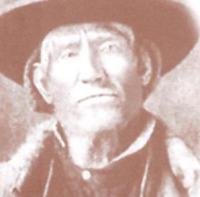
James H. "Jim" Bridger
Year Inducted: 2008
Jim Bridger was born in Virginia. In 1804, he moved to Missouri with his parents. After an apprenticeship as a blacksmith, he hired on with William Ashley in 1822 and headed to the Rocky Mountains after fur.

Jim was an accomplished trapper and mountain man who became an expert scout for the Army. He was one of the first Americans to see the wonders of Yellowstone. In  1824, he followed the Bear River south into the Great Basin  where he discovered the Great Salt  Lake. In 1843, he established a fort and trading post (Fort. Bridger) on the Black's Fork of the Green River in Wyoming Territory. In 1859, he guided the Raynolds expedition into Montana  and in 1861, showed army engineer E.L. Berthoud into Colorado. He assisted  with the surveys for the transcontinental railroad and the campaign against Red Cloud. As much as any other man, he opened the American West and many places in Wyoming and the West are named after him.

He lived long enough to see the Yellowstone region set aside as a national park and must have been pleased to know that a corner of the wilderness he knew had been protected from development. In 1867, with failing eyesight, he returned to Missouri, and in 1881 he died penniless and forgotten by all but a few old friends.
Year Inducted: 2008
William "Bill" Barlow
Year Inducted: 2008
William Barlow was born to Marion and Lewis Barlow on October 1, 1936 in Sheridan, Wyoming. He graduated from Campbell County High School in 1954 and went on to earn a degree in Agriculture at the University of Wyoming in 1958. After graduation he was a delegate for an International Farm Youth Exchange program and spent six months in Burma. In 1960, he joined the International Voluntary Services and spent the next two years in Cambodia, where he met his future wife, Bernadette, who was attending law school. When he returned to the US, Bill got his teaching certificate and taught Vocational Agriculture and Social Studies in high school before returning to the family ranch where he continued the tradition of conserving grassland for livestock and wildlife alike.

In the early 1970s, the huge coal deposits under the Powder River basin became a valuable commodity. He and his neighbors watched with growing concern as strip mines opened across the landscape, and proposals for coal-fired power plants emerged. In 1973, this group of landholders organized and began calling itself the Powder River Basin Resource Council.

Over the decades, Barlow and the council spoke upon spectrum of issues affecting land and landholders in the region. It pressed for passage of the Surface Mining Control and Reclamation Act, opposed the construction of coal-fired power plants in Wyoming, and was instrumental in passing the state's Industrial Siting Act. One of Bill's most significant contributions was his role in the Cow Creek-60 Bar Land Exchange with the BLM that eventually formed the 20,000-acre Burnt Hollow a rea for public use. The whole process took almost five years, and BLM has described it as one of the biggest, most complicated land exchanges in Wyoming. Bill didn't see this project come to fruition as it was dedicated in March, 2002 one year after his death in March, 2001.
Year Inducted: 2008
Fred Eiserman
Fred Eiserman
Year Inducted: 2008
Fred was born to Fred and Anna Wise man in Pearl River, New York on  October 24, 1923. After graduation from Pearl River High School he joined the armed forces during World War II. After service in the  European and Pacific theaters and subsequent discharge, he went on to  receive his degree in wildlife management with  a specialty in fisheries at Utah State University in 1950. That same year he began his career as a  fisheries biologist with the Wyoming Game and  Fish Department and eventually was promoted to the positions of district fisheries supervisor and fisheries management coordinator over a career that lasted 28 years.

Fred was instrumental in developing the first stages of inventorying and surveying fish habitat. He served as a member of the Wyoming Legislative Interim Committee for stream preservation, chaired the first "Instream Flow Needs and Specialty Conference" and participated in the development of Wyoming's Stream Classification map. Before DEQ and EPA, he worked with the State Sanitation Engineer to remove wastewater from streams and had a major responsibility for the 400 mile chemical treatment of the Green River prim to the flooding of Flaming Gorge Reservoir.

He served as President of the Western Division of the American Fisheries Society. In  1969, was named to the Hall of Excellence by the Society in 1977 and was recognized as the outstanding worker for 1976 by the Colorado/Wyoming Chapter of the American Fisheries Society. He also receive d the Wildlife Conservation Award from the Wyoming Wildlife Federation  and the Sears Roebuck Foundation. He has been a member of the American Fisheries  Society since 1950, a member of the American Institute of Fisheries Research Biologists since 1970, was a founding member of the Great Plains Fisheries Workers Association and has been registered with the American  Fisheries Society as a fisheries  scientist since l 970.

After leaving the Department, Fred was employed by industry as an environmental compliance person working in Alaska. Mo re recently he is serving as an aid at the Casper College Werner Wildlife Museum and as a recorder a t the Western History Archives. He is also an active participant in the Library of Congress veteran's interview program and has served for more than 20 years on the Platte River Parkway Board of Trustees. Fred has also written several publications dealing with fisheries and environmental issues.
Year Inducted: 2007
Finis Mitchell
Finis Mitchell
Year Inducted: 2007

Finis Mitchell was born on November 14, 1901 in Ethel, Missouri, son of the late Henry Reece and Faye Troutman Mitchell. He traveled by wagon with  his parents from Missouri to Wyoming's Wind River Mountains, arriving on April 26, 1906. The family seeded on 160 acres in the sagebrush desert under the Wind River Range. His formal education ended after the 7th grade; however, he later served two terms in the House of Representatives and was honored with an honorary doctorate from the University of Wyoming.

In 1909 he climbed his first mountain on an elk hunt with his father. What he saw shaped the rest of his life. "From the first time I saw them, I felt the mountains were my real home. Where else can a man get so close to Heaven  - to his Creator - with both feet on the ground?" He  went on to travel more than 15,000 miles of Wind River Trails and climbed in excess of 250 peaks. In 1975, the US  Geological Survey named Mitchell Peak after Finis, elevation 12,842, and erected a plaque noting that he had climbed the peak 11 times. He went on to climb it another 10 times after the plaque was in place. Many other peaks, glaciers, and lakes in the Wind  River Range have names suggested by Mitchell.

Finis married Emma Nelson on June 4, 1925. They had two children, Anna M. Dew and William R. Mitchell. He worked for Union Pacific Railroad and guided fishermen in the mountains. During the Depression, they set up the first recreation area on the Pacific side of the Wind River Range and called it  Mitchell's Fishing Camp. The only problem was, out of 319 lakes accessible from the camp, only five contained fish. To remedy a the problem, Finis, along with his brother and father, horse -packed  trout into the range to stock lakes. The Game and  Fish  Department  furnished, the fish in five-gallon milk cans, and over a period of eight years the Mitchells took them into more than 300 lakes. In essence,  they took a fishing desert and turned it into a sportsman's paradise.

In 1975, Fin is wrote the definitive guide  to hiking in the Wind River Range, Wind River Trails. He helped mark trails and update maps for both the National Park Service and the US Forest Service. His efforts opened the backcountry of  "the Winds" to many. In 1920 he bought his first camera and accumulated well over 100,000 photos, as part of his legacy.

He received many awards and citations during his lifetime, including special recognition from the Bridger-Teton  Forest on their 75th anniversary. He was also recognized by both the California and Wyoming legislatures, the US Environmental Protection Agency, and the dining hall at Western Wyoming Junior College was named for him and Emma. In addition, he has been the focus of countless articles in  scores of magazines and his photographs have appeared in many publications, including some in the Soviet Union.

Until his death November 13, 1995, one day before his 94th birth day, Fin is lived by the philosophy "Take only pictures, leave only footprints, kill nothing but time."

Year Inducted: 2007
Hans Kleiber
Hans Kleiber
Year Inducted: 2007

Hans Kleiber was born August  24, 1887 in Jaegersdorf, Austria, on the eastern slope of the Sudeten Mountain Range. His parents love for nature inspired Hans to learn about, love and appreciate the beauty of the outdoors. He was an avid reader and was intrigued by the American Frontier. At the age of 14, Hans quit school to work to help his family through a financial crisis. In 1900 he and his family immigrated to the US where his father, a textile designer, found work in Massachusetts.

He was quickly disillusioned with the north east as it was not the "America" he dreamed of experiencing.    Being fluent in German as well as French, Hans quickly learned the English language and immersed himself into read­ing outdoor magazines featuring the forests and mountains of the west. In  addition, he had short- lived, informal art training by way of a brief apprenticeship and time spent with friends in New Jersey, where he learned the principles of art and the use of paint. When he learned of the government's plan to establish a Forest Service, he made a personal decision to eventually become a part of this national project.

In 1906 , Kleiber moved west and joined the McShane Timber company, based in the Bighorn Mountains, as he was too young for a Civil Service position. In 1908, he became a Forest Guard and finally, after the long task off finalizing his American citizenship, he was appointed  Forest Ranger in 1911. In 1920, he was designated as a Ranger at Large.

Kleiber laid out many of the Bighorn Mountain roads and trails still used today, as well as exploring and map­ping unknown areas in the Big Horn, Washakie, Wind  River and Bridger National Forests. He became an expert firefighter, and was a trusted Forest Service Firefighter crew boss in Minnesota, Idaho, Montana and Wyoming. Kleiber built and rebuilt telephone lines connecting Bighorn  Mountain Ranger stations to aid in fire control.

Hans resigned from the US Forest Service in 1923 to pursue art full- time. His love of the Wyoming outdoors and his time spent  there as a Ranger showed through in his poetry, stories and artwork. He was soon "discovered" by an Eaton Dude Ranch guest, who arranged for his first big show in Boston. Largely self- taught, Kleiber became a nationally known etcher. His work was shown around the US, including the National Museum in Washington, DC in 1944. Etchings that once sold for $10 are now worth hundreds. He also published  a book of poetry called Songs of Wyoming and a book of fanciful forest animal short stories called Daydreams and Fantasies.

Hans Kleiber died at his home in Dayton , Wyoming on December 8, 196 7. Kleiber's family donated his rustic 1920's log studio, along  with art, furnishings, photos and art supplies to his "hometown" of Dayton at the foot of the Bighorn Mountains. His love for the outdoors and wildlife lives on in the art he left behind.  It continues to inspire  people  to find  the places  he stood and  travel the trails he blazed as an early outdoor pioneer. Preservation and enjoyment of our mountains were his life's work, and his artistic exploration grew from this need to express his love for the outdoors.

Year Inducted: 2007
Charles E. "Chuck" Ward
Year Inducted: 2007

Chuck Ward was born in Cheyenne, Wyoming, April  15, 1926 to Joe and Helen Ward. He attended school in LaGrange, Wyoming, graduating in 1944. He served in the US Air Corps until 1946 and then went on to attend  the University of Montana, graduating with a BS degree in Wildlife Technology in 1950. He worked a short time as a Research Biologist for the US Fish and Wildlife Service in Montana, and then in 1951 Chuck began his thirty-one year career with the Wyoming Game and Fish Department.

Initially, Ward worked in Cheyenne as an Education Assistant where he influenced the lives of many young people, by sharing the conservation message. Many of these young people went on to pursue careers in the  conservation  arena. Chuck later became the game warden in Casper. Over the next 20 years he became the voice for the Wyoming Game and Fish Department, doing radio programs five nights a week on KTWO and KVOC radio stations. In addition, he became "Mr. Game and Fish" to nearly everyone in the state through his bi-weekly game and fish reports on KTWO TV

As a game warden, Chuck was tenacious. He was known to be out checking hunters and  fishermen when they least expected to encounter a warden. As a  warden he had his finger on the pulse of both wildlife and  the public, and he applied that knowledge to  merge the management of the resource with public demands within his district. At every opportunity he continued his education efforts,  including providing a conservation program for all  ninth grade students in the Natrona County School District. He also presented  a program to all Casper fourth graders on fur-bearing animals and trapping in conjunction with a chapter in  their Wyoming History book on mountain men. One of the students in these classes was the current Chief Game Warden, Jay Lawson.

Chuck was an active member in The Wildlife Society, The American Society of Ecologist and Herpetologists, Phi Sigma Biological Honoree, Wyoming Peace Officers Association, Casper Red Cross Water Safety Commission, Casper Community Board of Recreation Directors, Boy Scouts of America as Cubmaster, Scoutmaster, District and Council Camping and Activities Chairman, Explorer Post Advisor and  the Wyoming Game Wardens Association. Chuck was a certified Casting Instructor for the National Angling and Fly Fishing Organization, NRA Police Firearms Instructor, and Wyoming Hunter Safety Instructor.

Following his retirement in 1981, Chuck continued in the education field as a science and computer science instructor in the Torrington school system, Eastern Wyoming College, and Darby School District, Darby, Montana.  Following retirement from his second career, he and  his wife, Wilma, moved to Puyallup, Washington to  be near their family. Since living in  the  Puyallup  area, he has received  the  President's Volunteer Service Award for volunteer service to the community. This included six years assisting first and second graders improve their reading skills and helping judge the Puyallup School District science fair. 

Year Inducted: 2007
Bert and Meg Raynes
Bert and Meg Raynes
Year Inducted: 2007

Bert  Raynes was  born  in  New Jersey, and his wife,  Meg, was born in  Pennsylvania. The two met while attending Penn State. They vacationed in Jackson Hole in the 1950s and made the decision to move there permanently upon retirement in the 1970s. Bert credits Meg for introducing him to the world of nature. The two of them complement each other's talents and have worked as a team to make significant contributions towards the awareness and conservation of Wyoming's natural resources.

Bert, with  Meg as editor, has written five books, as well as a weekly natural history column for the Jackson Hole Nest for the past 28 years. His books include helpful guides to find and identify birds in the Jackson area such as Birds of Grand Teton National Park and Surrounding Areas, Finding the Birds of Jackson Hole, and Winter Wings. Other books, Valley So Sweet and Curmudgeon Chronicles, focus on area history and include gleanings from his column. They were also the authors of the first valley bird checklist, which continues to be revised and updated every few years.

Meg discovered a historic hunting blind site on the Jackson Hole Elk Refuge that archaeologists acknowledge as Raynes Site 1. Together, Bert and Meg founded the Jackson Hole Bird club in the 1970s that still meets monthly and provides a forum for residents and visitors to exchange information on bird observations. Bert has taught classes at the Teton Science School for many years. Bert and Meg have provided support to the Wyoming Game and Fish Department's Nongame Bird Program through educating the public and providing records over the years on bird occurrence, distribution, and natural history. In recognition "of the extraordinary contributions to the public's awareness of wildlife and the habitat necessary for its survival," Bert was awarded the prestigious Rungius Medal from the National Museum of Wildlife Art in 1999.

Although Bert is no longer able to lead birding trips, he still answers numerous phone calls and e -mails  requesting information on identification of birds and/or conservation. Meg, in support of their life long partnership, continues to edit and critique Bert's writing.

Frank Craighead
Year Inducted: 2006
Dr. Frank C. Craighead, Jr.
Frank Craighead
Dr. Frank C. Craighead, Jr.
Year Inducted: 2006

Frank Cooper Craighead, Jr. and  John Johnson Craighead were born  in Washington, D.C. on August 14,  1916.  Their par­ents were Dr. Frank C. Craighead, Sr. and Carolyn Johnson Craighead. Frank, Sr. was a forest entomologist working for the Department of Agriculture, and Carolyn was a biologist technician. As youths, the boys developed a keen fascination with falconry, helping to pioneer the sport in the United  States and honing what would become their lifelong interest in wildlife conservation. In the summer of 1934, just after high school, Frank and John drove west in a 1928 Chevrolet with several of their friends,  photographing and capturing  hawks and falcons. They drove on dirt roads all the way, pulling over at night to camp.  During this trip, they first  saw Jackson Hole and visited with world renowned naturalists Olaus and Mardy Murie. The  spectacular beauty of  Wyoming remained with them through subsequent travels,  and they promised themselves they would return someday to live near the Tetons.  Parts of this trip were described in their first magazine article, “Adventures with Birds of Prey,” penned for National Geographic  Magazine in 1937.


Frank and John graduated with A.B. degrees in Science in 1939 from Pennsylvania State University, where they both excelled on the wrestling team. They went on to the University of Michigan for M.S. degrees in Ecology and Wildlife Management in 1940. That same year, an Indian Prince named K.S. "Bapa" Dharmakumarsinjhi read their falconry article in the National Geographic Magazine and invited them to visit him in India. They wrote another National Geographic article and made a film about this visit, both titled, " Life With an Indian Price." These were the last days of the rule of Maharajahs in India, and the last  days of Indian falconry on a grand scale .


With the outbreak of World War II, the brothers organized and conducted an outdoor living course for training military pre-inductees. Frank and John were commissioned as Lieutenants in the U.S. Naval  Reserve Aviation Training Program and stationed in Pensacola, Florida. The Navy had taken keen interest in the brothers' outdoor skills course at the university, and as naval officer they were thus tasked with the unique assignment of pioneering survey techniques for military aviators and other personnel in the South Pacific. One outcome of this service was publication of their oft-reprinted Navy manual, "How to Survive on Land and Sea." While on a short military leave, Frank took a train to Illinois and married Escher Stevens.


After their wartime service, the brothers returned to Jackson Hole, where they bought 14 acres of land from John Moulton on Antelope Flats near Moose. They also completed their Ph.D studies at the University of Michigan. John Craighead married Margaret Smith and the two couples built identical cabins on their property in Moose and began families.


Frank and John went their separate ways in the early 1950, when John accepted a permanent position with  the University of Montana.


John spent most of his subsequent career at the University of Montana, serving for many years as the leader of the Cooperative Wildlife Research Unit there. Similarly, Frank served in several li:de ral and academic positions and in 1955 formed the nonprofit Outdoor Recreation Institute. In 1959, Frank and John careers merged again. At the request of Yellow­stone National Park, they began a 12-year study of grizzly bears. One of their greatest contribution to this study, and to the science of wildlife ecology, was their leadership in developing and using radio transmitters.


If there is one recurring theme in the lives of these remarkable individuals, it is the fact that these brothers repeatedly pioneered so many frontiers, from falconry to wildlife cinematography and immobilization, radio and satellite telemetry, and large scale satellite mapping of habitats. Perpetuating their legacy, many of the Craigheads' students, co-researchers, and children went on to pioneer the ir own new frontiers in science with other wildlife: species including mountain lions, wolverines, Arctic grizzlies, Alaskan brown bear, and peregrine falcons, among many others.


Although Frank and John retired in the mid- l980s, neither ever gave up their lifelong devotion to outdoor recreation, scientific research, and interpretation of the natural world. At age 89, John continues to remain as active as possible, fishing, writing, and organizing a life's worth of paper, files, photographs and artifacts.
Floyd Martin Blunt
Year Inducted: 2006
Floyd Martin Blunt
Floyd Martin Blunt
Floyd Martin Blunt
Year Inducted: 2006

The Wyoming Game and Fish Department's Sybille Wildlife Research Unit wouldn't be what it is today, or where it is today, if it were not for Floyd Blunt. He was responsible for establishing the Research Center at  its present location, and his forward-thinking resulted in one of the nation's finest research facilities.


Floyd was born to Newton and Mabel Blunt January 24, 19l6 on a homestead near Yoder. He graduated from Guernsey High School in 1937. Putting himself through college by working full-time as a mechanic and gas station attendant in Laramie, he graduated from the University of Wyoming in 1941 with a B.S. in Agriculture. After Pearl Harbor, he joined the Army where he served 4 1/2 years in the South Pacific. Floyd was discharged in 1945 as a decorated Master Sergeant.


His career with the Wyoming Game and Fish Department began in 1946. He took leave to attend graduate school in 1947 but was called back that fall. Floyd's  work on large game resulted in an increase in antelope quotas due to improved aerial survey techniques in 1949-50 that showed there were more antelope available

for harvest than previously thought. He worked on an improved deer, elk, and antelope trap design, and these species were subsequently transplanted to new areas. He was instrumental in transplanting the Merriam's Turkey to the Bear Lodge area of the Black Hills.


Floyd became Coordinator of Federal Aid in Wildlife Restoration in 1950. He was released from his duties in 1955 so that he could oversee construction of the Sybille Wildlife Research Unit (now designated the Tom Thorne/Beth Williams Wildlife Research Center).


Sybille was the first of its kind, and Floyd had to design chutes and pens for animal handling.  Many of his innovations would  be copied in later years. Floyd led by example, encouraging every researcher to emulate  his calm demeanor, steady voice and slow, deliberate actions to avoid exciting captive wildlife. His  philosophy was to "let the animal figure out what you wanted." His unique personality and calming influence on animals was amazing. When asked about  that ability,  Floyd  said  you had to develop "simpatico" or mutual interactions and understanding that allowed  you to gain their confidence.


His relationship with animals evokes Rudyard Kipling's description of King Solomon's mythical ability to communicate with beasts and birds.


There was never a king like Solomon Not since the world began

Yet Solomon talked to a butterfly 

As a man would talk to a man.


Year Inducted: 2006
Tom Bell
Tom Bell
Year Inducted: 2006

Tom Bell has dedicated his life to the conservation of wildlife and wild lands. His induction into the Wyoming Outdoor Hall of Fame recognizes a full lifetime of achievement.


Tom was raised on a small ranch near Lander and attended one-room schools through the 8th grade. He graduated from Fremont County High School in 1941 where he was president of the student body. With the outbreak of World War II, he enlisted in the U.S.  Army Air Force and was assigned to the 455th Bombardier Group in Italy. In May of 1944, he lost his right eye to German flak but completed the combat mission he was on despite his injuries. At age 20, he was a 1st Lieutenant with a Silver Star, Purple Heart, and the Air Medal with three Oak Leaf Clusters. Following the war, he returned to the University of Wyoming where he majored in wildlife management, reactivated the Rodeo Club, found the Ski Club, and served as student body president, earning a bachelor's degree in 1948.


After graduating, Tom ran a sawmill and later worked at a trout hatchery. Having married, he worked for a time in the oil and gas industry and then returned to the University of Wyoming to complete a master’s degree in zoology. He also received the first Aven Nelson Fellowship in Botany and conducted research for the Rocky Mountain Herbarium.


After teaching junior high science in Lander, he worked for the  Wyoming Game and Fish Department as a  bi­ologist and habitat manager. He was appointed manager of the Ocean Lake Game Management Unit in 1957. Elected president of the Wyoming Wildlife Federation in 1965, he was instrumental in revealing thousands of miles of illegal fences on public lands. He also founded the Wyoming Outdoor Council in an effort to foster cooperation between outdoor interests.Tom Bell founded High Country News in 1970, feeling the public needed to be educated as to what was happening to our land, water, air and wildlife. The paper is still in existence, with a circulation of over 20,000.


In recognition of his many achievements, Tom Bell received the Shikar-Safari International Award for Wyoming Conservationist of the Year in 1970, the American Motors Conservation Award for 1973, and the National Wildlife Federation's J.N. "Ding" Darling Conservationist of the Year Award in 2001.

Sam Mavrakis
Year Inducted: 2006
Sam H. Mavrakis
Sam Mavrakis
Sam H. Mavrakis
Year Inducted: 2006

For the Great Outdoors to be a true asset, people have to get out into it.  Sam Mavrakis can be considered one of Wyoming's premier advocates for making that happen. Born June 18, 1918, in Monarch, Wyoming, to Greek immigrant parents Harry and Georgia  Mavrakis , Sam graduated from Sheridan High School in 1937. He attended BYU on a football scholarship, where he was a varsity football player and wrestler.  In January 1942, Sam was drafted into the Army and spent WWII in the Pacific Theater where  he served as a Staff Sergeant with the 211th  AAA Battalion.  He was honorably discharged in December 1945. He and his older brother, Paul, opened the Ritz Sporting Goods Store in Sheridan in 1947. The store closed in December 1998. Sam married Goldie Williams in 1953 and they had two children, Tami and Sam Paul.  Goldie passed away in 1980. In 1990 Sam married Lynn Borg  Burnham; they still reside in Sheridan.  Sam recently retired from operating Sam's Flies and Rods out of his home.


From 1947 through 1998, Sam not only sold hunting, fishing, and camping equipment; he also dispensed enormous amounts of professional advice, encouragement, and personal goodwill. He genuinely want ed  people  to have as good a time as possible while they were out enjoying Wyoming. Whether it was equipment, a lesson in how to use it or use it better, or directions to a new place to use it, Sam was always ready to help.  He conduct­ed  fly tying and casting classes and demonstrations at the store on a  regular  basis. It was  not  unusual to see him in the alley and occasionally on  Main Street  helping a customer with casting techniques.  Over the years, his customers ranged from the  kids down  the  street  to  Wyoming Governors, U.S. Senators and  Representatives, Presidents and Vice -Presidents, and the Queen of England .


Sam was far-sighted enough to  know that simply getting folks outdoors  wasn't enough.  The outdoors had  to be enticing and suitable for people to use. To  that end, he was a staunch advocate for Wyoming lands, fish, and wildlife. Sportsmen came into the store to discuss legislation and  policy with Sam, who  in turn  rallied support for or against the various issues. Many petitions had origin in the Ritz, and Sam initiated several letter- writing and phone-call campaigns to legislators. An all-around advocate for wildlife in the state, Sam was active for years in organizations that supported big game, small game, and fish.


His generosity was as well known as his willingness to help. He personally contributed to many causes , among them Trout Unlimited, Rocky Mountain Elk Foundation, Ducks Unlimited, Wyoming Wildlife Federation, Foundation for  North  American Wild Sheep, and  Pheasants  Forever. He also  regularly donated his custom built fly rods to various organizations for their fundraisers. On a more personal level, local kids who came into the Ritz with broken hunting or fishing equipment always left with  more than they brought in, and  they were seldom charged. This was not just a goodwill gesture  on Sam's  part.  He was  building the next generation of hunters and anglers.


Year Inducted: 2006
Dr. John J. Craighead
Year Inducted: 2006