CHEYENNE — Wyoming Game and Fish is celebrating the recent expansion of the USDA Partnership to the Migratory Big Game Initiative.
“This initiative has proven a model of success for wildlife conservation in Wyoming, and we celebrate with our neighboring states as it expands its reach,” Game and Fish Director Angi Bruce said. “Building connected habitat ranges and migration corridors will not only be a benefit to big game populations, but to the landowners who will be able to build better resources and healthier lands.”
The Initiative was established in 2022 through a Memorandum of Understanding with the State of Wyoming. The program has expanded to Montana, Idaho, Colorado and is now expanding to Utah.
For the current fiscal year in Wyoming, the Migratory Big Game Initiative is backed by significant financial resources to ensure management goals are met:
- $8 million dedicated to EQIP (Environmental Quality Incentives Program) for specific big game projects.
- $8 million allocated for the CSP (Conservation Stewardship Program).
The State Office has an increased budget of $42 million for all EQIP practices and initiatives.
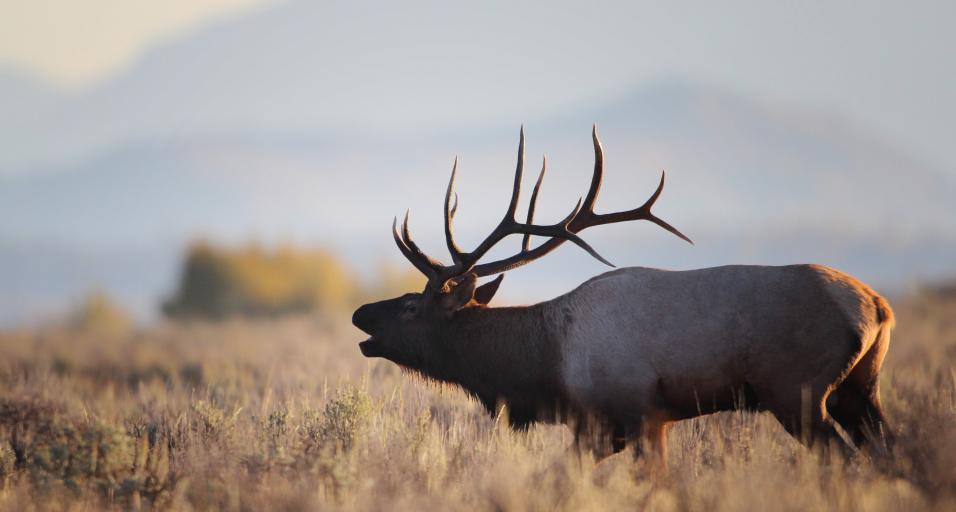
Since its inception, the partnership has resulted in successful conservation and habitat enhancement projects on more than 500,000 acres through investments. Through partnerships and private donations, the Initiative works directly with landowners to develop sustainable solutions for habitat conservation for key big game species.
“Wyoming’s private landowners are essential partners in conserving the health and resilience of our state’s big game habitat,” said Wyoming NRCS State Conservationist Jackie Byam. “Through voluntary, locally led approaches, the Migratory Big Game Initiative allows us to work directly with producers to restore landscapes, support migration connectivity, and strengthen working lands for future generations. We’re proud to continue building on this successful partnership as it expands across the West.”
Managed through the Natural Resources Conservation Service (NRCS) the initiative works directly with landowners on habitat restoration projects. For Game and Fish, the Initiative serves as a critical bridge between private land management and state wildlife goals. Through supporting habitat conservation on private land, the program helps mitigate migration corridor fragmentation, oversees installation of wildlife-friendly fencing, and the restoration of native habitats.
“The Initiative underscores a firm commitment to voluntary, incentive-based approaches, recognizing the pivotal role of private, working lands,” Bruce said. “It emphasizes the importance of empowering state and tribal partners and private landowners to work together to advance shared conservation priorities.”
For more information on the Big Game Initiative and how to apply, please visit the USDA Migratory Big Game Intiative webpage.
-WGFD-