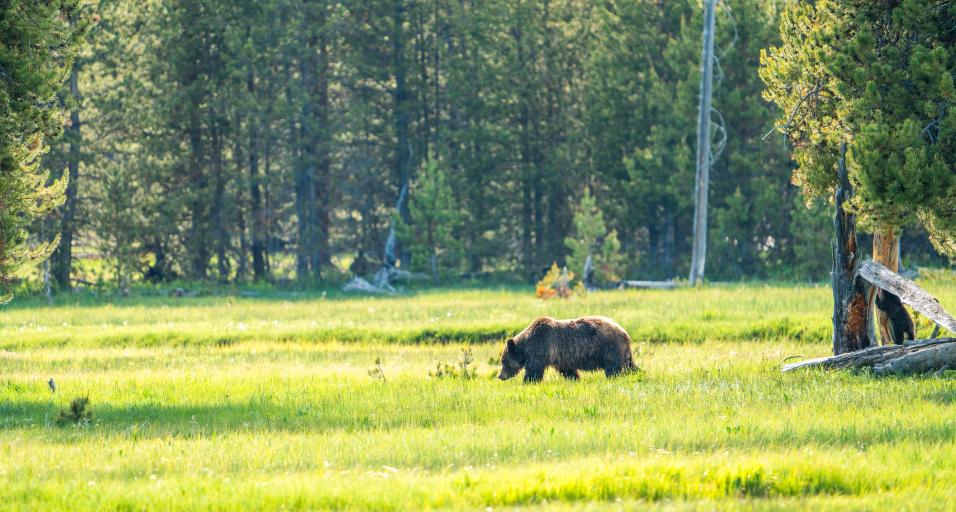

JACKSON – In recent weeks, significant bear jams and poor wildlife viewing ethics have been observed on Togwotee Pass. The Wyoming Game and Fish Department, U.S. Fish and Wildlife Service, and U.S. Forest Service staff are patrolling the area daily, trying to minimize traffic jams and prioritize public safety. Their efforts include intermittent hazing by wildlife agencies and increased patrols from law enforcement.
Wildlife managers are asking for the public's help in keeping both bears and humans safe by practicing responsible wildlife viewing behavior and operating vehicles lawfully. This includes parking only in paved pullouts and not in or along the highway. Interagency staff have observed wildlife viewers and photographers parking illegally on the roadway and interacting with bears in unsafe ways. The behavior of wild animals, particularly mother grizzly bears, can be unpredictable.
“Many people mistakenly believe that their presence on the scene is harmless, or even helpful, thinking they are keeping an eye on the bears to help them cross the road safely, " said Wyoming Game and Fish Large Carnivore Conflict Coordinator Brian DeBolt. “In reality, every person and vehicle creates an additional safety hazard that these bears have to navigate. This added stress and distraction make the bear's survival significantly more difficult.” To keep yourself and bears safe, adhere to ethical wildlife viewing practices:
- Never approach bears, stay in your vehicle, and always maintain a distance of at least 100 yards away from bears and wolves, and 25 yards from other wildlife.
- Do not stop your vehicle in the Togwotee Pass area to support ongoing safety efforts.
- Do not feed or make food accessible to wildlife.
- Respect all signs, laws, and regulations – including no stopping, standing, or parking on or along the highway per Wyoming Title 31 (31-5-504(a)/(i)/(J), 31-5-102(a)(vii), 31-1-101(a)(viii), and 31-5-102(a)(xl)).
- Cooperate and follow directions from law enforcement and wildlife officials.
Slow down and be vigilant while driving. Wildlife have been killed on Togwotee Pass due to collisions with vehicles.
As grizzly bear populations grow and expand, biologists have observed an increase in bears using roadside habitats. Some bears become habituated to people and road traffic, which reduces their instinct to flee, leading to dangerous encounters with humans. These habituated bears are at a higher risk of human-bear interactions, potentially causing human injury, scavenging for human food, or being killed or injured in vehicle collisions. Additionally, habituated bears are more likely to enter human developments and encounter improperly stored food, garbage, or other attractants. When bears are near roadways, people have been seen approaching them, encircling them, following them, and blocking their paths at distances of less than 100 yards.
Wildlife managers have invested considerable time and resources to keep these bears in their natural habitats and out of trouble. In 2021, the U.S. Fish and Wildlife Service began an intensive hazing effort to discourage bears from using areas within 100 yards of the road. This initiative involved monitoring the highway from dawn to dusk for several months. In 2022, efforts were expanded to include specially trained Karelian bear dogs, along with traditional hazing methods. Bears were also hazed out of occupied areas, such as the USFS compound and commercial zones. Since then, efforts to keep bears away from human-occupied areas and roads have continued, but managing public behavior and traffic remains a significant challenge. If unethical viewing practices persist or if bears clash with people, wildlife managers may have to take management actions, including capture, relocation, or removal.
Help keep bears wild and people safe by following the Bear Aware guidelines from the Interagency Grizzly Bear Committee. For additional information, visit the Bear Wise JH website.