
To stock or not to stock?
In 2026, the Wyoming Game and Fish Department stocked more than 5 million fish in more than 350 waters around the state. Work of this magnitude requires careful planning, and begs the question — how do biologists decide which fish and how many to stock, and how do they know if their stocking strategies are working?
Managing a program of this magnitude requires careful planning, and begs the question: How do biologists decide which fish and how many to stock? To maintain healthy fish communities and offer a variety of angling opportunities, biologists manage different waters for different purposes.
Since every fishery is different, they must monitor stocking success by measuring fish populations, average size, catch rates and angler satisfaction. One fishery, Twin Buttes Reservoir near Laramie, has received extra attention in recent years to compare the success of two varieties of rainbow trout.
A tale of two trout
Twin Buttes is part of the Laramie Plains Lakes, a system which is known for growing large fish quickly. Trout in this lake are unable to reproduce and many of them are harvested by anglers, so biologists periodically restock this water to maintain this popular fishery. For a long time, this included Eagle Lake rainbow, brown and cutthroat trout.
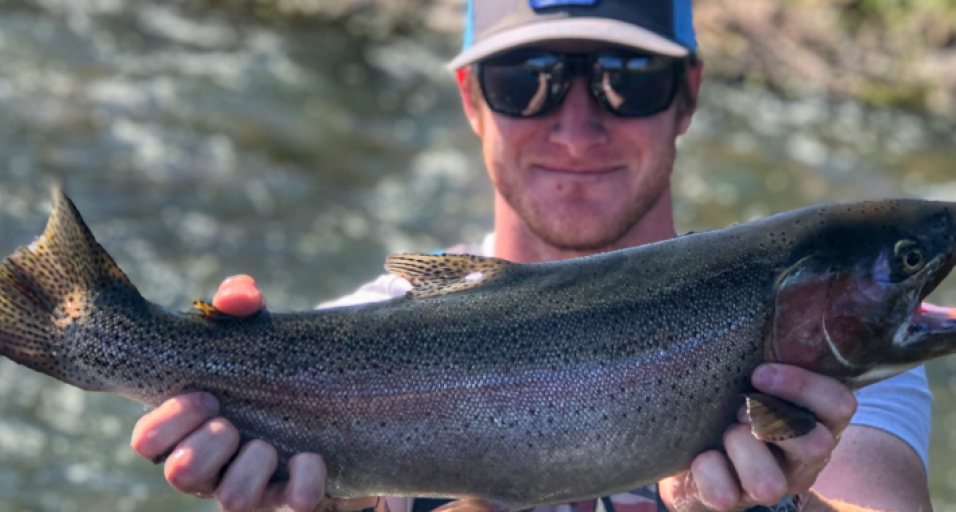
This story started when biologists noticed fly and bait anglers had great success catching the spring-spawning Eagle Lake rainbow trout from the shore during the spring. To see if they could develop a similar shore-angling opportunity in the fall, biologists stocked fall-spawning rainbows in addition to the Eagle Lake rainbows.
Biologists designed a study that measured fish growth and angler experience to evaluate which strain performed better. They used netting, angler interviews called creel surveys and an online survey. Additionally, the adipose fin on the fall spawners was clipped when the fish were juveniles at the hatchery so anglers and biologists could easily tell the difference between the two species.
Catch data
More than three years of measuring populations, collecting surveys and talking to anglers at the lake, biologists noticed a few trends:
- Eagle Lake rainbows grew larger than fall spawners. On average, they weighed nearly 1.5 pounds more and measured more than 4.5 inches longer.
- Anglers consistently caught more Eagle Lake rainbows than fall spawners. This was apparent in angler interviews and the online surveys, and matched the trend of netting surveys performed by biologists.
- Fall-spawning rainbow stocking didn’t provide a fall shore-fishing opportunity. While it's unclear why, this strain was supposed to head for the rocky habitat near the boat ramp in the fall, but didn’t.
The evidence painted a clear picture and the management decision was easy. The Eagle Lake rainbows were a clear winner in size, opportunity and angler success. Since then, managers have adjusted the Twin Buttes stocking schedule to continue browns, Eagle Lake rainbows and cutthroat trout rather than fall-spawning rainbows.
Reel important
Biologists collect a lot of biological data every year by counting, weighing and measuring fish. This information is only half the picture. Ultimately, those fish are stocked to be caught, which means managers need to understand what experience anglers are having.
During the Twin Buttes study, some anglers contributed a lion’s share of data. One angler submitted nearly one-third of 2025 responses collected during the spring, and nearly one-fifth of the fall responses. Another angler in 2024 logged a 6-hour day and reported catching 25 rainbows, in addition to brown and cutthroat trout.
While some folks caught limits of fish, others got sunshine and mosquito bites. Each survey response and interview contributed to the bigger picture of Twin Buttes Reservoir.
“We can sample fish in other ways, but creel surveys tell us what anglers are actually experiencing on the water. That perspective is an important piece of the puzzle when deciding how to manage a fishery,” said Colter Brown, Game and Fish fisheries biologist in the Laramie Region.
Thanks to local and visiting anglers, hundreds of responses created a clearer picture of the fishery than biologists could have gathered through biological sampling. Angler responses, combined with biological data and angler interviews, helped managers identify the best variety of rainbow trout for Twin Buttes and will continue to guide future management decisions, benefiting anglers for years to come.