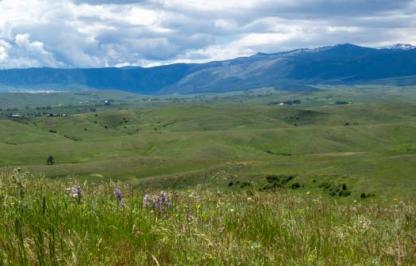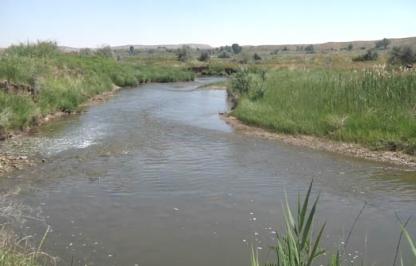
Landscape view of rolling, grassy hills. Mountains can be seen in the distance.

Landowner of the Year

The Landowner of the Year award is presented to Wyoming landowners who have demonstrated outstanding practices in wildlife management, habitat improvement, and conservation techniques on their properties. These landowners also cooperate with the Wyoming Game and Fish Department to provide access to hunters and anglers on their properties. Award recipients are nominated by any department employee and selected by regional leadership teams as model citizens for the conservation, ethical use, and stewardship of Wyoming’s natural resources.
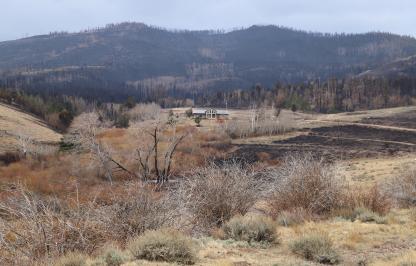
A landscape shot of the Terry Creek Ranch
Laramie Region
Landowners: Al and Barb Johnson
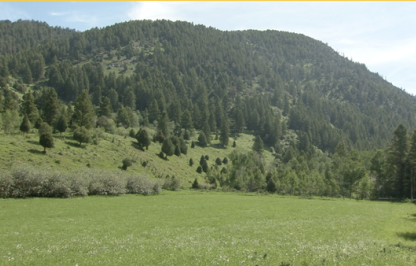
Terry Creek Ranch
2024 Landowners: Al and Barb Johnson

Al and Barb Johnson have stewarded the Terry Creek Ranch with a deep commitment to wildlife and conservation in the Centennial Valley. Nestled south of Centennial, their property serves as a vital corridor between the Snowy Range and Sheep Mountain for elk, mule deer and moose during their seasonal migrations in late fall and spring. The ranch’s diverse landscape includes coniferous forests, aspen groves, mixed mountain shrubs, riparian areas and native and introduced hay meadows. It’s also a haven for pronghorn, beavers, mountain lions, black bears, migratory waterfowl and numerous wildlife species throughout the year. 


In recent years, the Johnsons have undertaken significant efforts to make their ranch more wildlife friendly. They’ve replaced nearly all fences with wildlife-friendly designs that minimize barriers to movement, especially along the U.S. Forest Service boundary. This proactive step helps big game animals detect fences more easily, reduces the risk of collisions and improves migration routes. Their commitment to coexistence is evident in their approach to the thriving beaver population on their property, where they’ve willingly embraced strategies to manage and accommodate beavers. 


The devastating Mullen Fire of 2020 left its mark on the Terry Creek Ranch, prompting the Johnsons to focus on restoration efforts. They’ve spearheaded these efforts by conducting grass and forb seedings, managing timber to prevent soil erosion and actively controlling post-fire cheatgrass infestations to restore the landscape’s health. The Johnsons were recognized for their conservation leadership and highlighted in the “My Wildlands” short film. They also engaged with the community through panel discussions, sharing insights with attendees in Laramie on their land management practices and the importance of conservation. 


Their collaborative spirit extends beyond their property lines. They’ve facilitated access for Wyoming Game and Fish Department employees to conduct habitat assessments, retrieve wildlife collars and provide vital management recommendations. They actively promote conservation among their neighbors and advocate for leaving gates open and upgrading to wildlife-friendly fencing standards to facilitate migrations. Together, they recently facilitated a meeting between Game and Fish personnel and neighboring ranch managers to discuss habitat enhancements and conservation easements.


Their decision to place Terry Creek Ranch into a conservation easement ensures its continuity as a crucial wildlife corridor and safeguards the landscape from becoming a subdivision. Their dedication conserves a rich ecosystem and sets a precedent for sustainable land stewardship and community engagement.

Terry Creek Ranch showing a burned area from the Mullen Fire.
Bateman Ranch | Jackson Region
Jackson Region
Landowners: Richard and Brenda Bateman
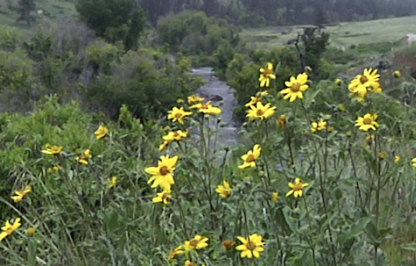
Bateman Ranch | Jackson Region
Bateman Ranch
2022 Landowners: Richard and Brenda Bateman
Bookout Ranch | Laramie Region
Laramie Region
Landowners: Bookout, Gerig, Nott and Burke Family
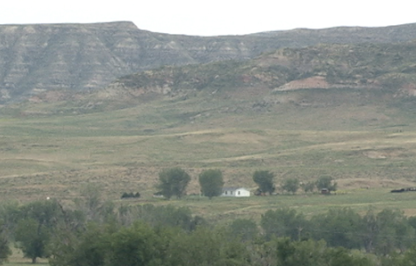
Bookout Ranch | Laramie Region
Bookout Ranch
2022 Landowners: Bookout, Gerig, Nott and Burke Family
Leo Land and Livestock & the RF Ranch | Sheridan Region
Sheridan Region
Landowners: Kathleen Hollcroft and Sam Reinke
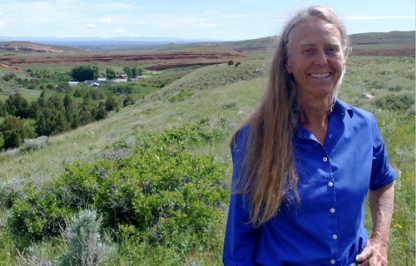
Leo Land and Livestock & the RF Ranch | Sheridan Region
Leo Land and Livestock & the RF Ranch
2022 Landowners: Kathleen Hollcroft and Sam Reinke
Mexican Creek Ranch | Lander Region
Lander Region
Landowners: Perry and Richard Cook
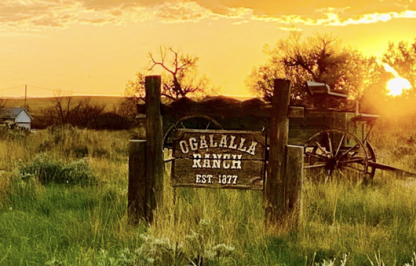
Mexican Creek Ranch | Lander Region
Mexican Creek Ranch
2022 Landowners: Perry and Richard Cook
Casper Region
Landowners: Josh and Kayla Moore
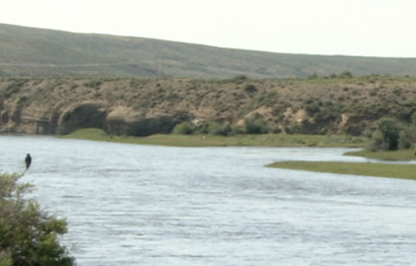
Ogalalla Ranch
2022 Landowners: Josh and Kayla Moore
Rock Springs Grazing Association
Green River Region
Landowners: John W. Hay III and Don Schramm
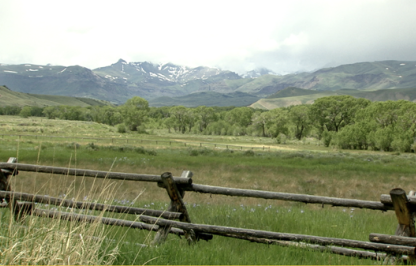
Rock Springs Grazing Association
2022 Landowners: John W. Hay III and Don Schramm
True North Ranch | Cody Region
Cody Region
Landowners: Anne Young and Jim Nielson
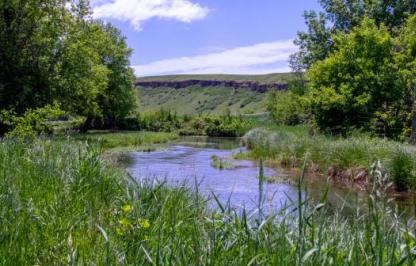
True North Ranch | Cody Region
True North Ranch
2022 Landowners: Anne Young and Jim Nielson
Cody Region
Landowners: Deb McCormick
Beaver Creek Ranch
2021 Landowners: Deb McCormick
The Beaver Creek Ranch sits in one of two primary watersheds including Beaver Creek and Bear Creek which flow westerly from the Bighorn Mountains into the Bighorn River. This stream serves as one of only a few perennial water sources in roughly 150 square miles of low elevation sagebrush steppe and saltbush habitats restricted by an 11 inch precipitation zone. The function of these streams is integral to the conservation of wildlife in this area which includes roughly 300 pronghorn antelope, thousands of migratory and resident mule deer, 1000 elk and an isolated sage grouse population.

As a former board member for the Rocky Mountain Elk Foundation, the McCormick family took it upon themselves to enroll the ranch in an RMEF conservation easement. This dedication to wildlife was felt most from 2020-21 when the Bighorn Basin experienced extreme drought conditions, exacerbating stress on wildlife.

In 2019 Deb was approached by department biologists with the interest in enhancing riparian habitat through the removal of conifers. Deb gave the department and its staff the opportunity to exercise our best management practices to enrich valuable wildlife habitats. Since 2020 roughly 140 acres have been treated and signs of improvement have already been detected. Beavers have returned to the Beaver Creek Ranch and are assisting in the improvement of habitat.
A Landscape of rolling, grassy hills with mountains visible in the distance.
Sheridan Region
Landowners: Sue and Ron Martin
Fryberger Ranch
2021 Landowners: Sue and Ron Martin
The Sheridan Region is honored to nominate Sue and Ron Martin as 2022 Landowner of the Year. The Martins own and operate the 2,600-acre Fryberger Ranch in central Sheridan County. The ranch consists of irrigated hay fields, riparian areas and rolling grass-covered hills, providing habitat for a variety of big game, bird and nongame species. The property has been enrolled in the Access Yes Walk-In Area
program since 2005 and provides access for sportspersons to hunt deer and antelope along with gamebirds. Their participation in the program is particularly important because it provides public hunting opportunities on 2,445 acres in an area where it is increasingly difficult to find access. Due to the Martin’s generosity, hunters are able to harvest 30 to 50 big game animals annually on the ranch.

The Martins have been active in the control and elimination of invasive plants on their property, particularly ventenata, since its discovery in the county several years ago. The Martins have also supported the ongoing North Bighorns Mule Deer Study since 2020. The Martins long term participation in the Access Yes program, their commitment to reducing the spread of ventenata throughout Wyoming and their assistance in regional research projects are just a few of the reasons why the Martins are deserving of this award.
Laramie Region
Landowners: J.R. Good
G-3 Land and Cattle Partnership
2021 Landowners: J.R. Good
The Good Family have been wonderful partners in the conservation of one of Wyoming’s most important native fish, the Hornyhead Chub. 

For more than a century, the Hornyhead Chub was only present in two rivers within Wyoming, the Laramie and North Laramie rivers. In June 2012, the Arapahoe Fire burned within the area occupied by Hornyhead Chub on the North Laramie River. Follow-up surveys determined that the Hornyhead Chub had been eradicated from river. Therefore, Hornyhead Chub transplants from the Laramie River were needed to reintroduce this important native species. 

The Laramie River flows through a good portion of the G3 Land and Cattle property. The habitat within the river is perfect for Hornyhead Chub and other native species, thanks in part to the quality management of the land by the Good Family. The Good Family allowed us to conduct multiple Hornyhead Chub transplants to the North Laramie River as well as the Sweetwater River. The Hornyhead Chub has not been documented in the Sweetwater River since the late 1850s.

The North Laramie River population of Hornyhead Chub has returned to its pre-fire abundance and the transplants to the Sweetwater River will be monitored for their success. None of these efforts would have been as successful if it was not for the cooperation of the Good Family.
Lander Region
Landowners: Bill and Duveene Hamilton
Hopkins Hamilton Ranch
2021 Landowners: Bill and Duveene Hamilton
Bill and Duveene Hamilton purchased their first ranch east of Lander in Lyons Valley in 1962. Soon after, they purchased the neighboring Hopkins Ranch and formed the Hopkins Hamilton Ranch Company in 1964. Although the Hopkins family has not been part of the operation for over 50 years, Bill kept the Hopkins name out of respect to the family that gave him an opportunity to pursue his dream. The Hopkins Hamilton Ranch now consists of approximately 5,000 deeded acres. They run cattle in the Government Draw and East Beaver common allotments, utilizing BLM, state and private lands

The ranch, managed by Bill’s son Bryan Hamilton and his wife Jennifer, provides important wildlife habitat that supports deer, antelope, sage-grouse, sauger and a variety of other species. Over the years, the Hamilton’s have been important wildlife conservation partners. They are supportive of the Department and often allow hunting and fishing on their property.

The first sauger work in the Lander region occurred in the Little Popo Agie River on the Hopkins Hamilton Ranch in 2002. This reach of the Little Popo Agie supports one of the highest elevation populations of sauger across their native range and access to the ranch has allowed the Department to collect critical information about sauger distribution, abundance, and genetics.

Bryan has also been an active member of the Popo Agie Conservation District Board of Supervisors. In addition, Bryan has participated in the Healthy River Initiative which is a collaborative effort by agencies and landowners to improve water use efficiencies and stream flows in the Popo Agie watershed.

Want the latest updates?

Sign up to get the latest news and events sent directly to your inbox.